Industrial evaporators, crystallizers and pressure vessels cecvessels@gmail.com 86-15217192090
Get a Quote

Single Effect & Multiple Effect Evaporators

Single-, double-, triple- and quadruple-effect evaporators with published specific steam consumption.

PRODUCT OVERVIEW

Single Effect & Multiple Effect Evaporators

Single-effect evaporators use live steam (or another heat source) to exchange heat with the material for evaporation and concentration. Multiple-effect evaporators connect two, three or four effects so that secondary steam from one effect becomes the heating source for the next, progressively reducing specific steam consumption.

Single-effect and double-, triple- and quadruple-effect evaporators. Published specific steam consumption: 1.1 / 0.6 / 0.4 / 0.3 tonnes of steam per tonne of water evaporated respectively.

Single Effect & Multiple Effect Evaporators Inquiry
Single Effect & Multiple Effect Evaporators — Center Enamel industrial evaporation equipment

PRODUCT CLASSIFICATION

Published Equipment Types

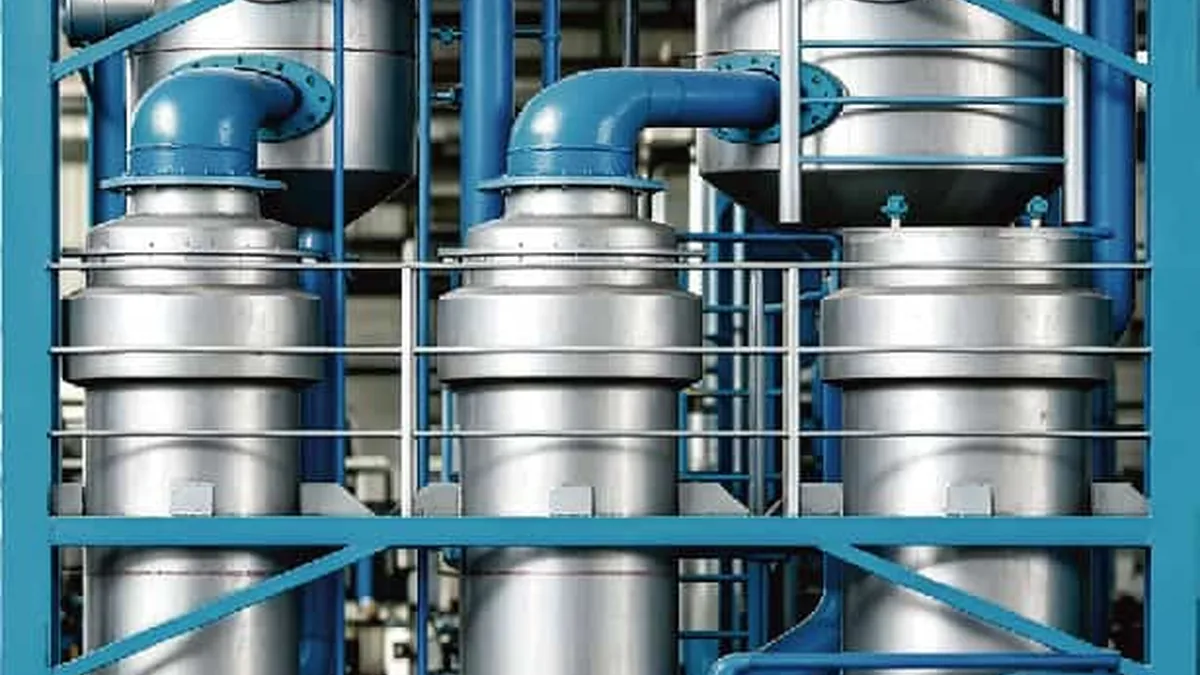
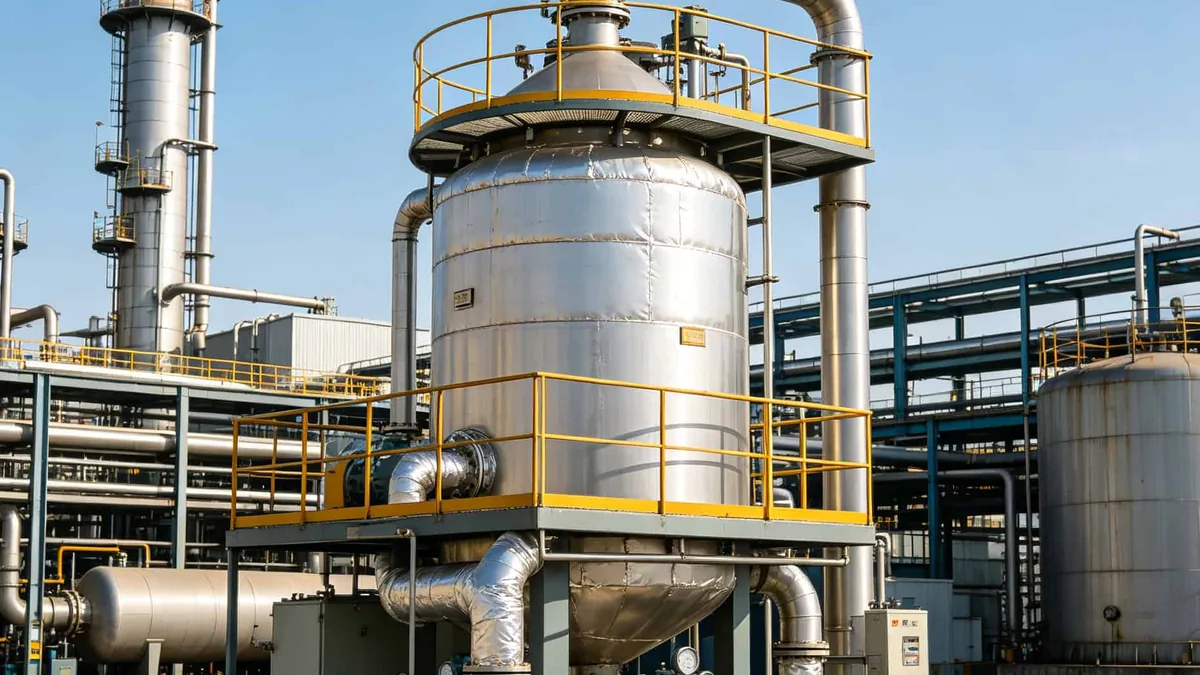
Single-Effect Evaporator (Skid-mounted) — Center Enamel equipment

Single-Effect Evaporator (Skid-mounted)

Uses live steam or another heat source for evaporation, concentration and crystallization. Specific steam consumption is 1.1 tonnes of steam per tonne of water evaporated. Low equipment cost; commonly used where steam costs are low, or for high-boiling-point, high-COD wastewater mother liquors.
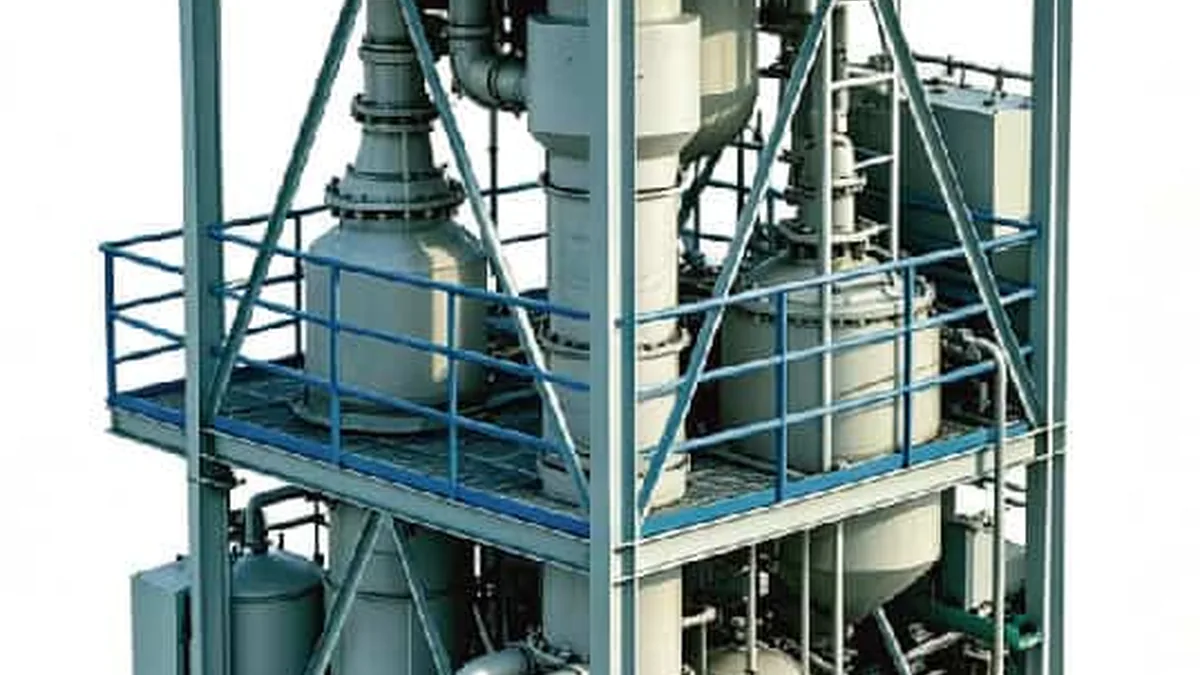
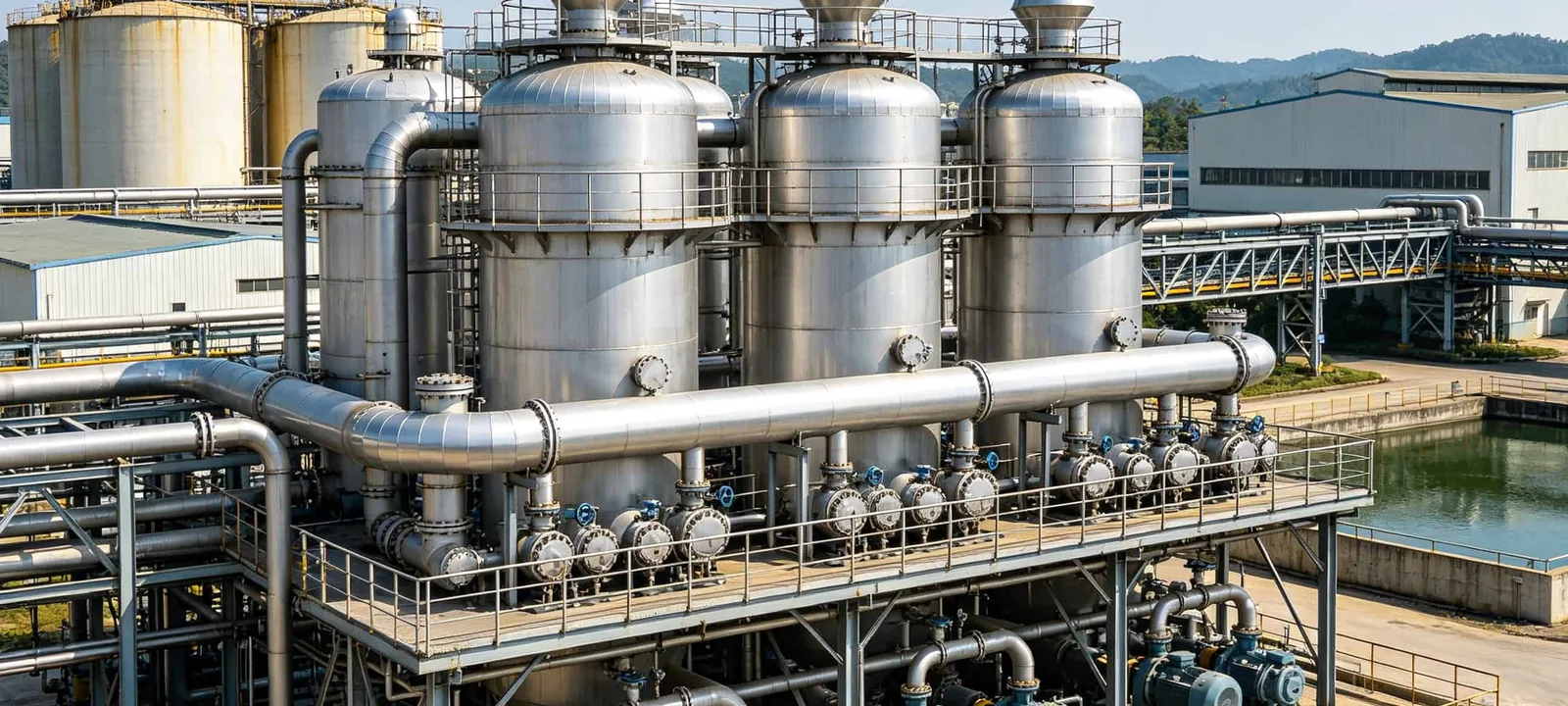
Double-Effect Forced Circulation — Center Enamel equipment

Double-Effect Forced Circulation

Secondary steam from the first effect heats the second effect. Lower equipment cost than a triple-effect system; specific steam consumption 0.6 t steam per t water evaporated. Used for concentrating high-boiling-point materials.

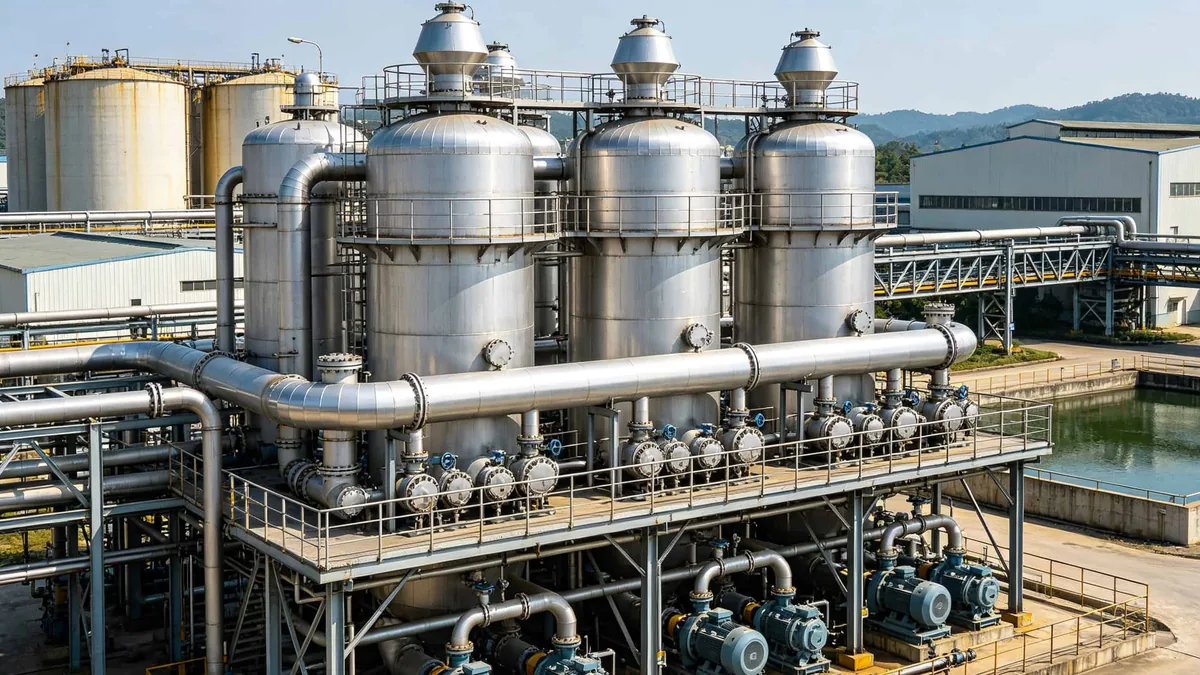
Triple-Effect Forced Circulation — Center Enamel equipment

Triple-Effect Forced Circulation

Live steam is utilized three times; specific steam consumption 0.4 t per t water evaporated. Used for material concentration (falling film) and industrial wastewater evaporation, crystallization and desalination (forced circulation).

Quadruple-Effect Falling Film — Center Enamel equipment

Quadruple-Effect Falling Film

Live steam is utilized four times; specific steam consumption 0.3 t per t water evaporated. Used for material concentration and wastewater without crystallization. Falling-film + forced-circulation hybrid configurations are available.

TECHNICAL COMPARISON

Single Effect vs Multiple Effect

Single Effect vs Multiple Effect
DimensionSingle EffectMultiple Effect
System configurationOne evaporation effectTwo to four connected effects
Steam utilizationLive steam used onceSecondary steam reused effect by effect
Published specific steam consumption1.1 t steam / t water evaporated0.6 (2-effect), 0.4 (3-effect), 0.3 (4-effect) t steam / t water evaporated
Equipment complexityLower equipment cost and simpler arrangementMore effects, higher equipment cost, greater energy efficiency
Circulation modesPer project designFalling film for heat-sensitive products; forced circulation for high-boiling-point, high-COD and crystallizing liquors
Application suitabilityLow steam cost sites; high-boiling-point / high-COD mother liquorsMaterial concentration, wastewater evaporation, crystallization and desalination

HOW IT WORKS

Working Principle

  1. 01

    Live Steam Heating (Effect 1)

    Live steam exchanges heat with the process liquid in the first heating chamber and generates secondary vapor.

  2. 02

    Vapor Transfer

    Secondary vapor from effect 1 is routed to the heating chamber of effect 2 as its heat source.

  3. 03

    Staged Concentration

    Each successive effect operates at a lower pressure/temperature, allowing the vapor to condense and release heat again.

  4. 04

    Product & Condensate Discharge

    Concentrated product and condensate are discharged; final vapor is condensed in the last effect.

EQUIPMENT STRUCTURE

Main Components

Typical system configuration; the final bill of materials is defined by the project specification.

Heating chambers

One per effect; transfer heat from live or secondary steam to the liquid.

Evaporation / separation vessels

Separate generated vapor from the concentrated liquid in each effect.

Circulation loop

Forced-circulation pump or falling-film distributor according to material characteristics.

Condenser & vacuum system

Handle final vapor and maintain the staged pressure profile.

Skid-mounted modules

Factory-assembled modules that shorten installation and reduce on-site civil work.

TECHNICAL DATA

Technical Specifications

Published technical data for this equipment family.

Single Effect & Multiple Effect Evaporators — specifications
ParameterSpecification
Published configurations Single-effect skid-mounted; double-effect forced circulation; triple-effect forced circulation; quadruple-effect falling film; hybrid falling-film + forced-circulation
Specific steam consumption - single effect 1.1 t steam / t water evaporated
Specific steam consumption - double effect 0.6 t steam / t water evaporated
Specific steam consumption - triple effect 0.4 t steam / t water evaporated
Specific steam consumption - quadruple effect 0.3 t steam / t water evaporated
Circulation modes Forced circulation; falling film; hybrid

Request a project-specific data sheet

ENGINEERED FOR PERFORMANCE

Features & Benefits

Efficient Heat Recovery

Secondary steam is reused effect by effect, cutting published steam demand from 1.1 to 0.3 t per tonne of water.

Skid-Mounted Engineering

Factory-assembled modules shorten installation and reduce on-site civil work.

Flexible Circulation Modes

Forced circulation for high-boiling-point, high-COD and crystallizing liquors; falling film for heat-sensitive products.

Lower Operating Cost

Higher effect counts cut live steam use; hybrid configurations match the material.

INDUSTRIAL APPLICATIONS

Where This Equipment Is Used

Industry applications and equipment solutions
IndustryApplicationEquipment Solution
Chemical & high-COD liquorsHigh-boiling-point mother liquor concentration.Single effect / forced circulation
Industrial wastewaterWastewater evaporation, crystallization and desalination.Triple-effect forced circulation
Heat-sensitive productsGentle material concentration.Falling-film multi-effect

FREQUENTLY ASKED QUESTIONS

Single Effect & Multiple Effect Evaporators FAQ

What is the difference between single-effect and multiple-effect evaporation?

In a single-effect evaporator, live steam heats the liquid once and the generated secondary vapor is condensed away. In a multiple-effect system, that secondary vapor becomes the heating medium for the next effect, so the same heat is reused two, three or four times.

What steam consumption figures does the company publish?

1.1 t steam per t water evaporated for single effect, 0.6 for double effect, 0.4 for triple effect and 0.3 for quadruple effect. These are specific steam consumption ratios, not equipment evaporation capacity.

When is forced circulation preferred over falling film?

Forced circulation suits high-boiling-point, high-COD, viscous and crystallizing liquors. Falling film suits heat-sensitive products and non-crystallizing materials.

Are evaporation capacity and steam consumption the same thing?

No. Specific steam consumption is the steam required per tonne of water evaporated, while evaporation capacity is the throughput of the equipment.

What affects the selection of effect count?

Steam and electricity cost, feed boiling point elevation, fouling tendency, available utilities, capital budget and required final concentration.

REQUEST A QUOTE

Discuss Your Single Effect & Multiple Effect Evaporators Requirements

Send your feed data, target capacity, utilities and design code. The inquiry form will be pre-selected for this product.

Single Effect & Multiple Effect Evaporators Inquiry Contact Our Team

REQUEST A QUOTE

Send Us Your Requirements

Complete the form and our engineering team will review your technical requirements. Fields marked * are required.

PDF, Word, Excel, JPG or PNG, max 5 MB.

Your details are used only to respond to this inquiry.

LET US ENGINEER YOUR SOLUTION

Tell Us Your Process Requirements

Share your feed composition, target capacity and operating conditions. Our engineering team will review your requirements and respond with a project-specific proposal.