
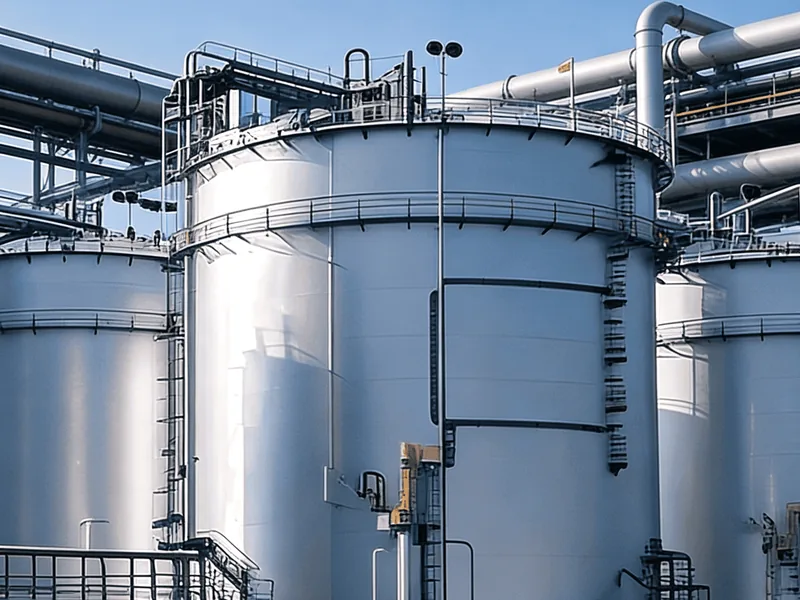
Atmospheric Storage Tanks
Storage of raw materials, finished products, process liquids and auxiliary liquids.
PRODUCT OVERVIEW
Center Enamel publishes six pressure-equipment manufacturing families: atmospheric storage tanks, shell-and-tube heat exchangers, jacketed / half-pipe / internal-coil vessels, columns and towers, pressure storage tanks, and reaction / agitated vessels. Materials listed in the company capability table are carbon steel, stainless steel and titanium; code selection is based on customer requirements, project location and applicable regulations.
Six published pressure-equipment families: atmospheric storage tanks, shell-and-tube heat exchangers, jacketed / half-pipe / internal-coil vessels, columns and towers, pressure storage tanks, and reaction / agitated vessels.
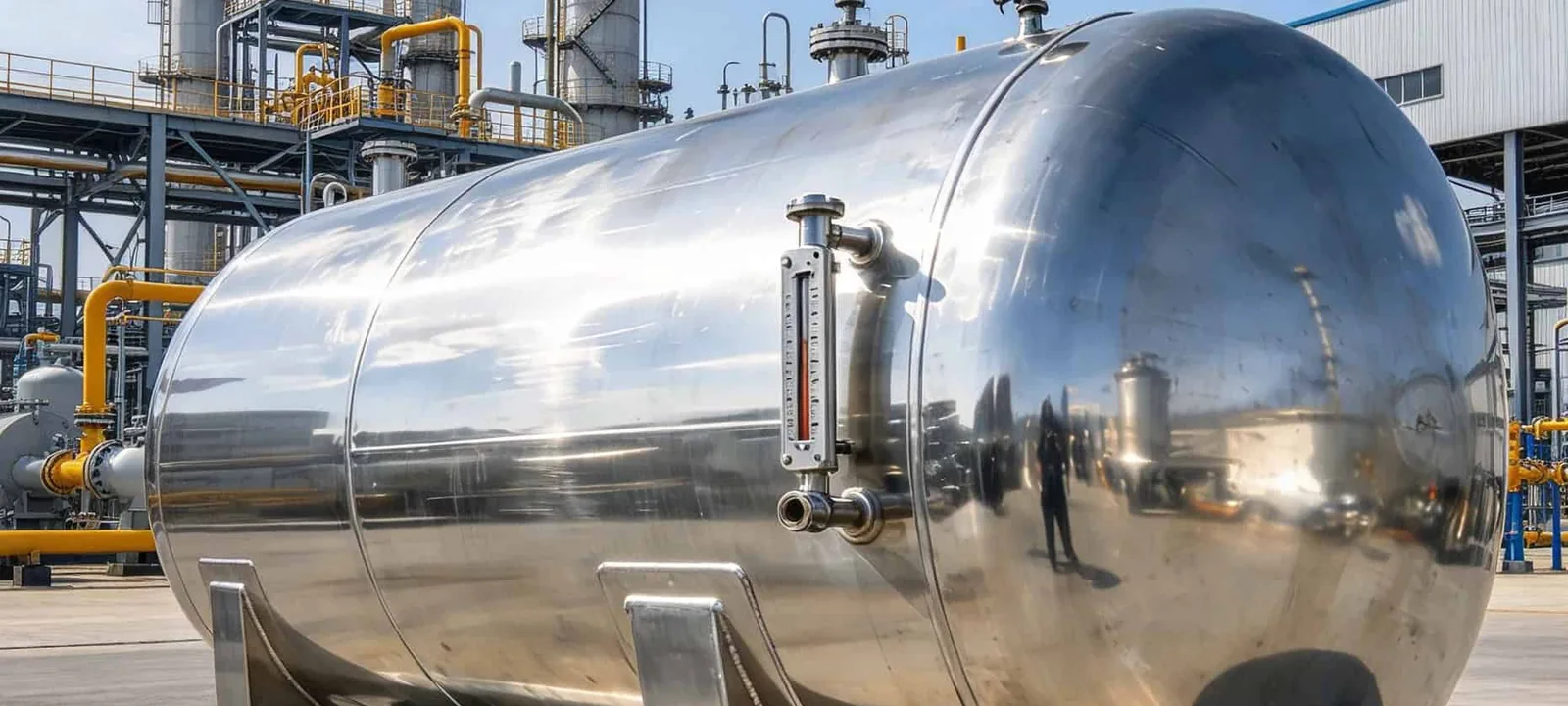
PRODUCT CLASSIFICATION
Storage of raw materials, finished products, process liquids and auxiliary liquids.
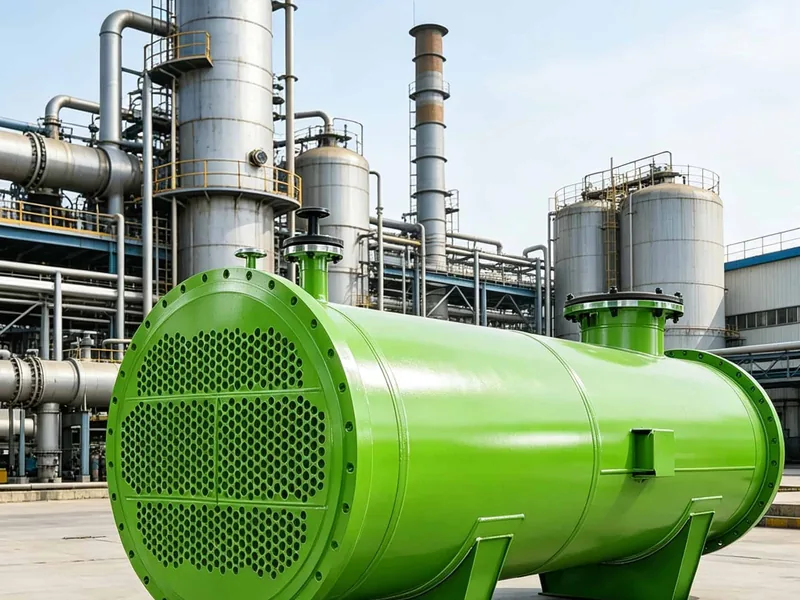
Thermal exchange duty in refining, chemicals, power and process industries.
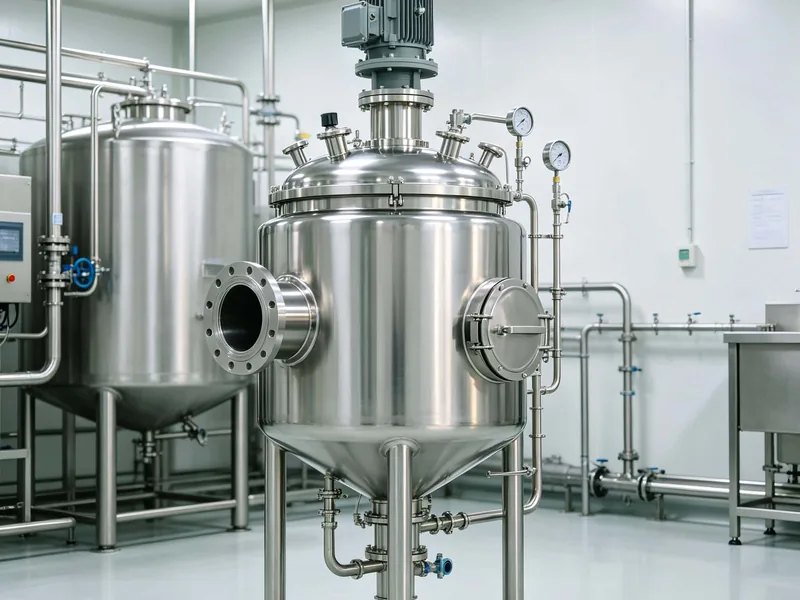
Jacketed vessels, external half-pipe heating and internal coil heating designs.
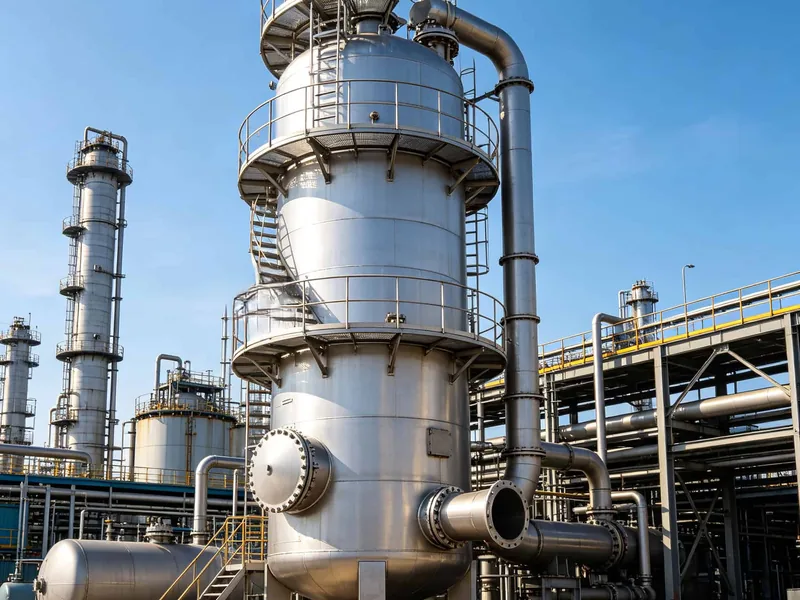
Distillation, absorption, separation and solvent recovery.
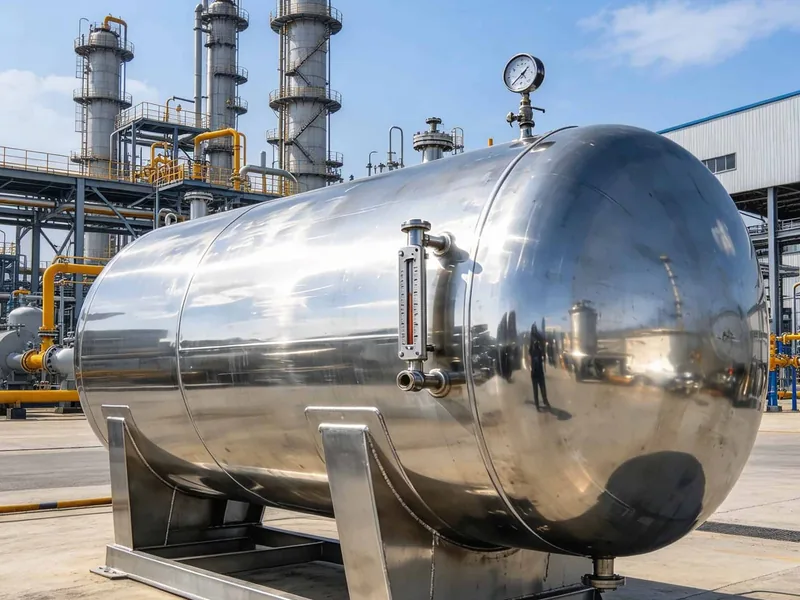
Compressed air tanks, steam tanks and plant utility vessels.
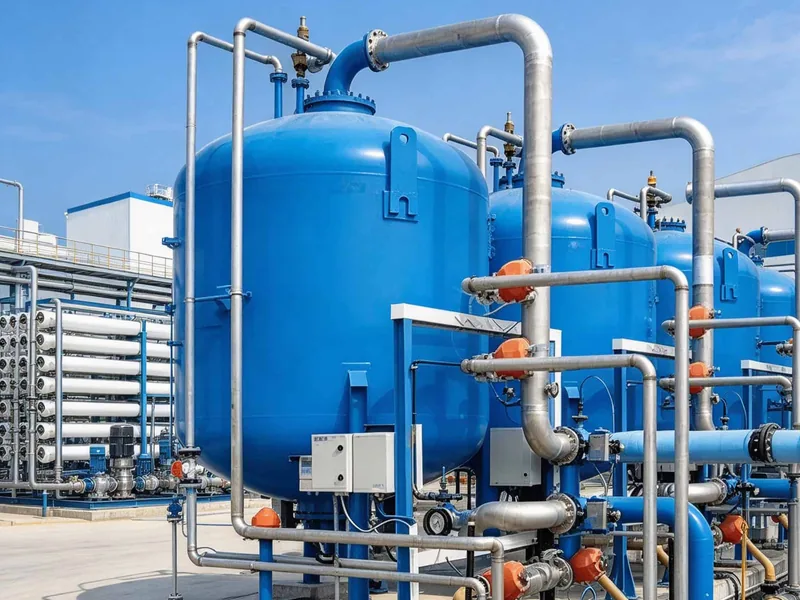
Mixing and reaction duty for chemical, pharmaceutical and fermentation processes.
EQUIPMENT STRUCTURE
Typical system configuration; the final bill of materials is defined by the project specification.
Fabricated from carbon steel, stainless steel or titanium according to the company capability table.
Formed heads fitted and welded to the shell; geometry defined by the approved drawing.
Process, instrumentation, vent and drain connections fitted during assembly.
Legs, skirts or saddles according to vessel orientation and installation.
Jackets, external half-pipe coils or internal coils for heated vessels.
Sandblasting and anti-corrosion coating applied in the final process stage.
MATERIAL SELECTION
Listed in the company equipment capability table for pressure equipment.
Listed in the company equipment capability table for pressure equipment.
Listed in the company equipment capability table for corrosive media applications.
DESIGN & MANUFACTURING
Code selection is based on customer requirements, project location and applicable regulations.
| Parameter | Specification |
|---|---|
| ASME BPVC Section VIII Div. 1 | Pressure vessel design and construction code supported by the engineering team. |
| PED | Pressure Equipment Directive, selected according to project location and applicable regulations. |
| BS EN 13445 | European unfired pressure vessel standard listed in the company standards. |
| GB Standards | Chinese national standards applied where required by the project. |
Design codes are NOT the same as certifications. Certificates held are listed separately on the Certifications page.
TECHNICAL DATA
Published technical data for this equipment family.
| Parameter | Specification |
|---|---|
| Published product families | Atmospheric storage tanks; shell-and-tube heat exchangers; jacketed/half-pipe/internal-coil vessels; columns & towers; pressure storage tanks; reaction & agitated vessels |
| Published materials | Carbon steel, stainless steel, titanium |
| Supported design codes | ASME BPVC Section VIII Div.1, PED, BS EN 13445, GB Standards (code selection per project) |
| Published manufacturing workflow | 5 controlled stages: material inspection → fabrication & assembly → welding & PWHT → inspection & pressure testing → surface treatment & delivery |
| Design pressure | Project-specific, per approved drawings |
| Certification held | ASME, PED, CE, ISO 9001, ISO 14001, ISO 45001 |
INDUSTRIAL APPLICATIONS
| Industry | Application | Equipment Solution |
|---|---|---|
| Petrochemical & chemical | Storage of raw materials, intermediates, acids/alkalis and finished products. | Storage tanks, towers, reaction vessels |
| Pharmaceutical & fine chemicals | API production, separation and purification. | Jacketed vessels, reactors, columns |
| Food & beverage | Liquid raw materials, syrups and ingredient processing. | Storage tanks, agitated vessels |
| Water & environmental | Clean water, wastewater and process liquid storage. | Atmospheric and pressure tanks |
| Power, energy & utilities | Thermal systems, compressed air and plant utilities. | Heat exchangers, pressure storage tanks |
MANUFACTURING CAPABILITY
Steel supplied by qualified domestic mills; material verification and incoming inspection.
WPS/PQR controlled welding performed with advanced welding equipment.
NDT carried out on welds and pressure boundaries prior to pressure testing.
Hydrostatic and pressure testing performed as part of final verification.
Dimensional checks, surface finishing and complete quality documentation before shipment.
FREQUENTLY ASKED QUESTIONS
The company capability table lists atmospheric storage tanks, shell-and-tube heat exchangers, jacketed / half-pipe / internal-coil heated vessels, columns and towers, pressure storage tanks, and reaction / agitated vessels.
Carbon steel, stainless steel and titanium are listed in the company equipment capability table. Material selection depends on the process medium and applicable design code.
Design pressure is the maximum pressure used as the design load condition together with the corresponding design temperature; it is not lower than the operating pressure. Operating pressure is the pressure under normal service.
No. ASME BPVC Section VIII Div.1, PED, BS EN 13445 and GB are design/construction codes the technical team supports for code selection. Separately, the company publishes ASME, PED, CE and ISO 9001/14001/45001 certificates. They are different things and are presented separately.
Material inspection, WPS/PQR-controlled welding, NDT, dimensional inspection, hydrostatic / pressure testing, final inspection and a complete quality documentation package.
REQUEST A QUOTE
Send your feed data, target capacity, utilities and design code. The inquiry form will be pre-selected for this product.
Pressure Vessels Inquiry Contact Our Team
REQUEST A QUOTE
Complete the form and our engineering team will review your technical requirements. Fields marked * are required.
LET US ENGINEER YOUR SOLUTION
Share your feed composition, target capacity and operating conditions. Our engineering team will review your requirements and respond with a project-specific proposal.