
Fabrication Workshop
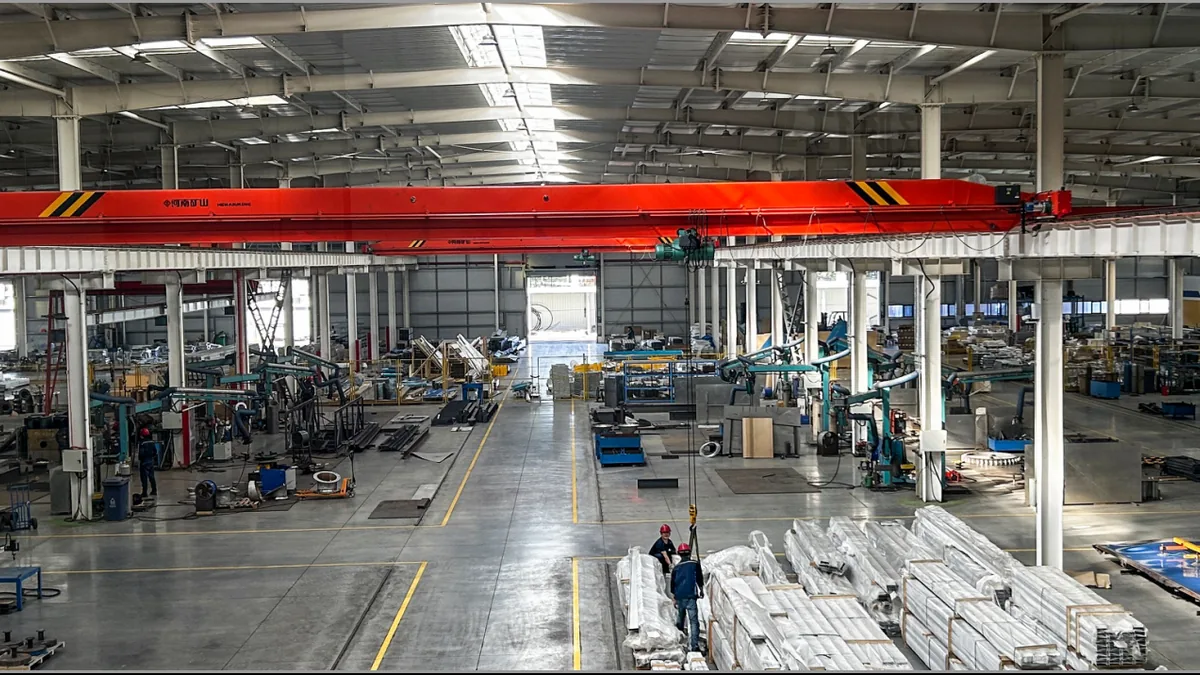
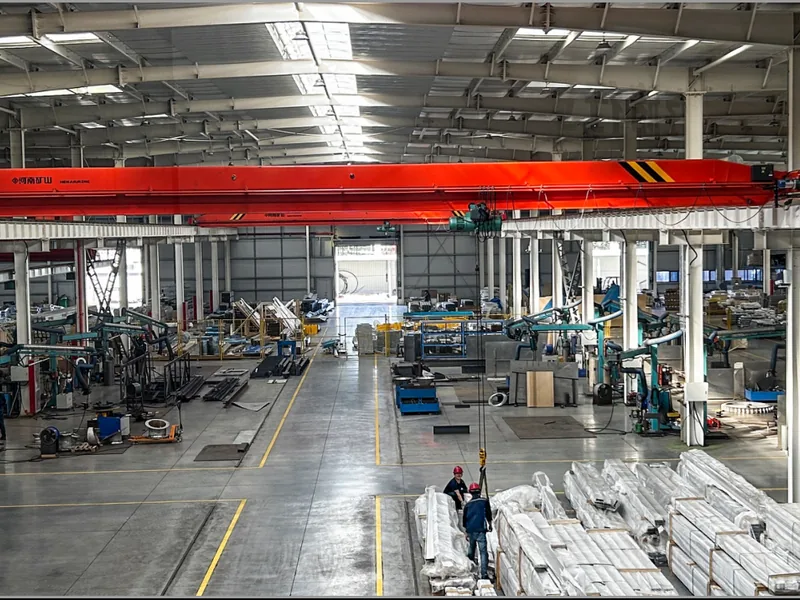
Covered fabrication hall with overhead cranes for cutting, forming, machining and assembly.
MANUFACTURING OVERVIEW
Every pressure vessel and evaporation unit leaves the workshop through the same controlled sequence: raw material inspection, fabrication and assembly, welding and heat treatment, inspection and pressure testing, then surface treatment and final delivery. Each stage has its own documented checks and release point.
INTERNATIONAL STANDARDS
Code selection is based on customer requirements, project location and applicable regulations.
| Parameter | Specification |
|---|---|
| ASME BPVC Section VIII Div. 1 | Pressure vessel design and construction code supported by the engineering team. |
| PED | Pressure Equipment Directive, selected according to project location and applicable regulations. |
| BS EN 13445 | European unfired pressure vessel standard listed in the company standards. |
| GB Standards | Chinese national standards applied where required by the project. |
Design codes are construction standards, not certifications. Certificates are shown on the Certifications page.
PROCESS STAGES
Each stage is separated by a release point so issues are resolved before the next operation begins.
Material verification & incoming inspection: incoming steel is verified against the purchase specification before any fabrication starts, so the material grade, thickness and certificates are confirmed while the vessel is still on paper.
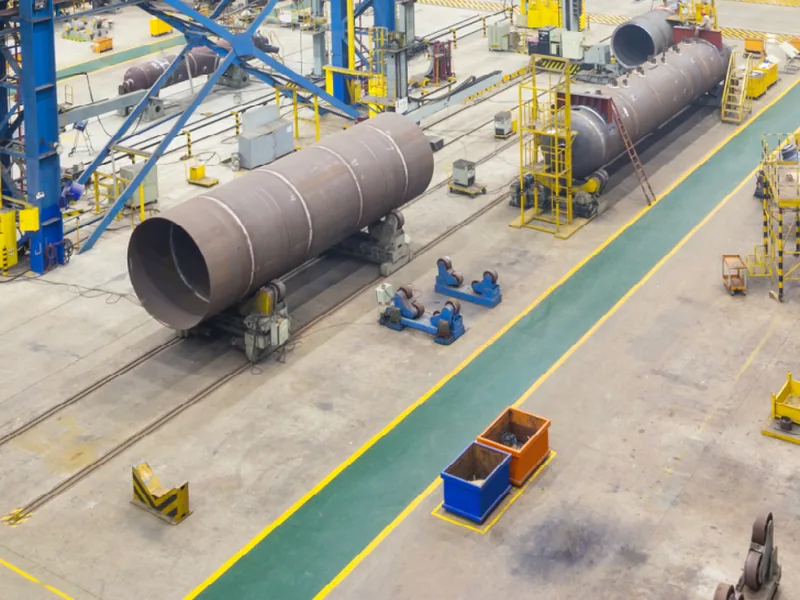
Cutting, machining, forming & assembly: plate is cut, machined and rolled into shells, then fitted and assembled as separate controlled operations.
Welding to qualified WPS/PQR procedures; post-weld heat treatment is applied where the design code and material require it.
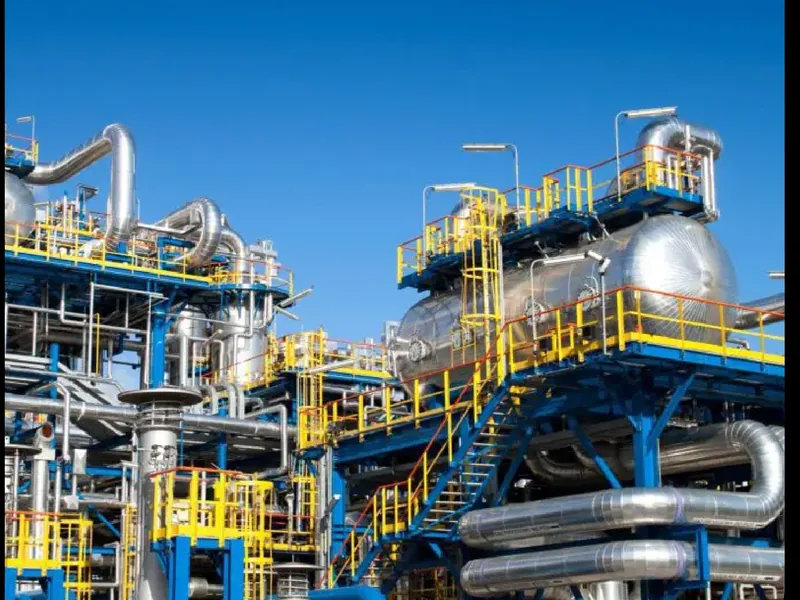
NDT, dimensional inspection & hydrostatic testing carried out on the finished vessel, with results recorded against the project documentation.
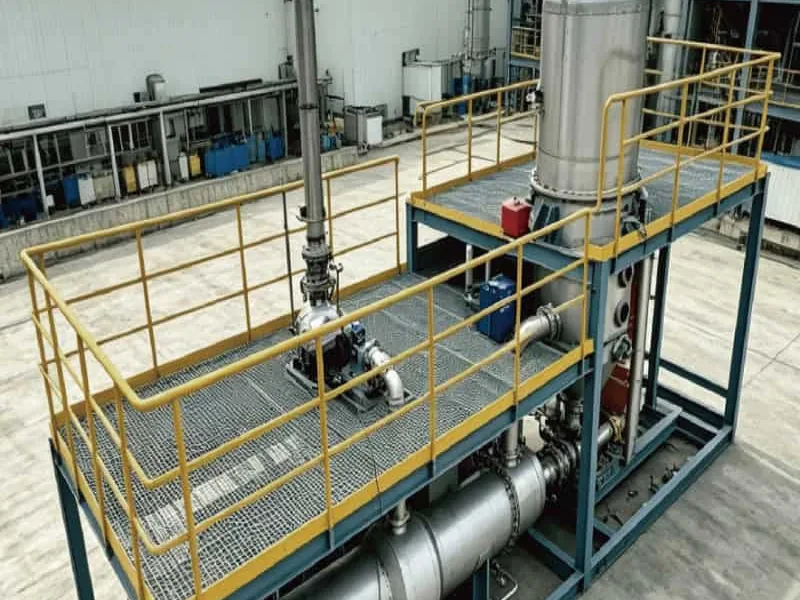
Surface finishing, completion of the quality documentation package and preparation for shipment. The vessel is released only after documented checks are complete.
PRODUCTION FACILITY
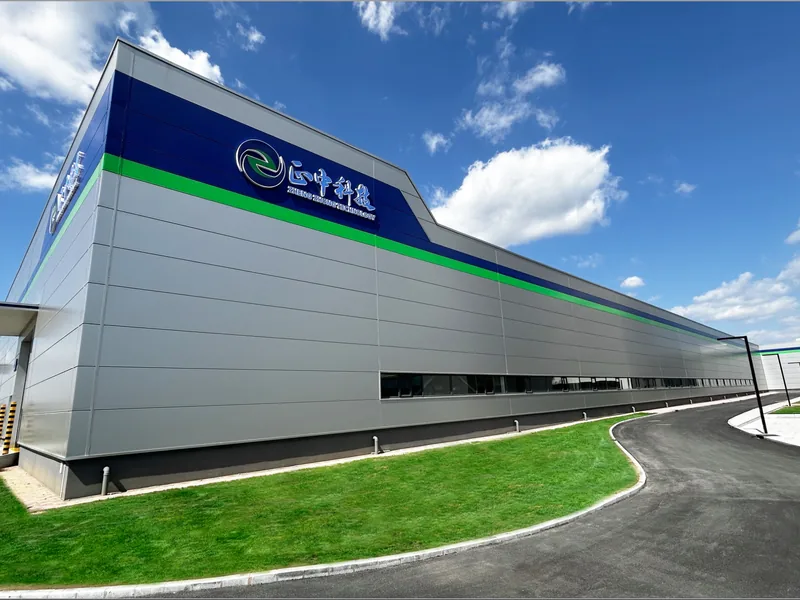
Covered fabrication hall with overhead cranes for cutting, forming, machining and assembly.
Assembly area used for staged welding of shells, heads and nozzles.
Inspection and pressure testing of fabricated pressure equipment.
Sandblasting and spraying capability for anti-corrosion coatings.
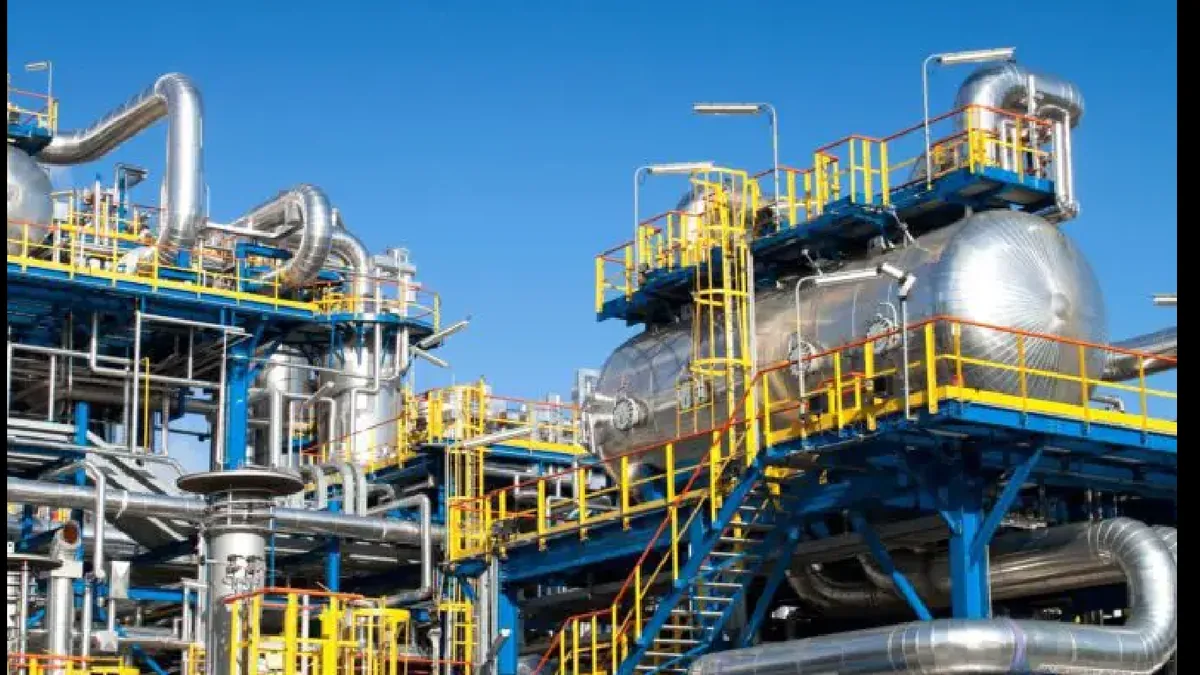
WELDING & FABRICATION
Plate is cut, machined and rolled into shells, then fitted and assembled. Welding is performed to qualified WPS/PQR procedures, with post-weld heat treatment applied where the design code and material require it.
PROCESS ADVANTAGES
Steel from top domestic mills with strength and toughness exceeding industry standards.
Advanced equipment and processes delivering smooth, high-quality welds.
Large-scale equipment ensuring uniform surface preparation for better coating adhesion.
Custom anti-corrosion coatings with stable performance and long service life.
QUALITY CONTROL
Steel supplied by qualified domestic mills; material verification and incoming inspection.
WPS/PQR controlled welding performed with advanced welding equipment.
NDT carried out on welds and pressure boundaries prior to pressure testing.
Hydrostatic and pressure testing performed as part of final verification.
Dimensional checks, surface finishing and complete quality documentation before shipment.
INSPECTION
Non-destructive testing of welds and pressure boundaries.
Hydrostatic testing to prove the pressure envelope of the completed vessel.
Pressure testing performed as part of the documented inspection programme.
Dimensional and surface inspection with complete quality documentation before shipment.
FACTORY GALLERY
Click any image to enlarge.
LET US ENGINEER YOUR SOLUTION
Share your feed composition, target capacity and operating conditions. Our engineering team will review your requirements and respond with a project-specific proposal.