
Industrial evaporators, crystallizers and pressure vessels cecvessels@gmail.com 86-15217192090
Get a Quote

TVR Evaporators

Thermal Vapor Recompression evaporators driven by live steam at 0.5 MPa or above.

PRODUCT OVERVIEW

TVR Evaporators

TVR (Thermal Vapor Recompression) evaporators use a steam-driven heat pump / ejector to recover secondary steam. Powered by live steam at 0.5 MPa or higher, the system extracts and repressurizes secondary steam for reuse, then feeds the mixture into the heating chamber. TVR is distinct from MVR: its driving energy is live steam through a steam ejector, not an electrically driven mechanical compressor.

Thermal Vapor Recompression evaporators use a steam ejector powered by live steam at 0.5 MPa or higher to recover and repressurize secondary steam. Triple- and quadruple-effect falling-film configurations are published.

TVR Evaporators Inquiry
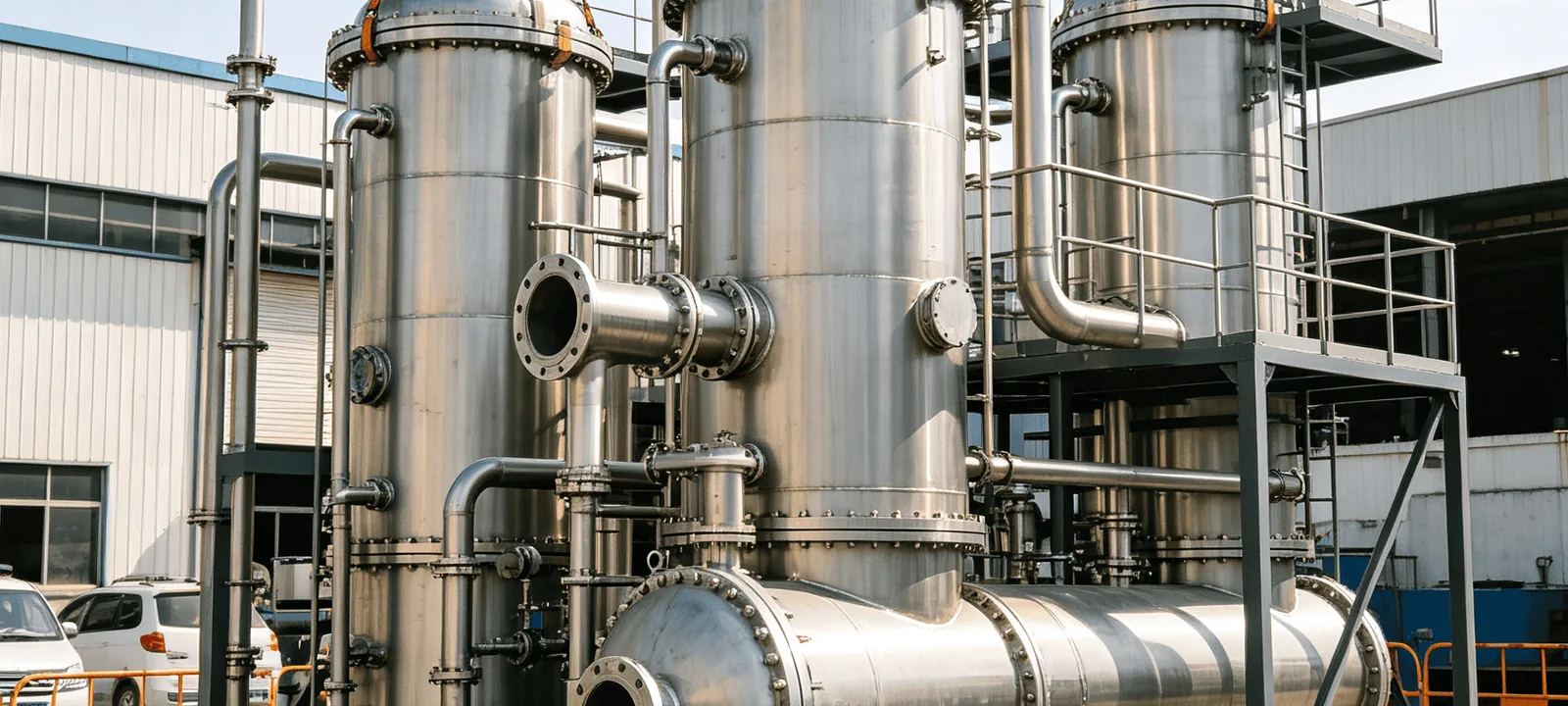
TVR Evaporators — Center Enamel industrial evaporation equipment

PRODUCT CLASSIFICATION

Published Equipment Types

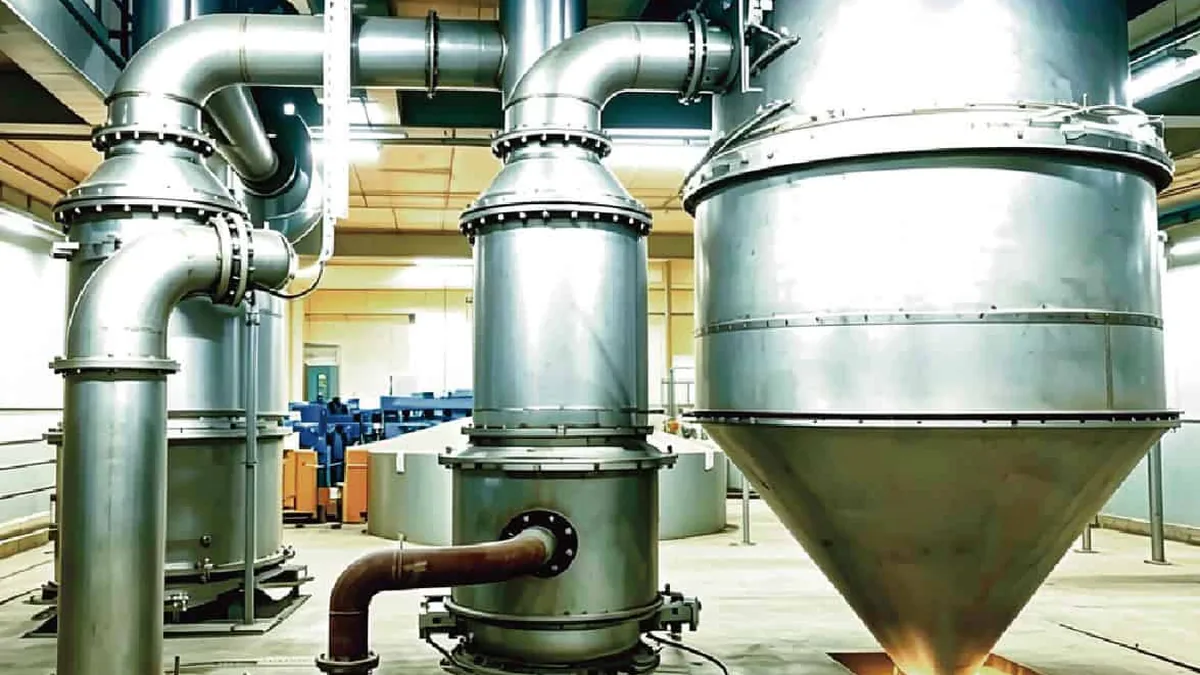
Triple-Effect Falling Film TVR — Center Enamel equipment

Triple-Effect Falling Film TVR

Uses proven steam heat pump recovery technology. Powered by live steam at 0.5 MPa or higher, it extracts and repressurizes secondary steam; the mixture enters the heating chamber for heat exchange. Compatible with double- and triple-effect evaporation and crystallization processes for evaporation/concentration, salt crystallization and waste liquid volume reduction.
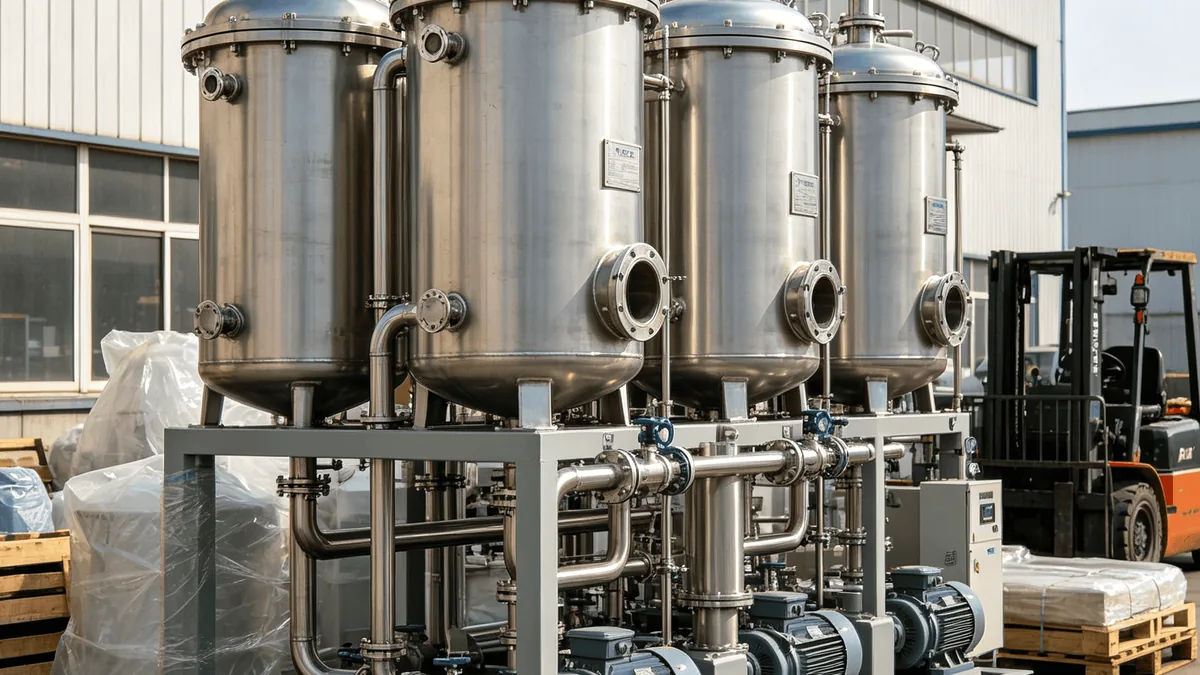
Quadruple-Effect Falling Film TVR — Center Enamel equipment

Quadruple-Effect Falling Film TVR

Integrates a quadruple-effect evaporation process with thermal vapor recompression. Powered by live steam (≥0.5 MPa), secondary steam is recovered via heat pump pressurization, mixed with live steam and fed to the heating chamber, cutting fresh steam consumption.

HOW IT WORKS

Working Principle

  1. 01

    Live Steam Supply

    Live steam at 0.5 MPa or higher is supplied as the driving energy for the ejector.

  2. 02

    Secondary Steam Extraction

    The steam ejector draws secondary steam from the evaporation system.

  3. 03

    Repressurization & Mixing

    Secondary steam pressure is boosted and mixed with the driving live steam.

  4. 04

    Heating Chamber Reuse

    The mixed steam enters the heating chamber to exchange heat with the process fluid.

TECHNICAL COMPARISON

TVR vs MVR — Technical Differences

TVR vs MVR — Technical Differences
DimensionTVRMVR
Driving energyLive steam at ≥0.5 MPaElectrical energy to a mechanical compressor
Core deviceSteam ejector / thermocompressorHigh-speed mechanical vapor compressor
Secondary steam pathEntrained, repressurized, mixed with live steam and reusedCompressed to raise temperature/enthalpy, then reused as heating steam
Published configurationsTriple- and quadruple-effect falling filmForced circulation, falling film, vertical / horizontal skid-mounted

EQUIPMENT STRUCTURE

Main Components

Typical system configuration; the final bill of materials is defined by the project specification.

Steam ejector (thermocompressor)

Core TVR component: uses high-pressure live steam to entrain and repressurize secondary vapor.

Driving steam line

Supplies live steam at ≥0.5 MPa.

Falling-film effects

Triple- or quadruple-effect evaporation stages.

Heating chambers

Receive the mixed driving and recovered steam.

Separators & condenser

Vapor-liquid separation and final vapor handling.

TECHNICAL DATA

Technical Specifications

Published technical data for this equipment family.

TVR Evaporators — specifications
ParameterSpecification
Technology Thermal Vapor Recompression (TVR) via steam ejector
Driving steam pressure 0.5 MPa or higher (≥0.5 MPa live steam)
Published configurations Triple-effect falling film; quadruple-effect falling film
Compatible processes Double- and triple-effect evaporation and crystallization; salt crystallization; waste liquid volume reduction
Energy consumption basis Determined by feed and utility conditions

Request a project-specific data sheet

INDUSTRIAL APPLICATIONS

Where This Equipment Is Used

Industry applications and equipment solutions
IndustryApplicationEquipment Solution
Salt crystallizationEvaporation and concentration followed by salt crystallization.Multi-effect TVR with crystallization
Waste liquid volume reductionReducing liquid waste volume before further treatment.Triple-effect falling film TVR
Material concentrationConcentration of process solutions with falling-film effects.Quadruple-effect falling film TVR

FREQUENTLY ASKED QUESTIONS

TVR Evaporators FAQ

What does TVR stand for and how does it work?

Thermal Vapor Recompression. High-pressure live steam (0.5 MPa or above) passes through a steam ejector, entraining and repressurizing secondary steam from the evaporator. The mixed steam is then used as the heating medium.

How is TVR different from MVR?

TVR is driven by live steam through a steam ejector; MVR is driven by electrical energy through a mechanical vapor compressor. The equipment, driving energy and steam path are different.

What is the role of the steam ejector?

It converts the pressure energy of the driving live steam into velocity, entrains low-pressure secondary vapor, and recompresses the mixture to a usable heating-steam pressure.

What driving steam conditions are published?

Live steam at 0.5 MPa or higher for both the triple-effect and quadruple-effect TVR configurations.

Can TVR be combined with crystallization?

The company states the triple-effect TVR is compatible with double- and triple-effect evaporation and crystallization processes, including salt crystallization.

REQUEST A QUOTE

Discuss Your TVR Evaporators Requirements

Send your feed data, target capacity, utilities and design code. The inquiry form will be pre-selected for this product.

TVR Evaporators Inquiry Contact Our Team

REQUEST A QUOTE

Send Us Your Requirements

Complete the form and our engineering team will review your technical requirements. Fields marked * are required.

PDF, Word, Excel, JPG or PNG, max 5 MB.

Your details are used only to respond to this inquiry.

LET US ENGINEER YOUR SOLUTION

Tell Us Your Process Requirements

Share your feed composition, target capacity and operating conditions. Our engineering team will review your requirements and respond with a project-specific proposal.