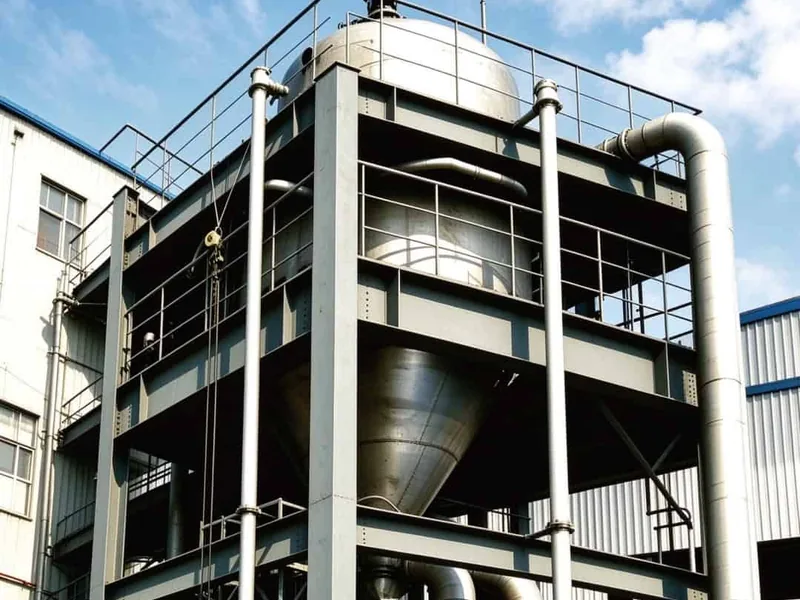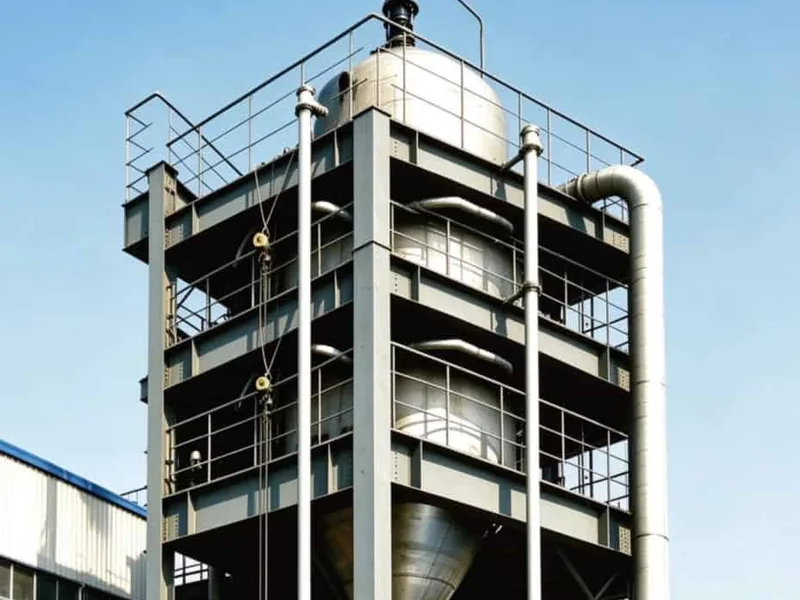
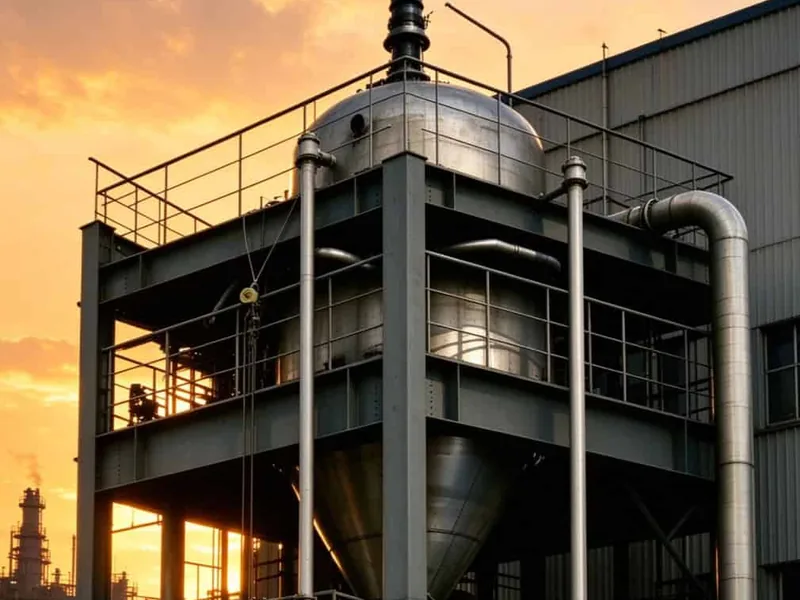
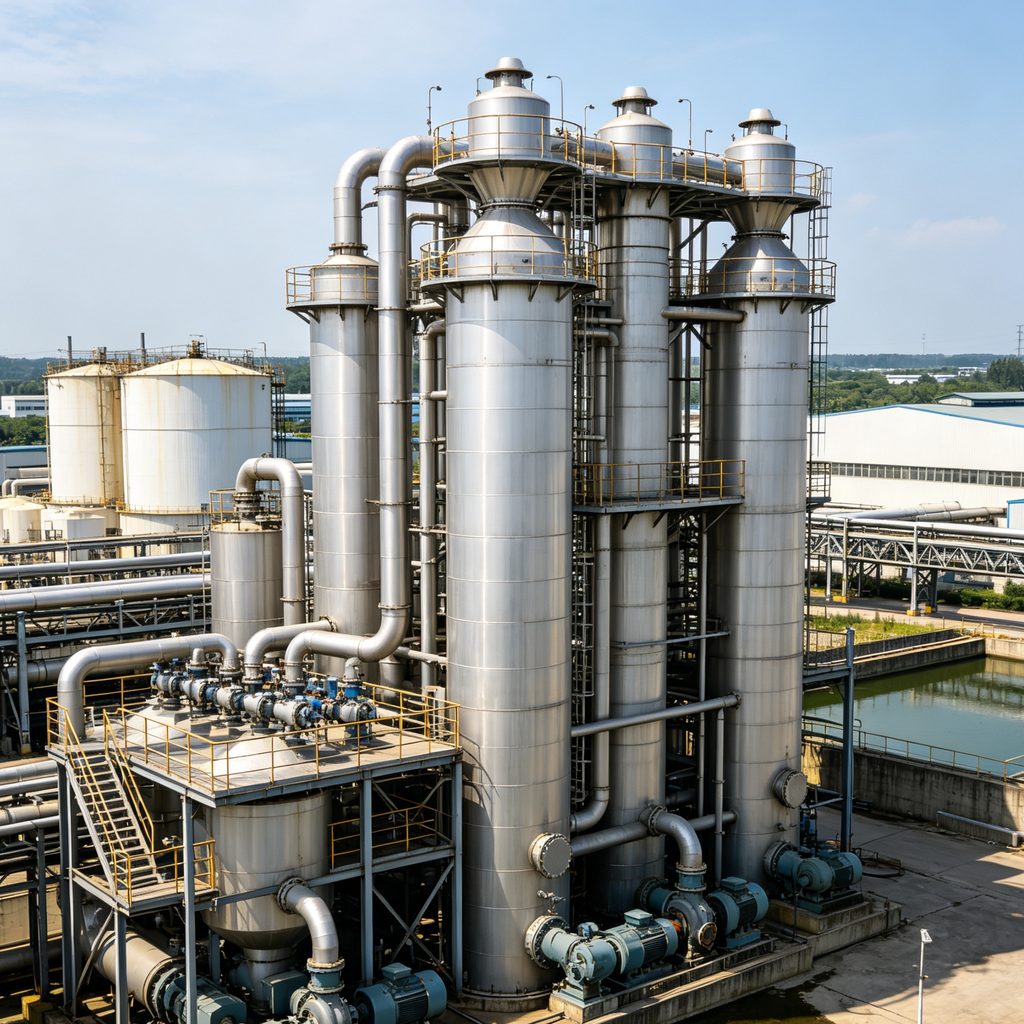
A multiple-effect evaporator is a concentration system arranged in successive evaporation stages called effects. Vapor released from one effect is directed to serve as the heating source for the next effect, so that heat introduced to the system contributes to evaporation across more than one stage. This staged arrangement supports energy-efficient processing and lowers the live steam required to concentrate the feed liquid.
Center Enamel designs multiple-effect evaporators around the feed liquid, target concentration, production rate, and available steam and water utilities. The number of effects, body arrangement, separation stages, and circulation details are defined from the process balance, so the system matches the plant’s concentration duty.
Energy-Efficient Processing
Energy efficiency is built around the reuse of vapor heat through the effect sequence. Steam enters the first effect to evaporate part of the liquid, and the vapor produced there moves to the next effect’s heating surface, where it supplies part of the heat needed for further evaporation. Each effect works at a corresponding condition that allows this heat transfer to take place, so that the overall system concentrates the liquid with less fresh steam than a single-stage arrangement would require.
Liquor and vapor paths are organized so that liquid moves forward through the effects while vapor moves to its heating role. Level, temperature, and flow conditions are monitored through arranged instrumentation, supporting steady operation as concentration rises through the sequence. This staged structure keeps the concentration process orderly and aligned with the plant’s energy objectives.
Reduced Steam Consumption
Reduced steam consumption follows directly from the staged heat reuse design. Because vapor generated in earlier effects contributes heat to later evaporation stages, the fresh steam input is spread across multiple concentration steps rather than being used once and discarded. The system’s effect count and arrangement are selected according to the concentration requirement, steam cost, and available utilities, balancing energy use with equipment investment.
Condensate and vapor streams are collected and routed according to the plant’s water and energy balance, supporting organized recovery of useful materials and heat. The design also accounts for the changing viscosity and boiling behavior of the liquid as solids content rises, so that evaporation remains steady through the full concentration range.
Key Design Features
Center Enamel multiple-effect evaporators include evaporator bodies, separators, circulation arrangements, pumps, and interconnecting piping detailed for the feed liquid and service conditions. Heat transfer surfaces and internal parts are arranged for effective vapor-liquid separation and steady liquor flow. Access openings, instrument connections, and supports are positioned for practical operation and maintenance, and documentation records materials, fabrication, and inspection results.
Materials are selected for compatibility with the concentrated liquid and operating temperatures, and insulation around bodies and piping helps control heat losses. The system layout leaves room for piping, auxiliary equipment, and servicing access around the evaporation train.
Typical Industrial Applications
Multiple-effect evaporators are used in food and dairy processing, chemical concentration, pharmaceutical production, wastewater evaporation, and other operations where liquids must be concentrated with controlled steam use. They suit producers balancing concentration performance with energy efficiency across continuous production schedules. Arrangements are adapted to the feed material, target solids, and plant capacity.
Center Enamel reviews each application from liquid properties, throughput, concentration target, and utility availability before defining the evaporator configuration. The delivered system reflects the actual processing duty and installation conditions.
Engineering Review and Fabrication Practice
Each multiple-effect evaporator begins with a review of the feed liquid, target concentration, production rate, and steam and water utilities, so that the number of effects and arrangement of evaporator bodies match the processing duty. The engineering team confirms circulation, separation, and vapor routing before fabrication starts, and material selections are recorded for reference during manufacture and ongoing operation.
Fabrication follows established equipment-building practice, with bodies, separators, circulation parts, pumps, and interconnecting piping completed and inspected through the build. Material certificates, dimensional records, and inspection results are compiled with the system, providing a clear technical package for installation and commissioning. The layout also considers cleaning access and maintenance points, so the evaporation train remains straightforward to service during scheduled shutdowns.
Project support coordinates the evaporation train with the surrounding processing line. The engineering team reviews feed supply, concentrate collection, condensate handling, utility connections, and available installation space with the customer, helping align the equipment with the plant’s production schedule and energy objectives. This review-oriented approach supports smooth integration between upstream processing, concentration, and downstream product handling.
Why Choose Center Enamel
Center Enamel, part of Shijiazhuang Zhengzhong Technology Co., Ltd, supplies evaporation and process equipment to industrial customers worldwide. Engineering, fabrication, and inspection are coordinated to deliver systems matched to concentration and energy objectives. More details are available at https://www.cecvessels.com/.
From the initial process review to final delivery, Center Enamel provides layout support, clear documentation, and quality-focused fabrication. Producers planning evaporation capacity or upgrading existing concentration equipment can discuss their liquid and steam requirements with the engineering team.