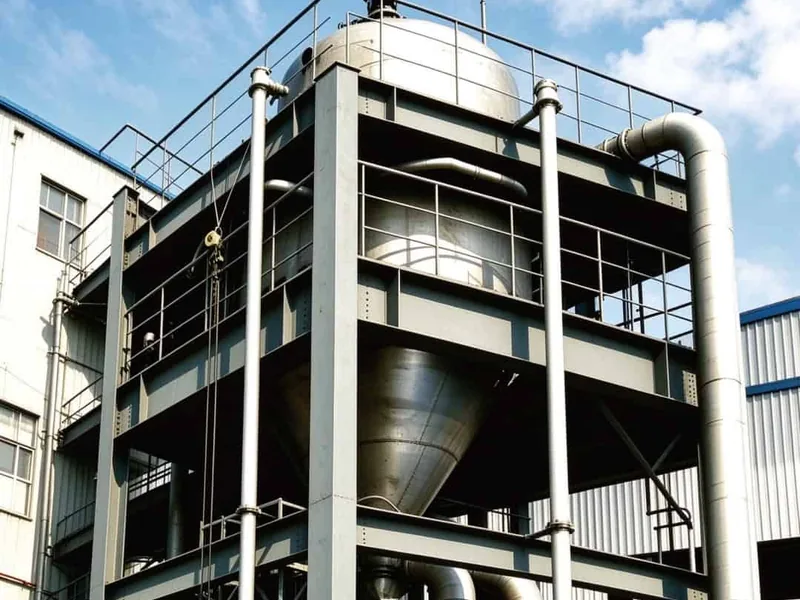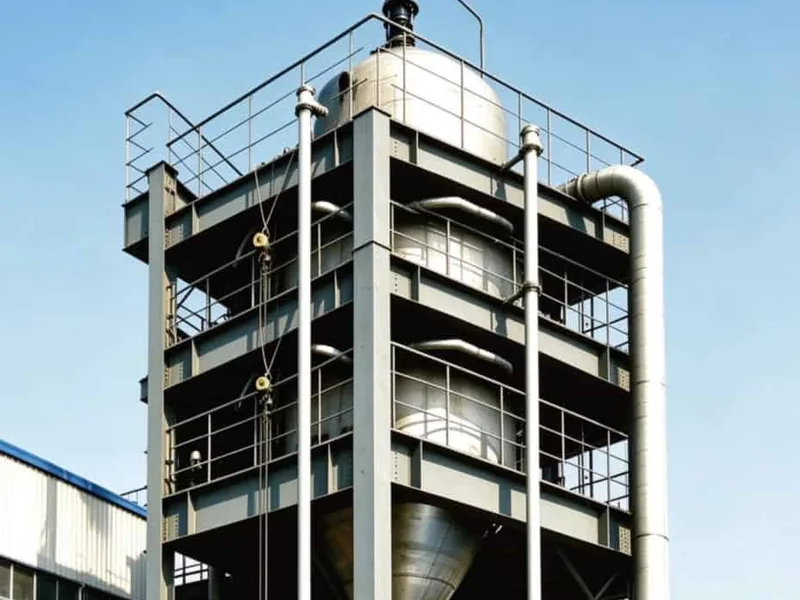
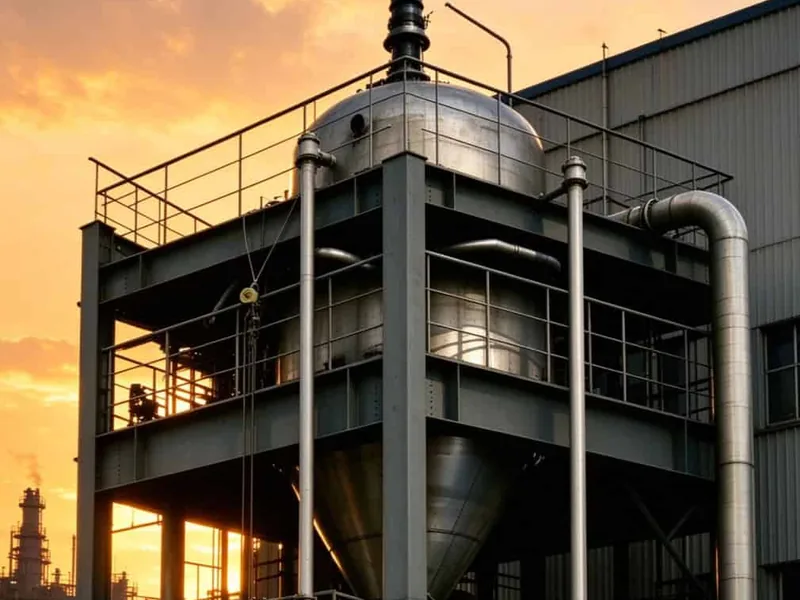
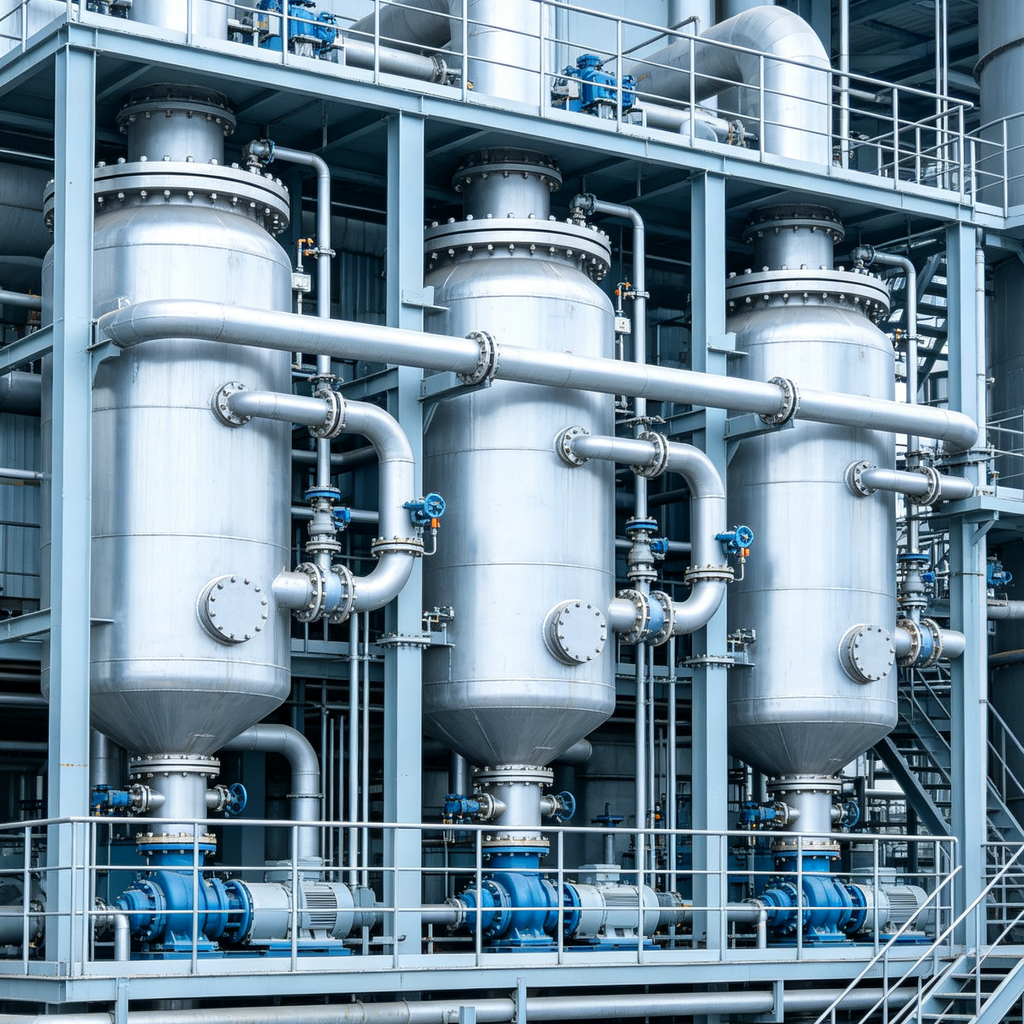
A waste heat evaporator concentrates a liquid using thermal energy recovered from another process stream rather than fresh steam as the primary heat source. Hot process water, warm condensate, or other available heat streams pass through the evaporator’s heating section, transferring heat to the feed liquid so that evaporation can take place. The unit combines heat recovery with concentration in one arranged system, aligning energy reuse with the plant’s processing duties.
Center Enamel designs waste heat evaporators around the available heat source, feed liquid, concentration target, and production rate. Heat transfer arrangement, evaporator body, separation sections, and material selection are defined from the energy and process balance, so the unit matches both the heat source and the concentration duty.
Recovering Thermal Energy
Recovering thermal energy means putting otherwise unused heat from a process stream to work in the evaporation system. The heat source flows through the heating surface of the evaporator, giving up part of its heat to the liquid being concentrated, and then returns to its original process path or moves to the next use. This reuse allows available heat to support evaporation without adding fresh steam for the full concentration duty.
The evaporator body and separator organize liquid and vapor movement, with vapor released and routed to condensation or collection while concentrate moves forward through the system. Temperature and flow conditions on both the heat source side and process side are monitored through arranged instrumentation, supporting steady operation as the liquid concentrates. This organized heat recovery keeps the system aligned with the plant’s energy balance.
Integration with Heat Source Processes
A waste heat evaporator must interface smoothly with the process supplying the heat stream. Piping connections, flow arrangements, and temperature conditions are coordinated between the evaporation system and the heat source equipment during design, so that heat can be extracted without disrupting the original process. The system can be arranged to follow the availability and temperature level of the recovered heat, with supplementary heating considered where the concentration duty requires it.
Liquid and vapor paths are planned to keep material movement organized between feed supply, evaporation, concentrate collection, and vapor handling. Maintenance access is built into the design, with internal components and heat transfer surfaces that can be inspected and cleaned during scheduled shutdowns.
Key Design Features
Center Enamel waste heat evaporators include the evaporator body, heating section, separator, feed and concentrate connections, and heat source piping arranged for the service. Heat transfer surfaces and internal parts are detailed for effective evaporation and separation, and materials are selected for compatibility with the feed liquid and heat stream conditions. Access openings and instrument connections support operation and servicing, and documentation records materials, fabrication, and inspection results.
Insulation around bodies and piping helps retain heat within the system and control surrounding surface temperatures. The layout leaves room for heat source connections, condensate and vapor piping, auxiliary equipment, and maintenance movement around the unit.
Typical Industrial Applications
Waste heat evaporators are used in chemical processing, manufacturing, food production, wastewater evaporation, and other plants where a warm process stream is available to support concentration. They suit operations aiming to reuse available thermal energy and reduce the use of fresh steam in concentration processes. Configurations are adapted to the heat source profile, feed material, concentration target, and plant capacity.
Center Enamel reviews each application from heat source conditions, liquid properties, throughput, and installation constraints before defining the evaporator configuration. The delivered unit reflects the actual energy recovery opportunity and concentration duty.
Engineering Review and Fabrication Practice
Each waste heat evaporator begins with a review of the available heat source, feed liquid, concentration target, and production rate, so that heat transfer arrangement, evaporator body, and separation sections match the recovery duty. The engineering team confirms heat source flow, temperature conditions, and material compatibility before fabrication starts, and material selections are recorded for reference during manufacture and ongoing service.
Fabrication follows established equipment-building practice, with the body, heating section, separator, and piping completed and inspected through the build. Material certificates, dimensional records, and inspection results are compiled with the unit, providing a clear technical package for installation and commissioning. The layout also considers cleaning access and inspection points, so the evaporator remains straightforward to service during scheduled shutdowns over its working life.
Why Choose Center Enamel
Center Enamel, part of Shijiazhuang Zhengzhong Technology Co., Ltd, manufactures evaporation and process equipment for customers worldwide. Engineering, fabrication, and inspection are coordinated to deliver systems matched to energy recovery and concentration objectives. The product range is presented at https://www.cecvessels.com/.
From the initial process review to final delivery, Center Enamel provides layout support, clear documentation, and quality-focused fabrication practices. Producers planning heat-reuse concentration systems can discuss their available heat sources and liquid requirements with the engineering team.