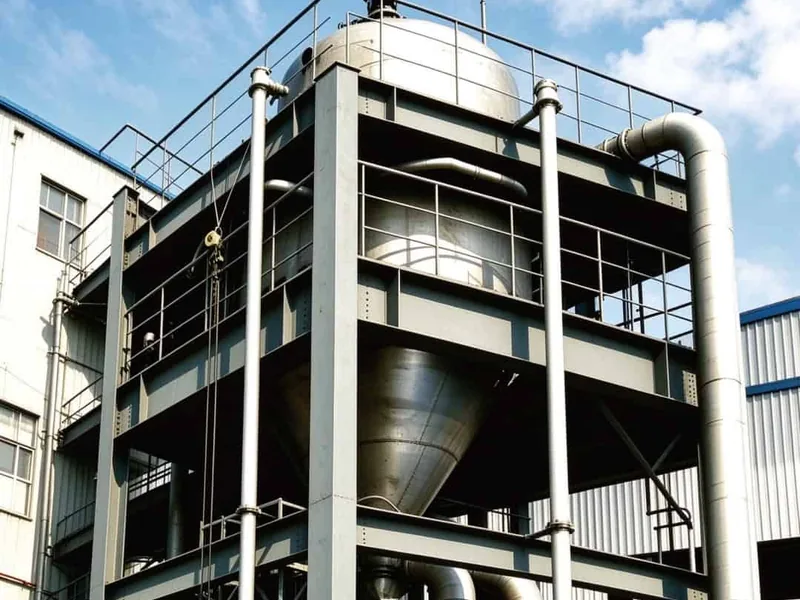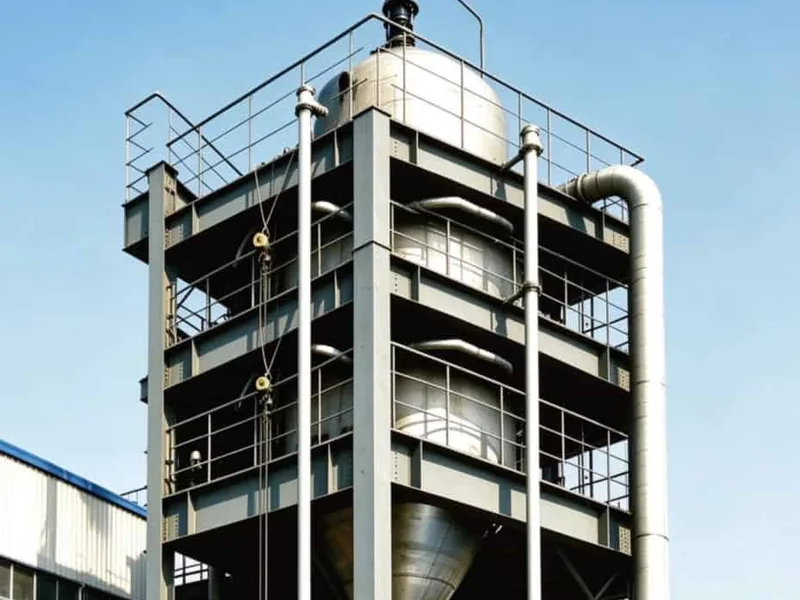
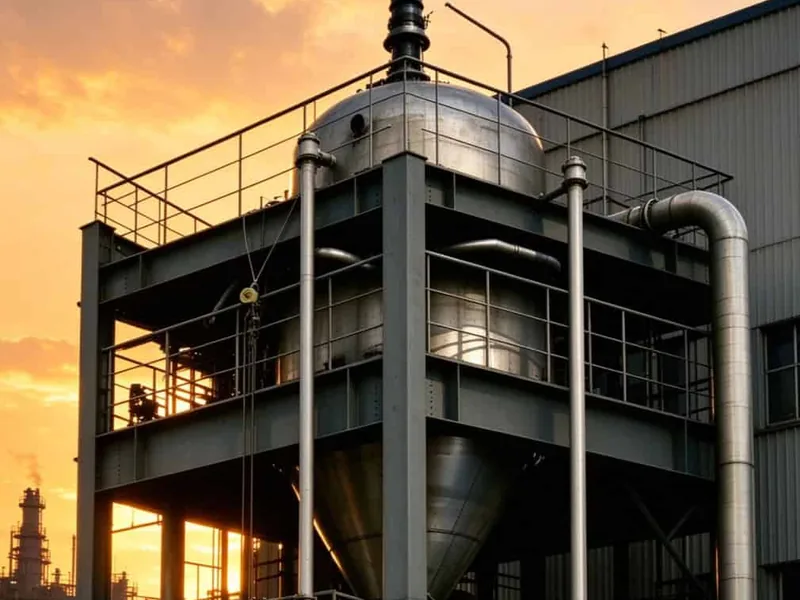
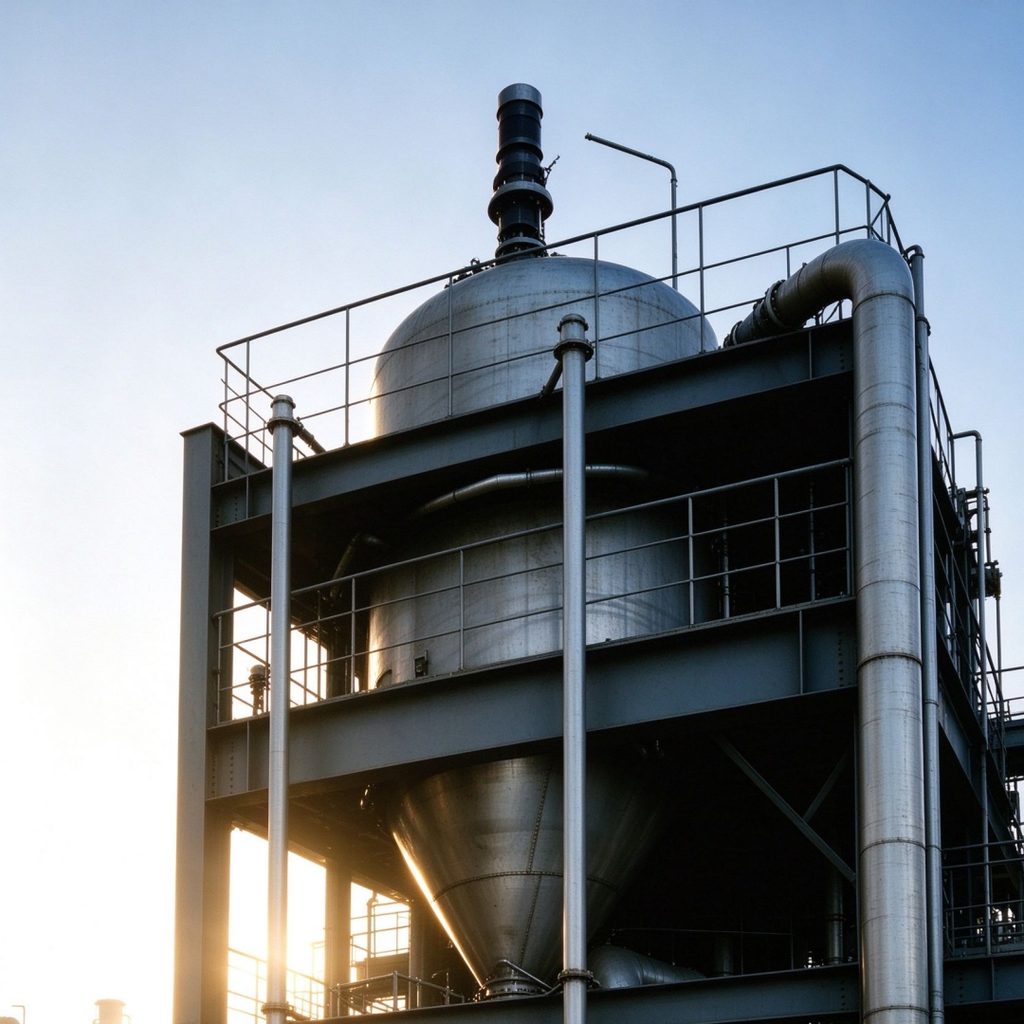
A Falling Film Evaporator is an efficient industrial system designed to concentrate liquids while minimizing exposure to elevated temperatures. Its short liquid residence time and effective heat transfer make it particularly suitable for processing heat-sensitive materials in food, pharmaceutical, chemical, and other industries.
What Is a Falling Film Evaporator?
A Falling Film Evaporator is a heat transfer system that uses gravity to distribute liquid as a thin film along the inner or outer surfaces of vertical heating tubes. As the liquid flows downward, heat supplied through the tube walls causes part of the liquid to evaporate.
The resulting vapor and concentrated liquid are separated in a dedicated vapor-liquid separation chamber. The concentrated product is then discharged or transferred to another processing stage.
Compared with evaporation systems that maintain liquids in larger pools, falling film technology creates a thin liquid layer with a relatively large heat transfer area. This arrangement supports rapid evaporation and helps reduce the time that products remain exposed to heat.
How Does a Falling Film Evaporator Work?
The operating process generally includes several continuous stages:
1. Liquid Distribution
The feed liquid enters the evaporator through an inlet system. A distribution device spreads the liquid evenly across the heating tubes to establish a consistent falling film.
2. Heat Transfer and Evaporation
Heating steam or another suitable heating medium transfers energy through the tube walls. As the liquid moves downward, its temperature increases and a portion of the solvent evaporates.
3. Vapor-Liquid Separation
The vapor and concentrated liquid flow into a separation chamber. The vapor is directed toward the vapor outlet, while the liquid product is collected separately.
4. Product Discharge
The concentrated liquid leaves the system for storage, further concentration, cooling, or subsequent processing. Depending on the product requirements, the evaporator can operate as a single-stage unit or as part of a multi-effect evaporation system.
This continuous process allows manufacturers to maintain stable feed and discharge conditions while achieving the required concentration.
Key Features of Falling Film Evaporation Technology
The design of a Falling Film Evaporator provides several advantages for industrial liquid concentration.
Short Residence Time
The liquid flows continuously through the heating section rather than remaining in a large heated volume. This reduces thermal exposure and makes the technology suitable for products whose quality can be affected by prolonged heating.
Efficient Heat Transfer
The thin liquid film provides a large contact area between the product and the heated surface. This supports effective heat transfer and rapid evaporation under appropriately selected operating conditions.
Suitable for Heat-Sensitive Products
Food ingredients, pharmaceutical solutions, and certain chemical materials may require carefully controlled processing temperatures. Falling film evaporation helps limit unnecessary thermal exposure.
Continuous Operation
The system can be integrated into continuous production lines, supporting consistent product concentration and coordinated material handling.
Flexible Process Integration
Falling film evaporators can be configured for different capacities and connected with preheating systems, condensers, separators, pumps, and automated control equipment.
Main Components of a Falling Film Evaporator
A complete Falling Film Evaporator System consists of several interconnected components. Each contributes to stable operation and effective concentration.
- Heating Calandria: Contains the heat transfer tubes through which the liquid flows as a falling film. Heat passes through the tube walls from the heating medium to the process liquid.
- Liquid Distribution System: Distributes incoming feed evenly to help maintain a uniform film across the heating surface.
- Vapor-Liquid Separator: Separates generated vapor from the concentrated liquid before the two streams enter their respective downstream processes.
- Condenser: Condenses vapor when required by the process configuration and helps manage vapor recovery.
- Circulation and Transfer Pumps: Support feed delivery, product discharge, and other liquid transfer operations.
- Control System: Monitors important operating parameters, such as temperature, flow rate, liquid level, and system pressure, to support consistent process control.
Component dimensions, materials, and configurations should be selected according to the liquid properties, processing capacity, and operating conditions.
Industrial Applications of Falling Film Evaporators
Falling Film Evaporators are used across industries that require efficient concentration while maintaining product quality.
Food and Beverage Processing
In food production, falling film systems are commonly used for concentrating fruit juices, dairy products, liquid sugar, extracts, and other food ingredients. Their short residence time helps preserve important product characteristics during evaporation.
Pharmaceutical Manufacturing
Pharmaceutical production may involve concentrating temperature-sensitive solutions and process liquids. A properly designed falling film evaporator supports controlled evaporation and can be integrated into sanitary processing systems.
Chemical Processing
Chemical plants use falling film evaporation to concentrate selected chemical solutions, recover solvents, and reduce liquid volume before further treatment or processing.
Biotechnology and Fermentation
Certain biotechnology processes require concentration of liquid products containing valuable components. Falling film technology can be considered when the feed characteristics and product requirements are compatible with this evaporation method.
Environmental Treatment
Industrial wastewater streams may require volume reduction before further treatment or resource recovery. Falling film evaporators can be incorporated into suitable treatment processes based on the wastewater composition and operating requirements.
How to Select the Right Falling Film Evaporator
Choosing an appropriate Falling Film Evaporator requires an understanding of the process conditions and product characteristics.
Feed Properties: Evaluate viscosity, solids content, boiling point, thermal sensitivity, and the possibility of scaling or crystallization. These factors influence the evaporator design and liquid distribution method.
Processing Capacity: Determine the required feed volume, evaporation rate, and final product concentration. These values help establish the necessary heat transfer area and equipment dimensions.
Material Selection: Stainless steel grades and other suitable materials should be selected according to the chemical composition of the process liquid, cleaning requirements, and applicable industry standards.
Energy Consumption: Consider heating medium availability, vapor utilization, and opportunities for multi-effect evaporation or mechanical vapor recompression where appropriate.
Automation Requirements: Temperature, flow, and liquid-level controls can help maintain stable operation and coordinate the evaporator with upstream and downstream equipment.
A detailed process evaluation helps ensure that the selected system meets production targets and integrates effectively with the existing facility.
Center Enamel: Customized Industrial Evaporation Solutions
Center Enamel provides industrial process equipment and customized engineering solutions for different production requirements. For projects involving a Falling Film Evaporator, equipment configuration should be determined by evaluating the process liquid, required concentration, production capacity, heating conditions, and plant layout.
A complete evaporation system may involve heating equipment, separation vessels, condensers, storage tanks, piping, pumps, and control systems. Coordinating these components helps establish a practical process arrangement and supports integration with existing production facilities.
As a Falling Film Evaporator Manufacturer and industrial equipment solution provider, a supplier should be able to consider equipment materials, structural design, connection requirements, and project-specific operating conditions. Center Enamel focuses on customized industrial equipment solutions to support process requirements across different industries.
Supporting Efficient Liquid Concentration
A Falling Film Evaporator offers an effective approach to concentrating heat-sensitive liquids through thin-film heat transfer and continuous evaporation. Its short residence time, flexible configuration, and compatibility with different industrial processes make it an important option for modern production facilities.
When selecting a China Falling Film Evaporator Manufacturer, businesses should evaluate engineering capabilities, material selection, process integration, and customization services. With appropriate equipment design and system coordination, Center Enamel can support industrial projects seeking reliable liquid concentration solutions.