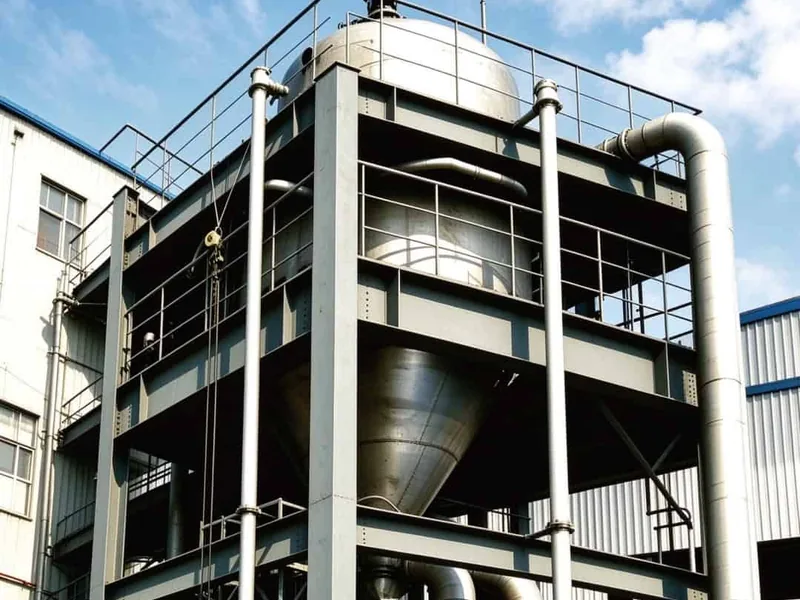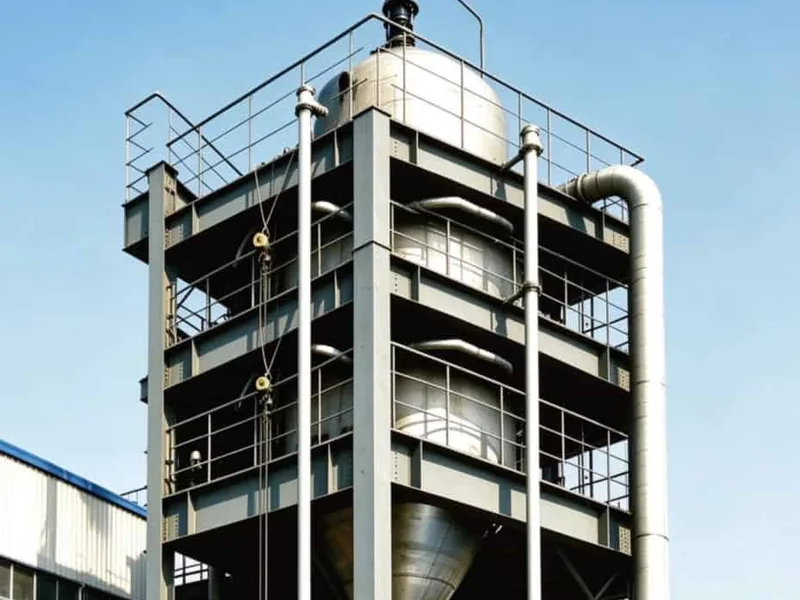
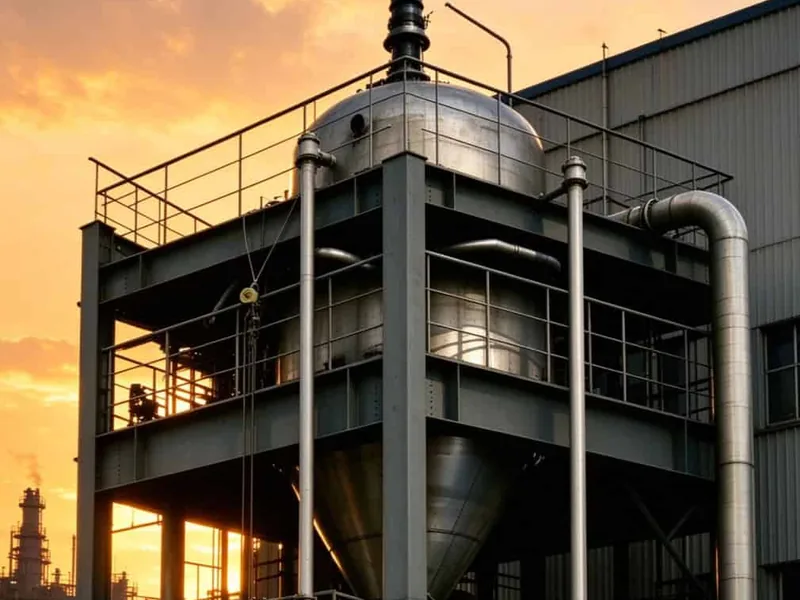
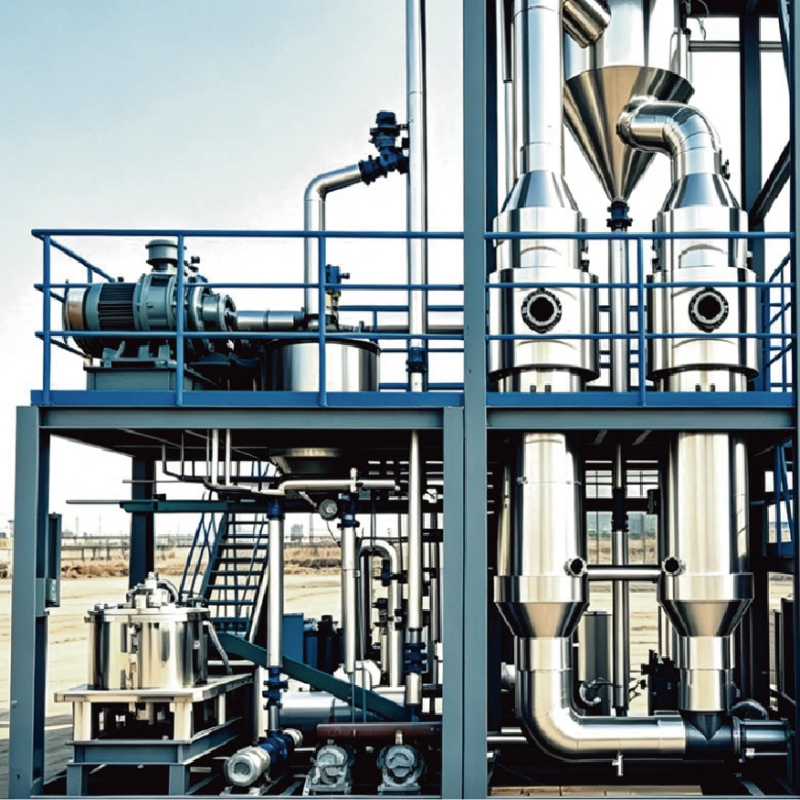
A Rising Film Evaporator is an industrial heat transfer system designed to concentrate liquid materials by evaporating part of their solvent content. It uses heated tubes to create rising vapor-liquid flow, supporting efficient evaporation and continuous processing. This equipment is widely used in chemical, pharmaceutical, food, beverage, and wastewater treatment industries.
What Is a Rising Film Evaporator?
A Rising Film Evaporator is a vertical evaporation system in which liquid material enters the lower section of a heating chamber and moves upward through heated tubes.
As the liquid absorbs heat, part of its solvent evaporates and forms vapor. The generated vapor helps move the remaining liquid upward along the inner tube walls, creating a thin liquid film.
This process provides a relatively large heat transfer area and supports rapid evaporation. The vapor and concentrated liquid are separated in a designated separation chamber before being transferred to the next processing stage.
Rising film evaporators are particularly suitable for liquid materials with relatively low viscosity and good flow characteristics.
How Does a Rising Film Evaporator Work?
The operating process of a Rising Film Evaporator involves several stages:
1. Liquid Feeding
The feed liquid enters the lower part of the evaporator through a feeding system. A distribution arrangement helps introduce the material into the heating tubes.
2. Heating and Vapor Formation
Steam or another heating medium supplies thermal energy through the tube walls. As the liquid temperature increases, part of the solvent evaporates.
3. Rising Film Formation
The generated vapor moves upward through the tubes and carries the remaining liquid along the inner surfaces. This creates a rising thin-film flow that supports heat transfer.
4. Vapor-Liquid Separation
The vapor-liquid mixture enters a separation chamber, where vapor is separated from the concentrated liquid.
5. Product Discharge
The concentrated liquid is discharged for further processing or storage, while the vapor can be directed to a condenser or other heat recovery equipment.
Main Components of a Rising Film Evaporator
A typical Rising Film Evaporator consists of several coordinated components.
- Heating Chamber: Contains vertical heat exchange tubes where evaporation takes place.
- Feed Distribution System: Distributes liquid material into the heating tubes.
- Steam Supply System: Provides the thermal energy required for evaporation.
- Vapor-Liquid Separator: Separates generated vapor from concentrated liquid.
- Condenser: Condenses vapor when required by the process configuration.
- Circulation and Discharge Pipelines: Transport feed materials, concentrated products, and process media.
- Control Instruments: Monitor temperature, flow rate, and other operating parameters.
The equipment configuration can be customized according to feed characteristics, evaporation capacity, and required product concentration.
Industrial Applications of Rising Film Evaporators
Food and Beverage Industry
In food processing, rising film evaporators are used for concentrating fruit juices, liquid ingredients, and other products with suitable flow characteristics. Their rapid evaporation process helps support continuous concentration operations.
Chemical Manufacturing
Chemical plants use Rising Film Evaporators to concentrate chemical solutions and recover solvents. The equipment can be integrated into chemical production lines requiring liquid volume reduction.
Pharmaceutical Industry
In pharmaceutical processing, rising film evaporation systems can be used for concentrating selected liquid preparations and process solutions. Equipment materials and cleaning arrangements are selected according to product requirements.
Wastewater Treatment
Industrial wastewater treatment facilities can use evaporation systems to reduce liquid volumes and concentrate dissolved substances. Rising film configurations may be considered when feed properties are suitable for this evaporation method.
Sugar and Starch Processing
Rising film evaporators can support the concentration of selected sugar solutions and starch-related liquid streams, helping prepare materials for subsequent production stages.
Rising Film Evaporator vs. Falling Film Evaporator
Both evaporation systems use thin-film heat transfer principles, but their liquid flow directions are different.
| Comparison | Rising Film Evaporator | Falling Film Evaporator |
| Liquid movement | Upward | Downward |
| Main driving force | Vapor generation and upward flow | Gravity |
| Heating structure | Vertical tubes | Vertical tubes |
| Feed characteristics | Generally suitable for low-viscosity liquids | Suitable for many low-viscosity liquids |
| Typical applications | Liquid concentration and solvent evaporation | Food, pharmaceutical, and chemical concentration |
The appropriate system depends on liquid viscosity, heat sensitivity, flow characteristics, evaporation capacity, and process requirements.
How to Select the Right Rising Film Evaporator
Selecting a suitable Rising Film Evaporator requires evaluating several technical factors.
1. Feed Material Characteristics
Consider viscosity, boiling point, solid content, and chemical composition. These properties influence evaporation performance and equipment material selection.
2. Evaporation Capacity
Determine the required feed rate, solvent evaporation rate, and final product concentration. The heating surface area should match the expected processing capacity.
3. Heating Medium
Evaluate the available steam supply, heating temperature, and thermal requirements to determine the appropriate heat exchange configuration.
4. Material Selection
Stainless steel, carbon steel, and other suitable materials can be selected according to the chemical properties of the feed and process environment.
5. System Integration
Consider connections with feed pumps, condensers, vapor separators, storage tanks, and downstream processing equipment.
Customized Rising Film Evaporator Solutions from Center Enamel
Shijiazhuang Zhengzhong Technology Co., Ltd. (Center Enamel) provides industrial vessel engineering and manufacturing solutions for different industrial applications.
As an experienced Rising Film Evaporator Manufacturer, Center Enamel can provide customized equipment configurations according to project specifications and processing requirements.
Customization considerations include:
- Equipment Capacity: Evaporation capacity and system dimensions.
- Material Selection: Stainless steel, carbon steel, and other suitable materials
- Heat Exchange Design: Heating surface configuration and thermal management arrangements.
- Separation Equipment: Vapor-liquid separation structures and associated connections.
- Process Connections: Customized feed, discharge, steam, and condensate connections.
- System Integration: Interfaces with pumps, condensers, pipelines, and auxiliary equipment.
Center Enamel operates a 150,000-square-meter manufacturing and R&D base, providing engineering and fabrication capabilities for industrial equipment projects.
As a China Rising Film Evaporator Manufacturer, Center Enamel combines manufacturing experience and customized engineering services to support chemical processing, food production, wastewater treatment, and other industrial applications.
Improving Industrial Evaporation and Concentration Efficiency
A properly designed Rising Film Evaporator supports continuous liquid concentration through upward film movement and efficient heat transfer. Its heating tubes, separation chamber, and auxiliary equipment work together to achieve the required evaporation performance.
Center Enamel is committed to providing customized industrial equipment solutions based on customer specifications. Through engineering design, manufacturing capabilities, and project support, Center Enamel helps customers develop suitable evaporation systems for modern industrial concentration processes.