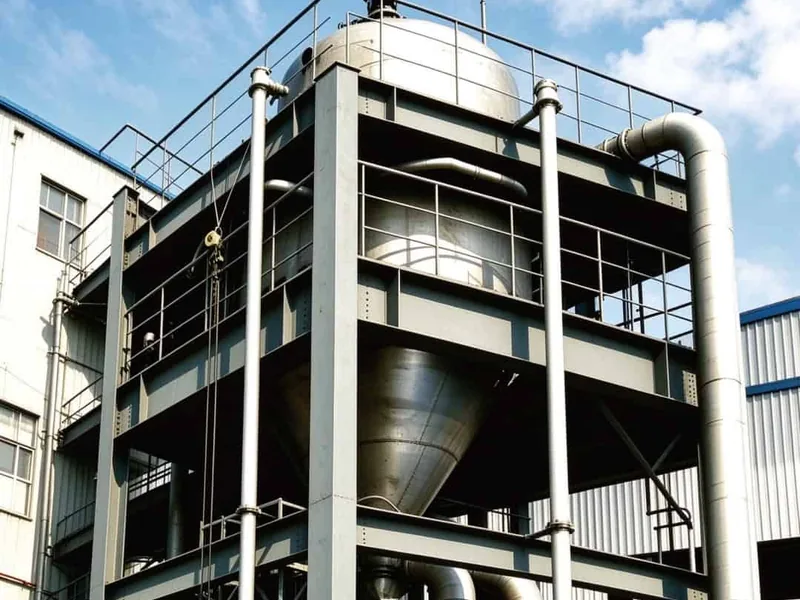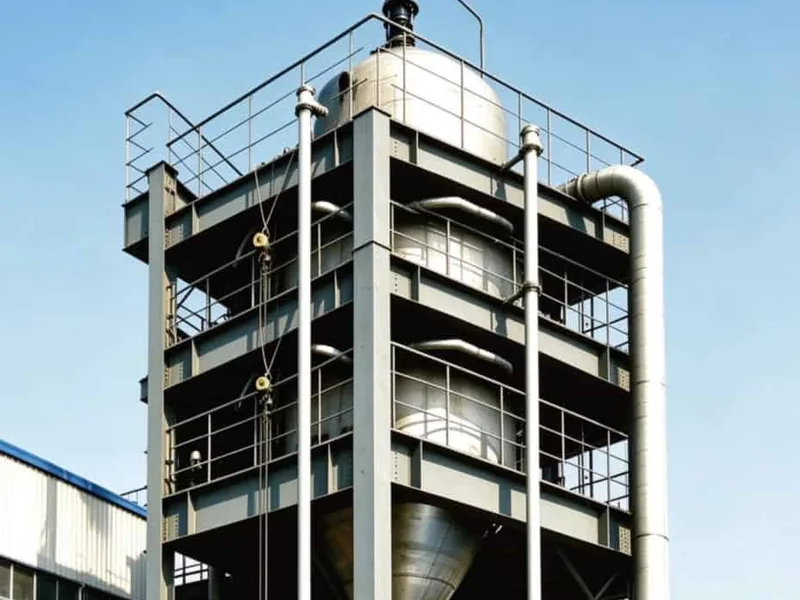
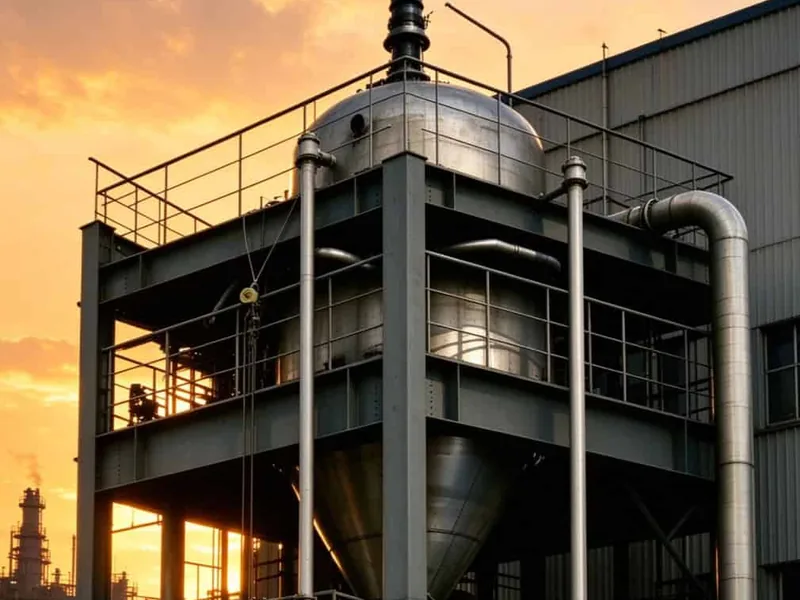
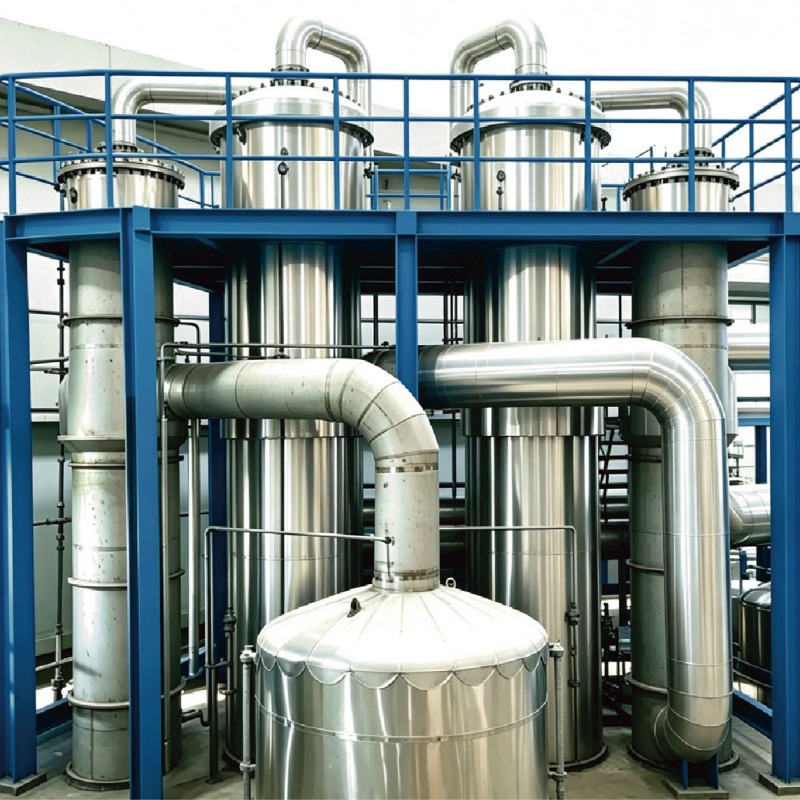
A Sugar Industry Evaporator is essential equipment in sugar manufacturing, designed to remove excess water from sugar juice and increase its concentration before crystallization. Through controlled heating and evaporation, it helps sugar factories improve processing efficiency, maintain stable syrup quality, and optimize energy utilization.
What Is a Sugar Industry Evaporator?
A Sugar Industry Evaporator is an industrial evaporation system used to concentrate clarified sugar juice into syrup by removing part of its water content.
During sugar production, extracted juice from sugarcane or sugar beet contains water, sucrose, and other dissolved substances. Before crystallization, the juice needs to be concentrated to achieve the required soluble solid content.
Industrial evaporators perform this operation through heat exchange and vapor separation. Depending on production capacity and process requirements, sugar factories may use single-effect or multi-effect evaporation systems.
A typical evaporation system consists of heating chambers, vapor separators, circulation pipelines, steam connections, condensate outlets, and process control instruments.
How Does a Sugar Industry Evaporator Work?
The evaporation process generally involves several stages.
1. Sugar Juice Feeding
Clarified sugar juice enters the evaporator through a feeding system. Pretreatment removes suspended impurities according to the requirements of the sugar production process.
2. Preheating
The juice passes through heat exchangers to increase its temperature before entering the evaporation equipment. This helps improve thermal utilization.
3. Water Evaporation
Steam supplies heat through the evaporator’s heat exchange surfaces. Water in the sugar juice evaporates, increasing the concentration of dissolved sugar.
4. Vapor Separation
The generated vapor is separated from the concentrated liquid through a vapor separation chamber. In multi-effect systems, vapor can be reused as a heating medium in subsequent evaporation stages.
5. Syrup Discharge
The concentrated syrup is transferred to the next production stage, usually crystallization, where sugar crystals are formed.
Common Types of Sugar Industry Evaporators
Different evaporator configurations are available for sugar processing plants.
Falling Film Evaporator
A Falling Film Evaporator distributes sugar juice across the internal surfaces of vertical heating tubes. The liquid flows downward as a thin film while water evaporates. It supports rapid heat transfer and continuous concentration.
Rising Film Evaporator
A rising film evaporator uses vapor generation to move liquid upward through heated tubes. It can be applied to sugar juice concentration when feed characteristics and operating conditions are suitable.
Multi-Effect Evaporator
A Multi-Effect Evaporator connects multiple evaporation stages. Secondary vapor from one effect provides heating energy for another effect, improving overall steam utilization.
Forced Circulation Evaporator
A forced circulation evaporator uses pumps to move liquid through heating equipment. It is suitable for applications requiring controlled circulation and can be considered for specific concentrated liquid streams.
Key Factors in Sugar Juice Evaporation
The performance of a Sugar Industry Evaporator depends on several operating and design factors.
Temperature Control: Appropriate temperature management supports stable evaporation and helps maintain the required syrup characteristics.
Heat Transfer Efficiency: Heating surface area, circulation conditions, and heat exchange design influence evaporation performance.
Juice Composition: Sugar concentration, impurities, and liquid properties affect the selection of evaporation equipment.
Final Syrup Concentration: The target soluble solid content determines the required evaporation capacity and operating parameters.
Energy Utilization: Vapor recovery and multi-effect configurations can improve the use of thermal energy throughout the process.
Applications in Sugar Processing Plants
Sugarcane Processing
Sugar factories use evaporators to concentrate extracted and clarified sugarcane juice before crystallization. The equipment helps prepare syrup with suitable concentration characteristics.
Sugar Beet Processing
In sugar beet production, evaporators concentrate extracted beet juice after clarification and purification. The resulting syrup is transferred to downstream crystallization equipment.
Syrup Manufacturing
Industrial syrup producers use evaporation systems to adjust sugar concentration for different food and beverage applications.
Molasses and Byproduct Processing
Selected sugar processing operations use evaporation equipment to concentrate liquid streams and prepare materials for further utilization.
How to Select the Right Sugar Industry Evaporator
Choosing an appropriate Sugar Industry Evaporator requires evaluating the following factors:
- Processing Capacity: Determine the required juice feeding rate and evaporation volume.
- Juice Characteristics: Consider sugar concentration, impurities, viscosity, and temperature.
- Evaporation Technology: Select falling film, rising film, or multi-effect configurations according to process requirements.
- Heating Requirements: Evaluate available steam conditions and required heat transfer capacity.
- Energy Consumption: Consider vapor recovery and thermal energy utilization.
- Material Selection: Choose suitable construction materials according to juice characteristics and operating conditions.
- System Integration: Evaluate connections with juice clarification, preheating, crystallization, and condensate recovery equipment.
Customized Industrial Equipment Solutions from Center Enamel
Shijiazhuang Zhengzhong Technology Co., Ltd. (Center Enamel) provides industrial vessel engineering and manufacturing solutions for various industrial applications.
As an experienced Sugar Industry Evaporator Manufacturer, Center Enamel can develop customized equipment configurations according to customer specifications and project requirements.
Customization considerations include:
- Equipment Capacity: Customized processing capacity and structural dimensions.
- Material Selection: Stainless steel, carbon steel, and other suitable construction materials.
- Heat Exchange Design: Heating surfaces and thermal management arrangements
- Process Connections: Customized feed, discharge, steam, and condensate connections.
- Auxiliary Equipment: Interfaces with pumps, pipelines, condensers, and storage tanks.
- System Integration: Equipment arrangements designed to connect with existing production facilities.
Center Enamel operates a 150,000-square-meter manufacturing and R&D base, providing engineering and fabrication capabilities for industrial vessel projects.
As a China Sugar Industry Evaporator Manufacturer, Center Enamel combines manufacturing experience and customized engineering services to support sugar processing, food production, and other industrial applications.
Improving Evaporation Performance in Sugar Manufacturing
A properly designed Sugar Industry Evaporator helps sugar processing plants concentrate juice efficiently before crystallization. Evaporation technology, heat transfer design, vapor recovery, and process control all contribute to stable syrup production.
Center Enamel is committed to providing customized industrial equipment solutions based on individual project requirements. Through engineering design, manufacturing capabilities, and project support, Center Enamel helps customers develop suitable equipment configurations for modern sugar processing facilities.