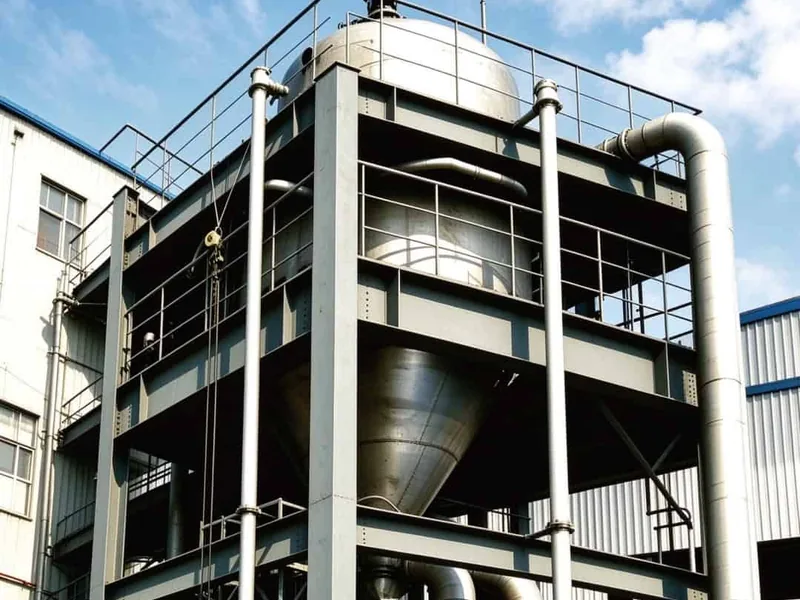
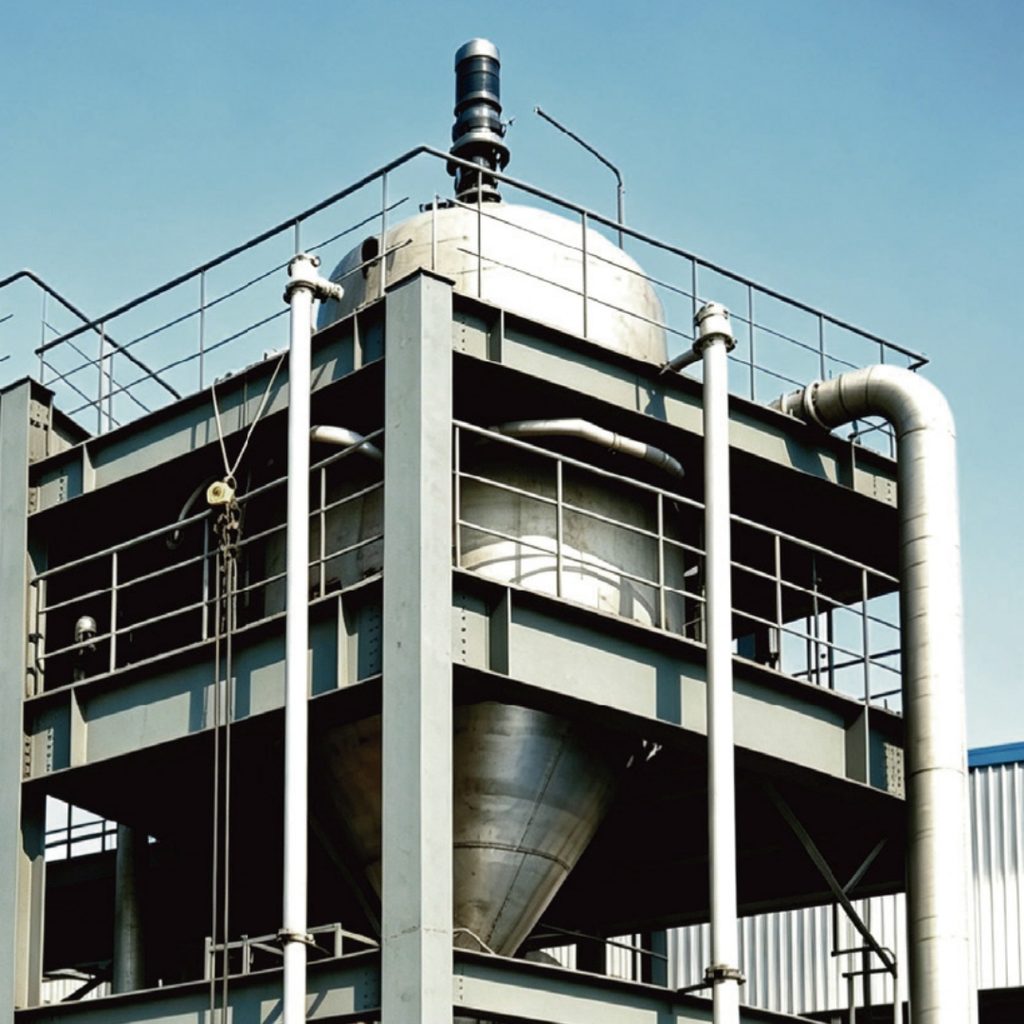
A Forced Circulation Evaporator is designed for concentrating liquids with high solid content, elevated viscosity, or a tendency to form deposits during evaporation. By using a circulation pump to move liquid continuously through the heating system, it maintains consistent flow and supports stable concentration in demanding industrial processes.
What Is a Forced Circulation Evaporator?
A Forced Circulation Evaporator is an industrial evaporation system that uses a mechanical pump to circulate process liquid through a heat exchanger and a vapor-liquid separator. Unlike natural circulation systems, which rely mainly on density differences to move liquid, forced circulation equipment provides controlled liquid movement through the heating circuit.
The feed liquid enters the system and mixes with the circulating liquid. A pump then transfers the mixture through the heat exchanger, where it absorbs thermal energy. The heated liquid moves into a separator, where part of the solvent evaporates and separates from the concentrated liquid.
The remaining liquid returns to the circulation loop, while a controlled portion is discharged as concentrated product. This arrangement is particularly useful when processing materials that require continuous movement to maintain consistent heat transfer.
How Does a Forced Circulation Evaporator Work?
The evaporation process typically involves four main stages.
1. Feed Introduction and Mixing
The incoming liquid enters the circulation system and combines with the existing process liquid. Feed flow is adjusted according to the required production capacity and final concentration.
2. Forced Liquid Circulation
A circulation pump moves the liquid through the heating exchanger at a selected flow rate. Continuous movement helps maintain a stable liquid flow and reduces the formation of stagnant areas within the heating circuit.
3. Heating and Vapor Generation
The heating medium transfers energy through the exchanger surfaces. The liquid temperature increases as it passes through the heating section. When the heated liquid enters the separator, part of the solvent flashes into vapor due to the change in operating conditions.
4. Vapor Separation and Product Discharge
The separator separates vapor from the concentrated liquid. Vapor is directed to a condenser or another downstream unit, while the concentrated liquid returns to the circulation loop or leaves the system as finished product.
By controlling feed flow, circulation rate, heating conditions, and discharge volume, operators can regulate the final concentration.
Why Use Forced Circulation for High-Solids and Viscous Solutions?
High-solids and viscous liquids often require evaporation equipment that can maintain consistent flow and heat transfer. Forced circulation technology offers several useful characteristics.
Continuous Liquid Movement
The circulation pump maintains liquid movement throughout the heating circuit. This is valuable for solutions with higher viscosity or suspended solids that may not circulate effectively through natural flow alone.
Adaptability to High Concentrations
Forced circulation systems can be configured for liquids that become more concentrated during evaporation. Equipment design and operating conditions can be adjusted to accommodate changes in viscosity and solids content.
Controlled Heat Transfer
The circulation rate and heating conditions can be coordinated to support consistent heat transfer. This helps maintain predictable evaporation performance across different production stages.
Flexible Process Configuration
Forced circulation evaporators can be designed as single-effect or multi-effect systems. They may also be integrated with condensers, storage tanks, crystallization equipment, and other process units.
Main Components of a Forced Circulation Evaporator
A complete Forced Circulation Evaporator System includes several major components that work together to support continuous concentration.
- Circulation Pump: Moves process liquid through the heating circuit and maintains the required flow rate.
- Heat Exchanger: Transfers thermal energy from the heating medium to the process liquid. Its heat transfer area and material selection depend on process requirements.
- Vapor-Liquid Separator: Separates generated vapor from the concentrated liquid after the heating stage.
- Condenser: Receives and condenses vapor when vapor recovery or condensate collection is required.
- Feed and Discharge System: Regulates incoming material and removes concentrated product at the required rate.
- Piping and Valves: Connect the equipment and control the movement of liquid, vapor, and heating media.
- Control System: Monitors temperature, flow rate, liquid level, and other operating parameters to support stable process operation.
The arrangement and specifications of these components depend on the characteristics of the feed material and the required evaporation capacity.
Industrial Applications of Forced Circulation Evaporators
Forced Circulation Evaporators are used in industries where liquid concentration involves high solids, increased viscosity, or materials that require continuous circulation.
Chemical Processing
Chemical manufacturers use forced circulation systems to concentrate inorganic salts, chemical solutions, and selected process liquids. The equipment can be configured according to material compatibility and the desired final concentration.
Industrial Wastewater Treatment
Certain industrial wastewater streams contain dissolved salts, suspended solids, and other concentrated substances. Forced circulation evaporation can reduce wastewater volume and support subsequent treatment or resource recovery.
Salt and Mineral Processing
Salt production and mineral processing often involve concentrating solutions before crystallization. Forced circulation evaporators can be integrated with crystallizers to create a coordinated evaporation and solid-liquid separation process.
Food Processing
Some food ingredients and liquid products become increasingly viscous as water is removed. Forced circulation systems may be suitable when their material properties and processing requirements match the equipment design.
Pharmaceutical and Fine Chemical Production
Selected pharmaceutical intermediates and fine chemical solutions require controlled concentration. Equipment materials, cleaning arrangements, and operating parameters should be selected according to the relevant production requirements.
How to Select the Right Forced Circulation Evaporator
Choosing a suitable Forced Circulation Evaporator requires a detailed evaluation of the feed material and production objectives.
Feed Composition: Determine the liquid’s viscosity, solids content, chemical composition, boiling characteristics, and tendency to form deposits.
Evaporation Capacity: Establish the required feed rate, water removal rate, and final product concentration. These parameters determine the heating area and overall equipment capacity.
Material Selection: Select suitable construction materials according to the chemical properties of the process liquid, operating temperature, and cleaning requirements. Stainless steel is commonly considered for many industrial applications.
Circulation Requirements: Pump capacity and circulation flow should match the liquid characteristics and heat exchanger design.
Energy Efficiency: Evaluate heating medium availability, vapor recovery opportunities, and the potential use of multi-effect evaporation or mechanical vapor recompression.
System Integration: Consider the connection between the evaporator, feed tanks, condensers, crystallizers, storage vessels, and existing plant utilities.
Center Enamel’s Customized Industrial Equipment Solutions
Center Enamel provides industrial equipment and customized engineering solutions for process applications across different industries. For projects involving a Forced Circulation Evaporator, the overall system configuration should be based on feed characteristics, evaporation capacity, material requirements, and plant operating conditions.
A complete evaporation installation may include heat exchangers, circulation equipment, vapor-liquid separators, condensers, storage tanks, and associated piping systems. Proper coordination of these components supports efficient process integration and consistent production.
When evaluating a Forced Circulation Evaporator Manufacturer, buyers should consider engineering experience, equipment material selection, customization capabilities, and project coordination. Center Enamel can support industrial projects through equipment solutions developed around specific process and installation requirements.
Improving Industrial Concentration Performance
A Forced Circulation Evaporator provides a practical solution for processing high-solids and viscous liquids that require continuous circulation and controlled heat transfer. Its flexible configuration makes it suitable for chemical processing, wastewater treatment, mineral recovery, and other industrial applications.
Working with a qualified China Forced Circulation Evaporator Manufacturer helps businesses evaluate equipment specifications, system integration, and customized process requirements. With appropriate engineering and equipment coordination, Center Enamel supports industrial facilities in developing effective liquid concentration systems.