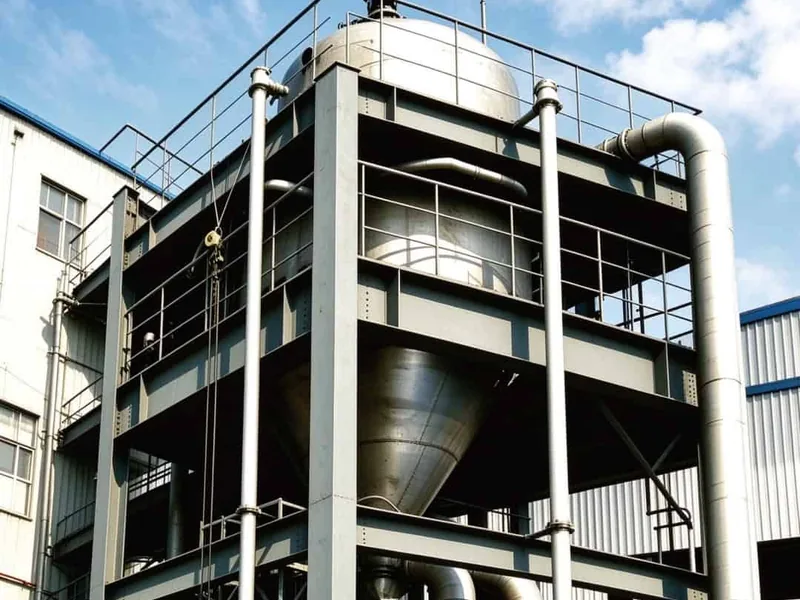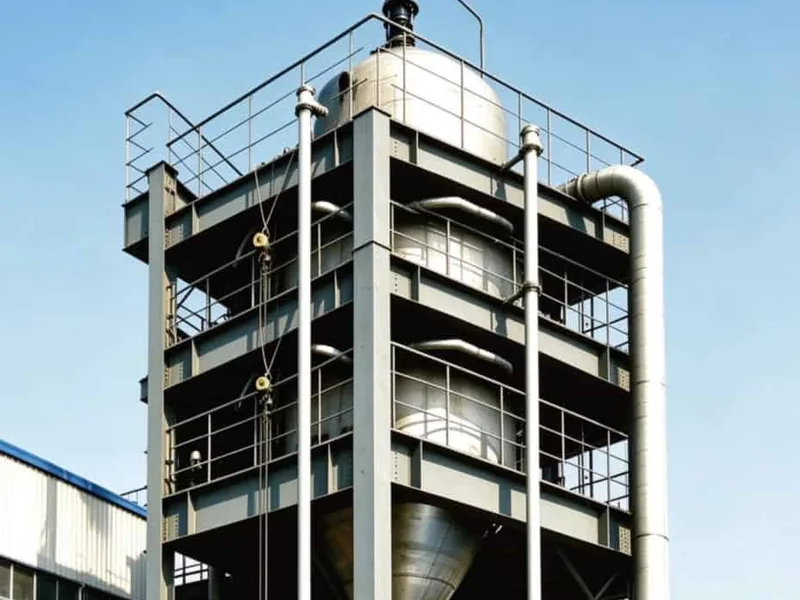
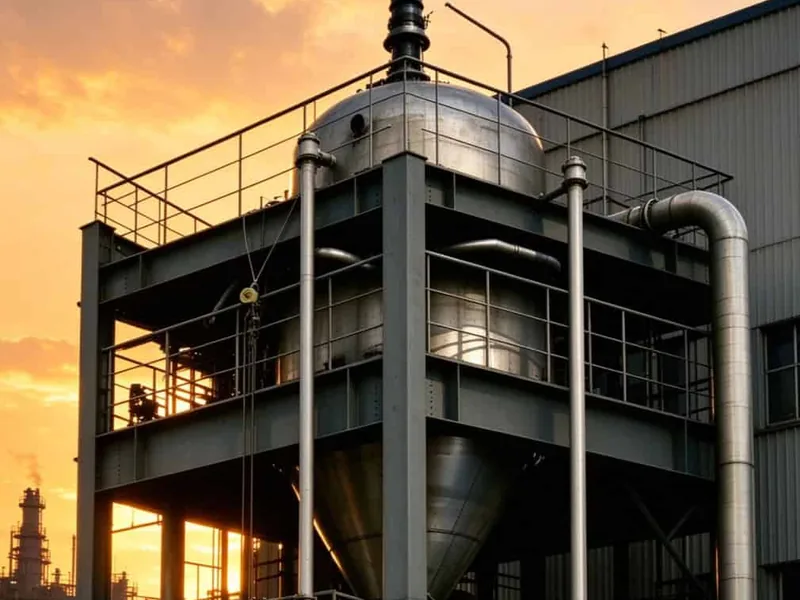
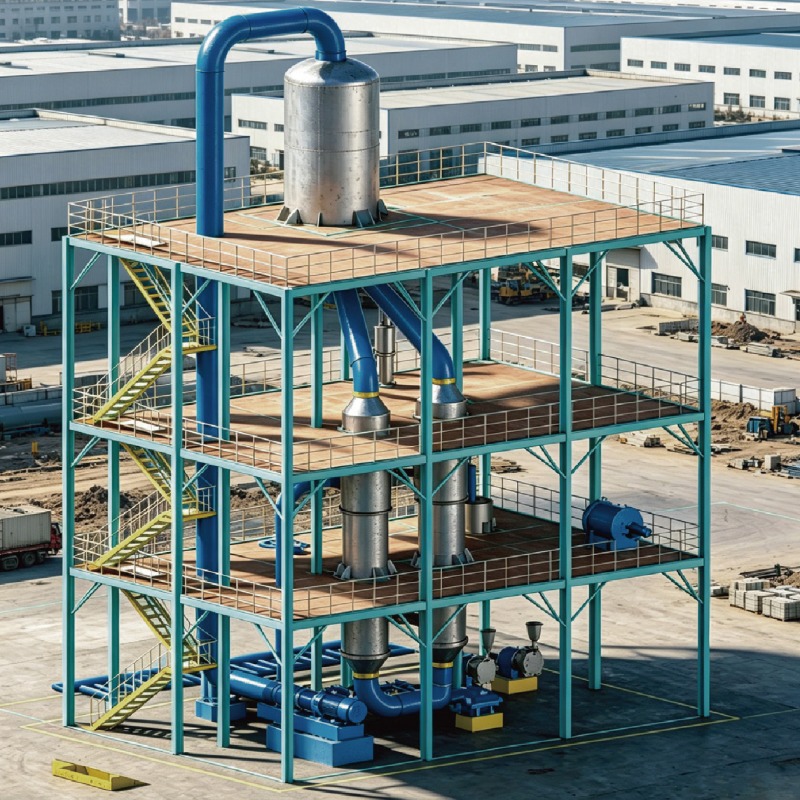
Concentration should remove water, not character. A food processing evaporator from Center Enamel is designed to raise solids while preserving the flavour, colour and texture that make a product recognizable, and to do it under hygiene conditions that suit daily food production. The duty is defined by the product, the target solids and the way the plant actually runs through the year.
Concentration Duties in Food Processing
Evaporation sits at the centre of many food lines: tomato paste and fruit purees, juices and concentrates, sugar and glucose syrups, dairy streams, soy sauce and stocks. Each duty has its own sensitivity. Fruit products respond to heat with colour change, dairy proteins respond to holding time, and aromatic products lose volatiles if the vapour path is poorly designed. Center Enamel begins from the product specification – final solids, allowable temperature, aroma retention – and sets the evaporator type, residence time and vapour handling accordingly. That product-first approach is why the food processing evaporator suits a range of lines rather than a single narrow duty. Where a line runs several fruits, the evaporator is specified for the most heat-sensitive product and the others run below their limits.
Falling-Film and Forced-Circulation Design
The evaporator body distributes a thin film of product over the heat surface so evaporation happens at low hold-up. Falling-film units give short residence time and high heat-transfer efficiency, ideal for heat-sensitive liquids; forced-circulation units handle viscous and solids-bearing products where a film would dry out; plate and scraped-surface designs serve very high viscosity or sticky duties. Distributors at the top of each pass ensure the film covers the tubes evenly, and the separator at the outlet keeps entrained product out of the vapour line. Center Enamel configures the number of passes and the surface area from the evaporation rate, so the food processing evaporator reaches the target solids in a single controlled pass. Distribution plates are designed for the lowest operating rate, because an uneven film at part load is where quality begins to drift.
Preserving Flavour, Colour and Nutrition
Quality is protected by three levers: temperature, time and vapour treatment. Operating under vacuum lowers the boiling point, so the product concentrates at a temperature that does not caramelise sugars or dull colours. Short residence time limits the heat history, and staged concentration lets the product reach high solids without a long final hold. Aroma recovery condensers strip volatile flavour compounds from the vapour and return them to the concentrate, which restores the top notes that simple evaporation would remove. Together these measures let the food processing evaporator deliver a concentrate that tastes like the raw material, not like the process. Aroma recovery is verified by comparing the concentrate with the fresh juice, so the benefit is confirmed rather than assumed.
Hygienic Construction and Cleaning
Food contact surfaces are stainless steel, finished to a controlled roughness, with welds ground and polished in product zones. The evaporator drains completely, and any dead leg is avoided by design rather than by extra flushing. Cleaning-in-place coverage includes the separator, condenser and concentrate line, with spray devices positioned for full wetting and a return path to the caustic tank. Sanitation cycles run from a fixed recipe, recording time, temperature and conductivity so each cleaning can be verified. Seals and gaskets meet food contact requirements, and inspection openings give access without cutting piping. Drain points are placed at every low point of the product path, including the separator and the concentrate line.
Automation and Product Changeover
Recipes store the set points a product needs: feed rate, vacuum, steam or hot-water temperature, concentrate density and discharge condition. The controller holds those values and adjusts the feed as viscosity rises toward the target, using density or refractometric measurement as the release criterion. Changeover between products is a matter of selecting a recipe and running the cleaning sequence, so the same food processing evaporator handles several lines across a week. Trend data supports quality release and shows where performance has drifted between maintenance intervals. Operator screens show the current step in sequence, which reduces the chance of a wrong action during a changeover. Alarm limits are set from the tested batch, so a drift in density or vacuum is noticed while there is still time to correct it.
Capacity Planning for Seasonal Production
Food plants often run campaigns rather than a flat year. Capacity is set from the peak week, then checked against the annual volume and the cleaning time between products. An evaporator sized only for average demand either bottlenecks the harvest or runs far below design for months. A product data sheet records the tested solids, viscosity and temperature profile, giving the plant a reference for future batches and new products.
Turndown matters as much as maximum output. A unit that holds a stable film and accurate density at half rate lets the plant match daily intake without storing concentrate. Center Enamel reviews the annual profile with the customer and sizes the food processing evaporator to the realistic operating pattern.
Partnering with Center Enamel
As a China Food Processing Evaporator Manufacturer, Center Enamel designs evaporators, reactors and storage tanks with food-grade fabrication standards. Process testing, surface documentation and operator training are part of the scope, and equipment can be supplied as a skid for fast installation.