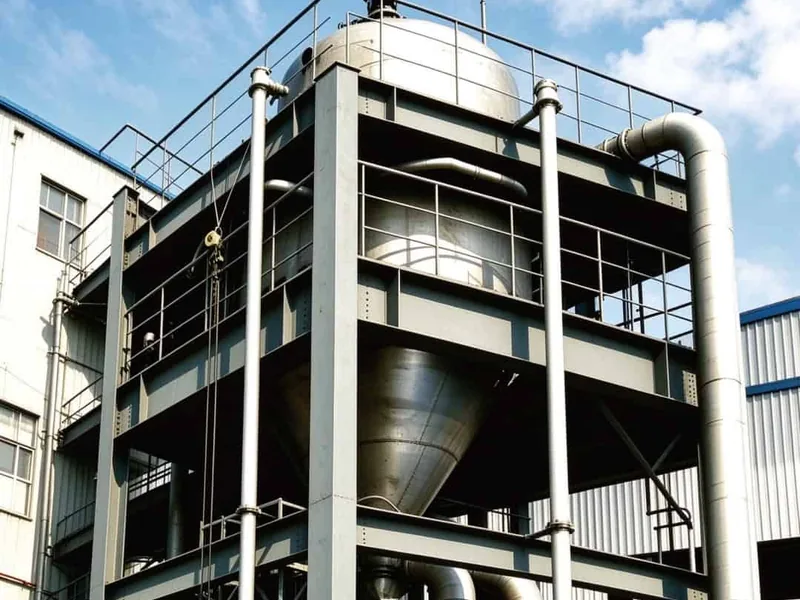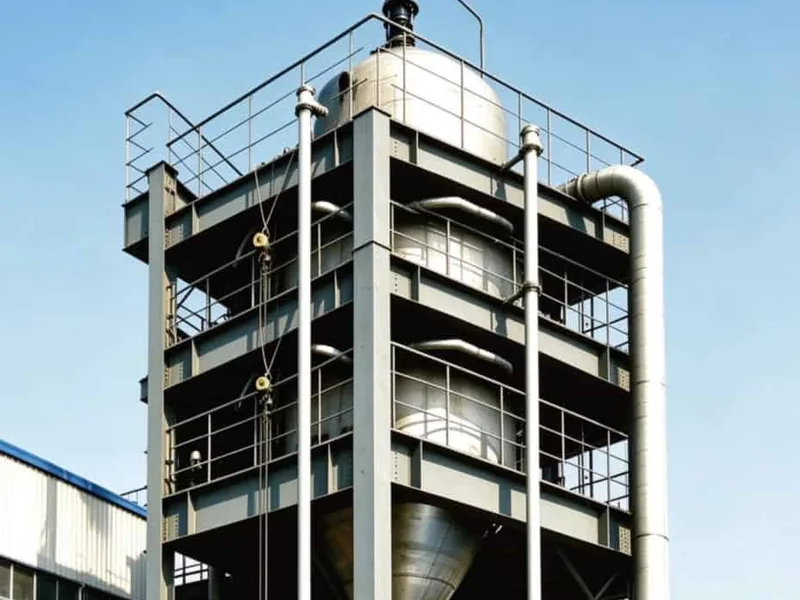
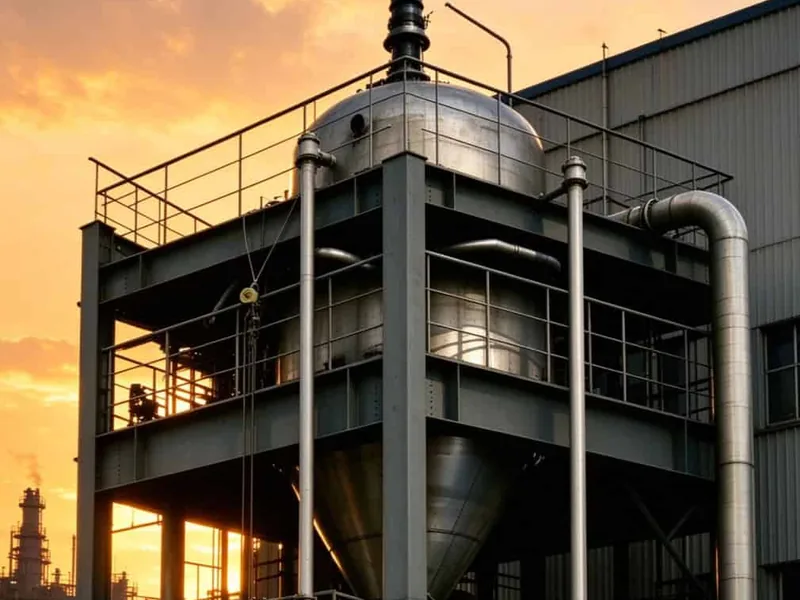
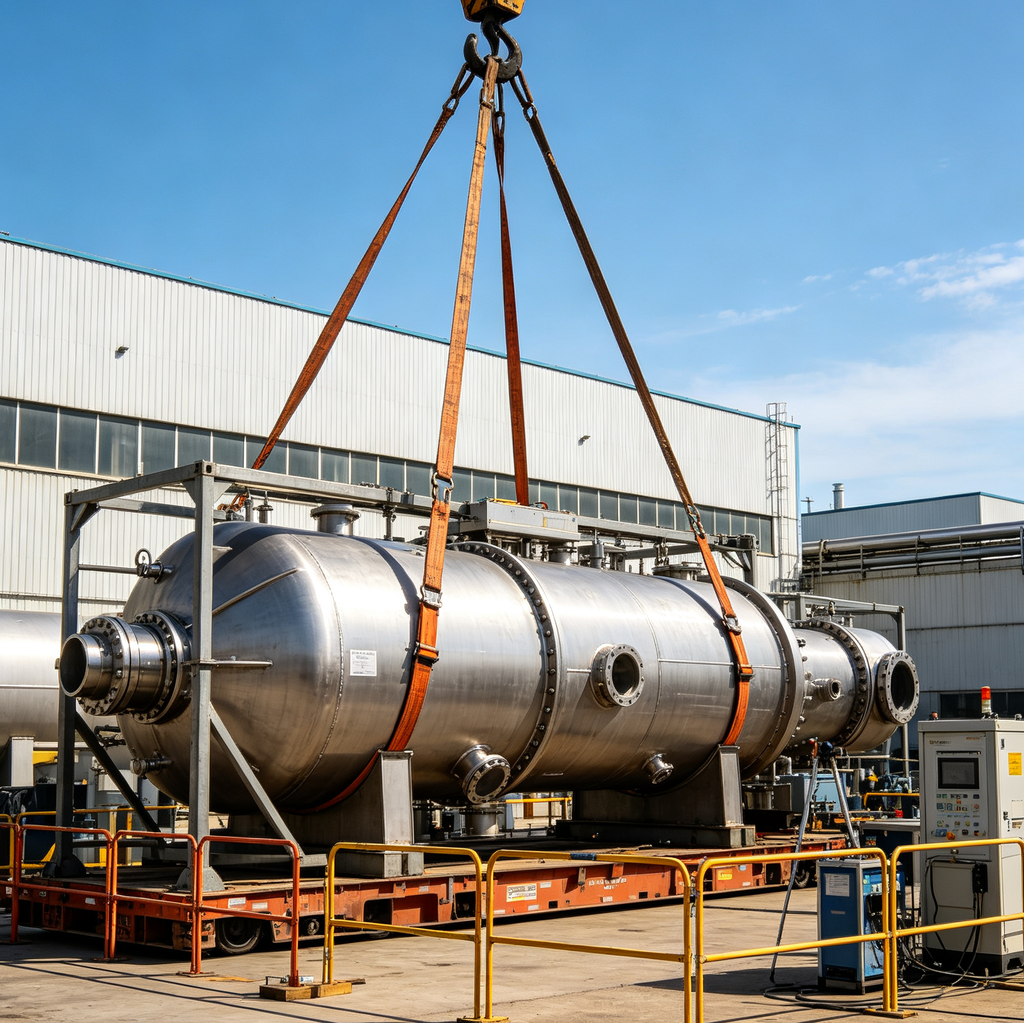
In pharmaceutical processing, concentration is a validated step, not a rough adjustment. A pharmaceutical evaporator from Center Enamel is built to reach an exact endpoint, keep the product inside its thermal limits and provide the documentation that a regulated plant expects. The duty is defined by the product, its thermal limit and the endpoint tolerance the process can accept.
GMP Design Requirements
Design begins with the product contact surface and the cleanability around it. Stainless steel with a defined finish, radiused corners, slope to drain and no dead legs form the basis of the design, and every weld in the product path is documented. The evaporator is arranged so that cleaning solutions reach all surfaces and rinse water leaves completely. Instrumentation is selected with sanitary connections, and the sample valve is placed where a representative sample can be taken without interrupting the run. These details are agreed in the design review, so the pharmaceutical evaporator meets the plant’s validation protocol rather than being adapted afterwards. Design reviews involve the quality unit, so cleanability and documentation expectations are settled before the drawings are frozen.
Low-Temperature Concentration
Many active ingredients lose potency or change form when held at high temperature. Vacuum operation lowers the boiling point, so water or solvent is removed at a temperature the molecule tolerates. Short residence time in a falling-film or wiped-film body further limits heat exposure, and staged concentration avoids a long final hold at maximum solids. Temperature is measured in the product rather than only in the jacket, so the control loop responds to what the product experiences. This thermal care is central to a pharmaceutical evaporator used for heat-sensitive intermediates and biological streams. Vacuum is set with margin below the product limit, so a small fluctuation does not raise the boiling point above it. Where several products share the unit, the vacuum set point is stored per product, and the correct value is loaded with the recipe.
Materials and Surface Finish
Material selection covers product contact, non-contact wetted parts and the outer surface. Stainless steel grades are chosen for the chemistry, with higher alloys where chlorides, acids or specific solvents require them. Surface roughness is specified and measured, welds are ground in product zones, and passivation follows fabrication. Elastomers are selected for solvent compatibility and for the cleaning temperatures used. A material and surface dossier is compiled for each pharmaceutical evaporator, giving the quality unit the traceability it needs. Surface replicas are taken at defined locations, giving a measurable record of finish rather than a visual impression.
Cleaning, Sterilisation and Documentation
Cleaning is validated as a process, not assumed as a habit. Spray coverage, flow rate, temperature and time are set for each cycle, and conductivity, pH or total organic carbon readings confirm the rinse endpoint. Where sterile operation is required, the evaporator is designed for steam sterilisation with condensate drainage at low points and air removal from high points. Cycle records are stored against the batch, and maintenance activities are logged against the equipment. The documentation package – drawings, certificates, calibration records, cleaning reports – forms the basis of the pharmaceutical evaporator‘s qualification file. Rinse water is sampled at the last low point, the location most likely to retain cleaning solution.
Process Control and Batch Records
Endpoint control is the difference between a compliant batch and a rework. Density, refractive index or flow measurement tracks concentration in real time, and the controller ends the run when the target is reached rather than after a fixed time. Vacuum, temperature and feed rate are held by recipe, and deviations are flagged while the batch is still in progress. The electronic batch record captures actual values, operator actions and alarms, so the batch history is complete. With this level of control, the pharmaceutical evaporator supports both product quality and regulatory review. Deviations are reviewed against the batch record, and the finding is closed before the next batch of the same product is released.
Qualification Support and Change Control
A pharmaceutical evaporator is qualified as part of a system, not in isolation. Center Enamel prepares design documentation, material and surface certificates, instrument lists and calibration records that feed the installation and operational qualification protocols. Factory acceptance testing follows an approved plan with recorded results. The qualification pack is indexed to the equipment tag, so an auditor can follow a batch from the design document to the cleaning record without a separate search.
After approval, change control keeps the qualified state intact. Replacement parts are matched to the original specification, repairs follow an approved procedure, and any modification is documented before it is implemented. This discipline allows the equipment to remain in a validated condition throughout its service life.
Working with Center Enamel
As a China Pharmaceutical Evaporator Manufacturer, Center Enamel provides GMP-oriented design, precision fabrication, surface treatment and full documentation. Factory acceptance testing is carried out before shipment, and commissioning support covers cleaning verification and operator training. Training covers cleaning, sampling and record entry, because the equipment performs best when the procedure is followed exactly.