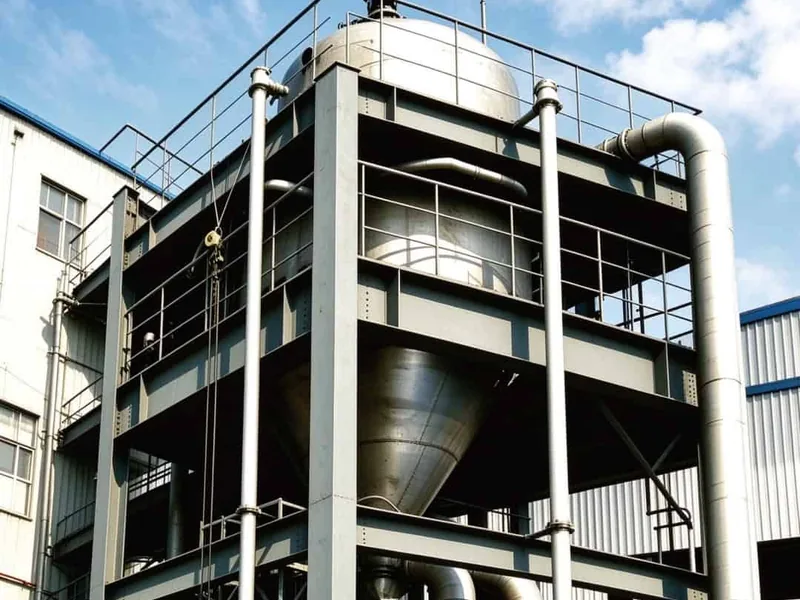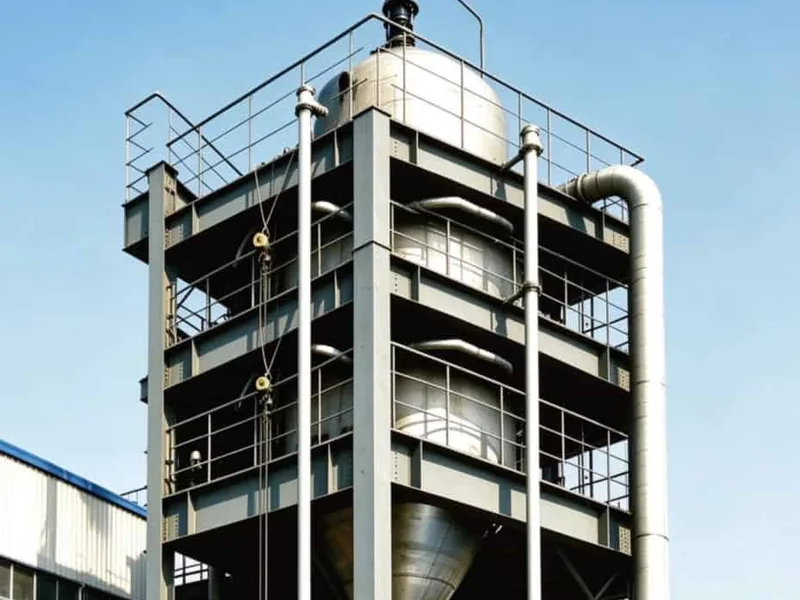
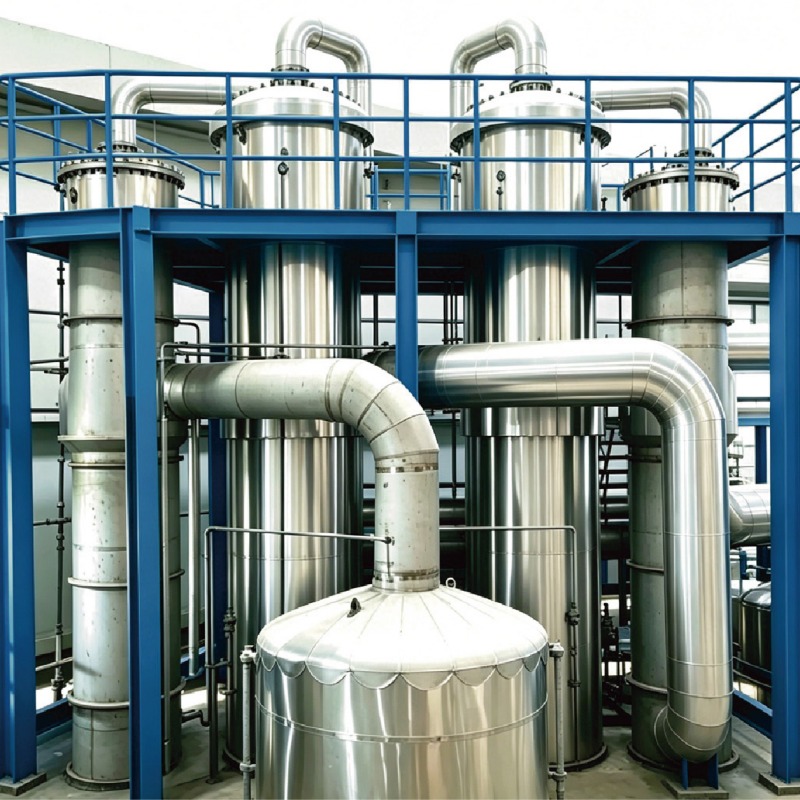
Heat-sensitive liquids cannot be boiled hard without losing what makes them valuable. A vacuum evaporator from Center Enamel removes water at a temperature the product tolerates, using reduced pressure to bring the boiling point down and a short residence time to limit heat exposure. The duty is defined by the product thermal limit, its target solids and the batch time the plant can accept.
How Vacuum Changes the Boiling Point
Boiling occurs when the vapour above a liquid matches the surrounding pressure. Lower the pressure and the liquid boils at a lower temperature: water that boils at 100 degrees at atmospheric pressure boils well below 60 degrees under a suitable vacuum. That reduction is the whole basis of vacuum evaporation. For a product containing sugars, proteins, enzymes, vitamins or volatile actives, the lower temperature means less colour change, less degradation and better retention of flavour and function. Center Enamel selects the operating vacuum from the product’s thermal limit, then designs the body and vapour system around that condition. The set point is chosen from a small-scale test, because the safe temperature for a product is a property of the product, not of the equipment.
Vacuum System and Condenser
The vacuum system has to remove the vapour as fast as it is produced, or the pressure rises and the boiling point follows. Liquid-ring pumps, dry pumps and ejector systems are matched to the vapour load, with a pre-condenser reducing the gas volume the pump must handle. The condenser is sized to condense the vapour against the available cooling medium, and its performance directly sets the achievable vacuum. Non-condensable gases are purged continuously from the condenser, because they otherwise accumulate and raise the operating pressure. Correct matching of condenser and pump keeps the vacuum evaporator at its design point throughout the batch. Condenser and pump capacities are matched at the design vapour load, with a margin that covers normal air ingress at flange joints.
Evaporator Body and Heat Surface
The body is arranged to give a large heat surface in a small hold-up, so product spends little time at temperature. Falling-film designs spread a thin film over vertical tubes; wiped-film designs mechanically renew the film for viscous or fouling-prone products; plate designs give a compact, easily cleaned surface. The separator after the body removes entrained droplets so the condenser stays clean and product loss is limited. Heating medium temperature is kept close to the product temperature, which avoids a hot wall that would damage the film. This gentle heat profile is the practical advantage of the vacuum evaporator.
Working with Heat-Sensitive Products
Product behaviour sets the operating limits. Enzymes and proteins need low temperature and short hold-up; fruit and vegetable extracts need volatile retention; pharmaceutical intermediates need controlled solvent removal and precise endpoint. Feed preheating is limited to what the product tolerates, and degassing at the inlet prevents flash boiling that would disturb the film. Concentration is monitored by density or refractive index, and the run ends at the specified solids rather than at a fixed time. Where aroma matters, a recovery condenser captures volatiles and returns them to the concentrate. The vacuum evaporator is therefore tuned to the product rather than to a generic procedure. Feed degassing is verified at commissioning, since dissolved air can disturb the film before the product reaches the heat surface.
Control and Operation
Vacuum, temperature, feed rate and discharge density are held together by the control system, because they interact strongly. If the feed rate rises, more vapour appears and the pressure drifts unless the pump and condenser respond; if the heating temperature rises, the film dries and quality suffers. Interlocks keep the sequence in order at start-up and shutdown, and alarm points flag loss of vacuum before product is affected. Trend records show the thermal history of each batch, which is exactly the evidence needed for quality review. With this control, the vacuum evaporator reproduces its results from batch to batch. Discharge density is measured inline, so the batch ends at the specification rather than after an estimated interval.
Batch Time and Capacity Planning
Vacuum evaporation is slower per unit area than atmospheric boiling, because the temperature difference across the surface is smaller. Capacity is therefore planned from the evaporation rate at the design vacuum rather than from a generic figure, and the batch time includes heating, concentration, discharge and cleaning. The thermal history of each batch is plotted from the trend data, giving the quality team a direct record of the exposure the product actually received.
Where output must rise, additional surface or a larger condenser is usually the answer rather than a higher temperature. Center Enamel reviews the cycle with the customer and sizes the vacuum evaporator so the daily batch count meets the production plan without stretching the product thermal exposure.
Partnering with Center Enamel
As a China Vacuum Evaporator Manufacturer, Center Enamel designs the evaporator body, condensers, vacuum package and controls as a single system, with thermal calculations supporting each choice. Equipment is tested before shipment, and commissioning support includes vacuum tuning and operator training.