Steam is the largest running cost in most evaporation plants, and the multiple effect arrangement is the classical answer to it. Each additional effect reuses the vapor from the one before, so one kilogram of steam can evaporate several kilograms of water. Center Enamel designs every Multi-Effect Evaporation Process around the site’s steam price, the product’s temperature tolerance and the value of the recovered condensate.
How Multiple Effects Reduce Steam Demand
In a single effect, one kilogram of steam condenses on one side of the heating surface and evaporates roughly one kilogram of water on the other. In a multiple effect train, the vapor produced in the first effect becomes the heating medium for the second, and so on down the train. Because each body runs at a lower temperature and pressure than the one before, the vapor can still drive boiling in the next effect. A triple effect therefore evaporates about three kilograms of water per kilogram of live steam, and a five effect train approaches five, before any thermal compression is added. The economy figure is the single number that describes the train, and it is guaranteed at commissioning.
Feed Arrangement and Effect Sequencing
The sequence of feed and vapor flow decides how the train behaves. In forward feed, liquor and vapor move in the same direction, from the hottest effect to the coldest, which suits feed that enters warm and products that tolerate high temperature at low concentration. Backward feed moves the liquor against the vapor flow and is chosen when the concentrate must stay cool or when the feed is cold. Parallel feed sends fresh liquor to each effect in crystallizing duty. Mixed arrangements combine the two and are common where viscosity rises sharply with concentration.
Choosing the Number of Effects
More effects mean less steam but more surface, more vessels and a larger footprint. Each added effect saves a diminishing share of the previous steam demand, so the economic optimum sits where the marginal saving equals the marginal capital cost. Center Enamel evaluates two, three, four and five effect schemes for the same duty and compares them on total installed cost, annual steam and power, cooling water load and maintenance. The result is usually a three or four effect train for medium duties and a four or five effect train where steam is costly and the plant runs continuously.
Heat Transfer Surface and Vapor Flow
Surface is distributed across the effects according to the heat load and the temperature difference each effect is allowed. Falling film bundles are preferred for low viscosity liquors because they need a small driving force; forced circulation is used where crystals form or viscosity climbs. Vapor passes from effect to effect through large diameter lines with low pressure drop, and entrainment separators keep droplets out of the next heating surface. Condensate from each effect is removed separately, because its purity differs and its heat still has value in a preheater.
Condensate Recovery and Water Reuse
Distillate from the first effects is clean enough for boiler make-up or for washing, and the later effects yield water suitable for cooling, irrigation or dilution. Keeping the streams separate is a design decision, not an afterthought, because it determines how much of the condensate can be returned to the plant. Conductivity meters on each outlet confirm quality, and a small polishing unit covers the last traces of carry-over. A four effect train on a large duty can return hundreds of cubic metres of water a day, which often pays for a significant share of the project on its own.
Combining Effects with Thermal Compression
Thermal vapor recompression takes a portion of the vapor, passes it through an ejector and returns it at a higher temperature to the first effect, which raises the economy of the train without adding a body. Mechanical recompression can also be applied to the first effect where electricity is cheaper than steam. Center Enamel compares the plain train, the ejector assisted train and the hybrid arrangement on the same duty, and selects the scheme that fits the plant’s utility balance rather than the one that looks best on a single line of the heat balance.
Layout, Footprint and Maintenance Access
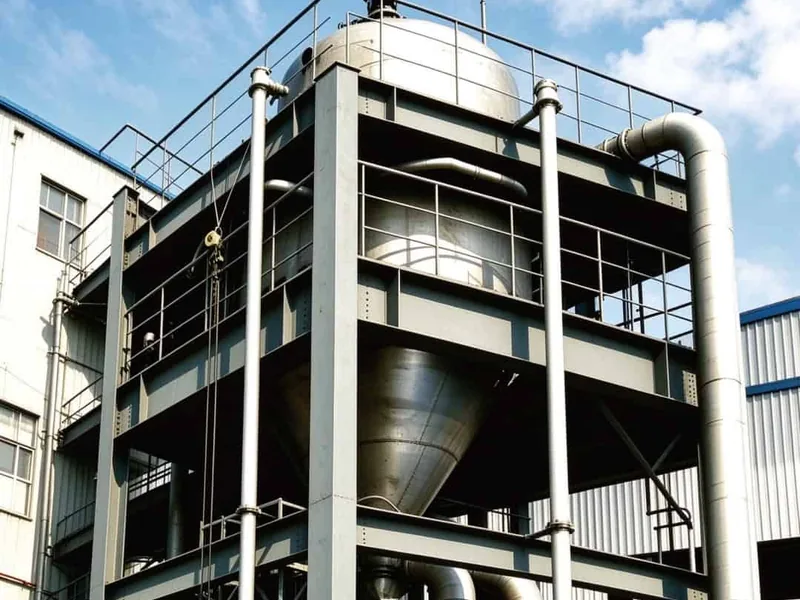
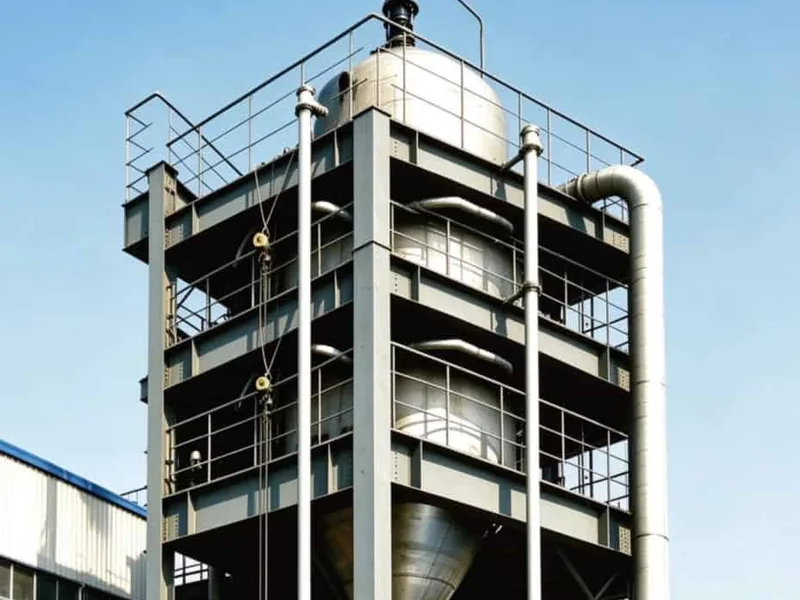
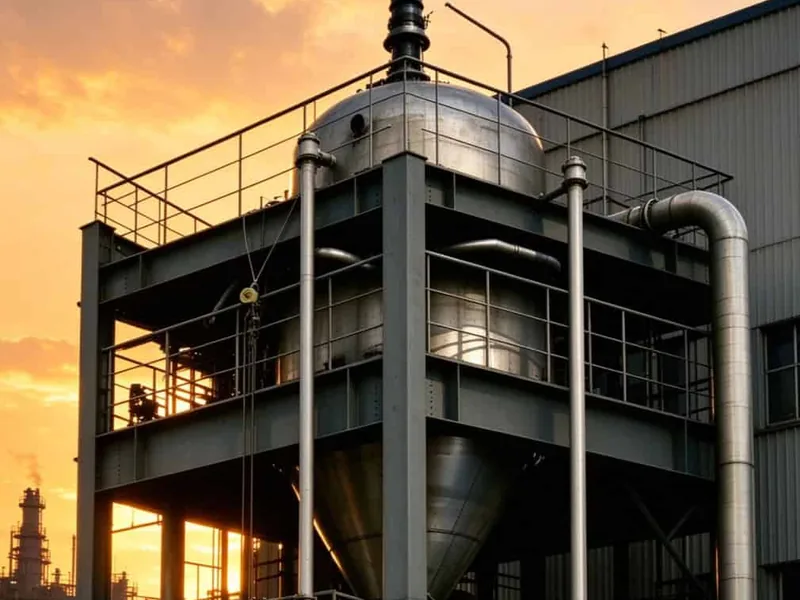
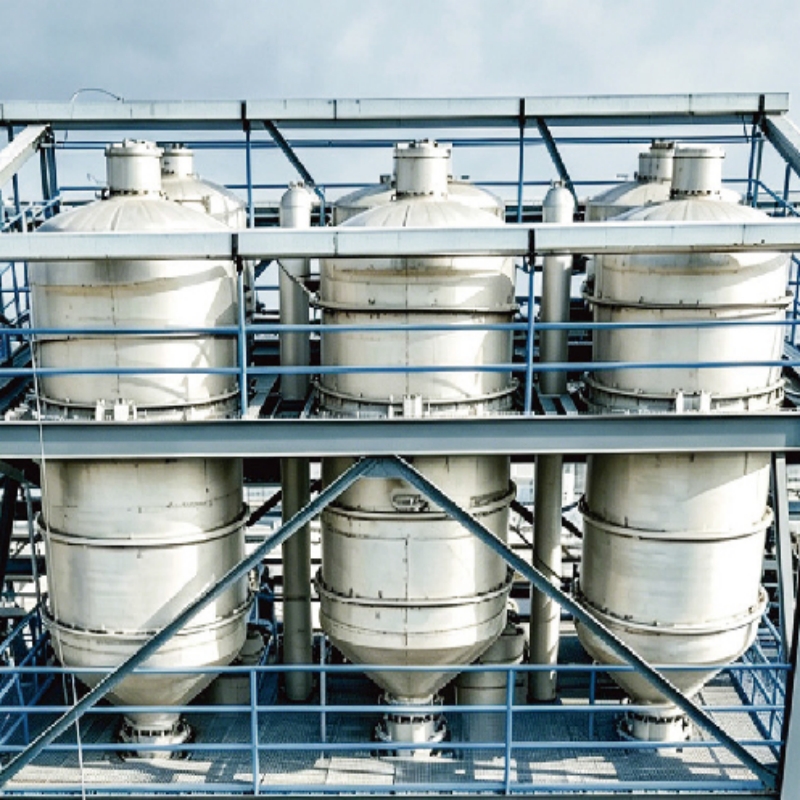
A multi effect train occupies a long elevation, and its layout determines how easily it can be maintained. Center Enamel stacks the bodies to keep the vapor runs short, places the preheaters and pumps at grade, and leaves access to tube bundles, sight glasses and instrument connections from a service platform. Piping is arranged so that any effect can be isolated and washed while the rest of the train stays in production. Structural design allows for wind load, seismic load and the thermal expansion of long vapor lines, and the whole battery is modelled before fabrication begins.
Erection, Commissioning and Operator Training
Large trains are shipped in sections and assembled on site. Center Enamel supervises erection, aligns the bodies, completes the piping and carries out the hydrostatic and tightness checks that precede first boil. Commissioning then steps through each effect in turn, verifying the pressure profile, the condensate quality and the achieved economy against the design figures. Operators are trained on the wash sequence, the response to a falling vacuum and the records that reveal surface condition, so the train keeps its rated steam economy rather than drifting downward over the years.
Steam Savings You Can Measure
The value of a multiple effect design is visible on the steam meter every month. Center Enamel guarantees the economy figure and the evaporation rate together, and the two are verified at commissioning against the same instruments the plant will use afterwards. Surface margin, generous vapor lines and a clean layout keep that performance stable across seasons and product changes. Center Enamel supplies the train as a single package with its own preheaters, pumps, instruments and control logic, so the guaranteed economy is measured across the whole battery. Configurations for two to five effect trains are described at cecvessels.com.