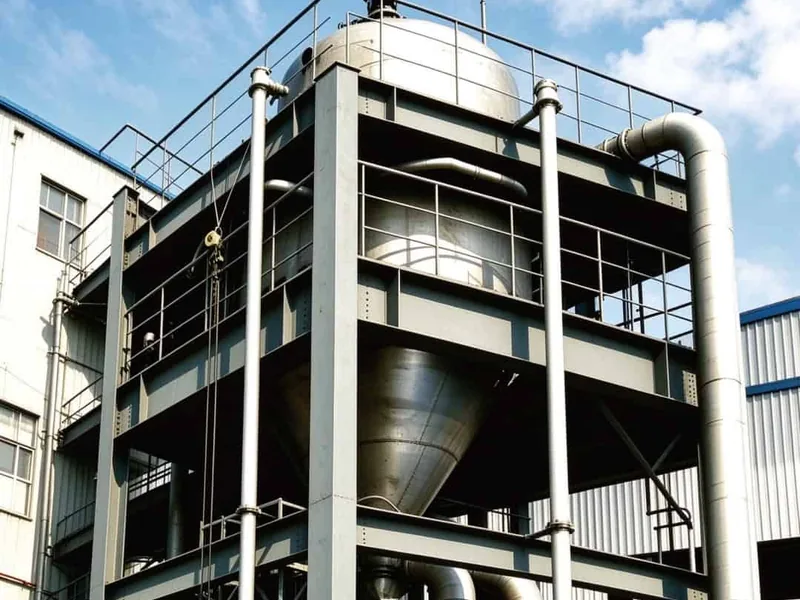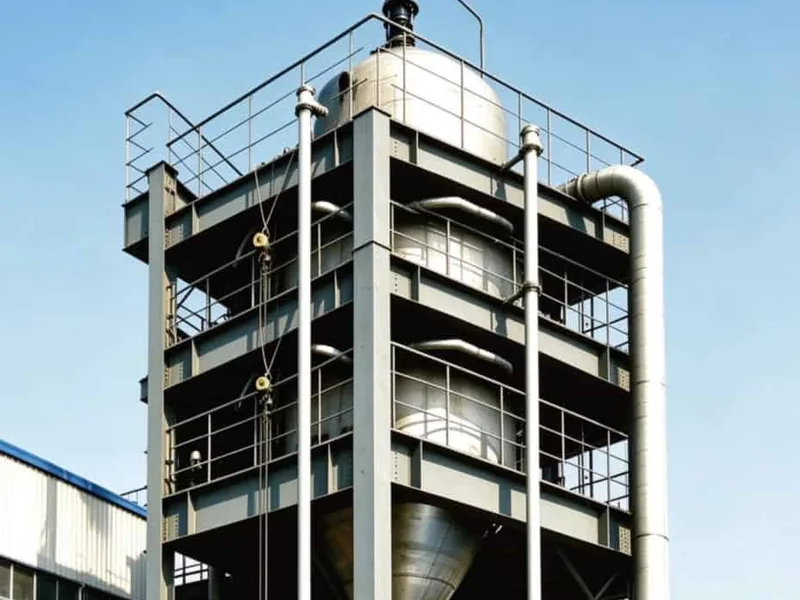
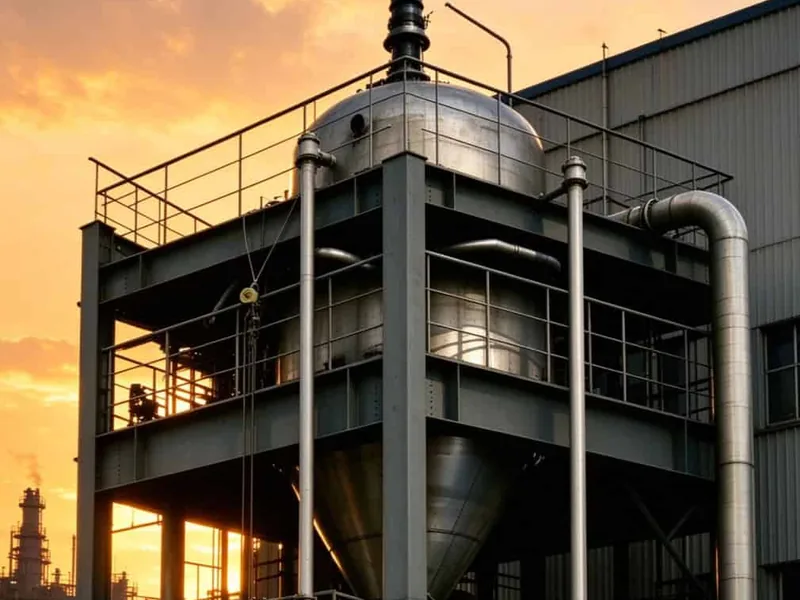
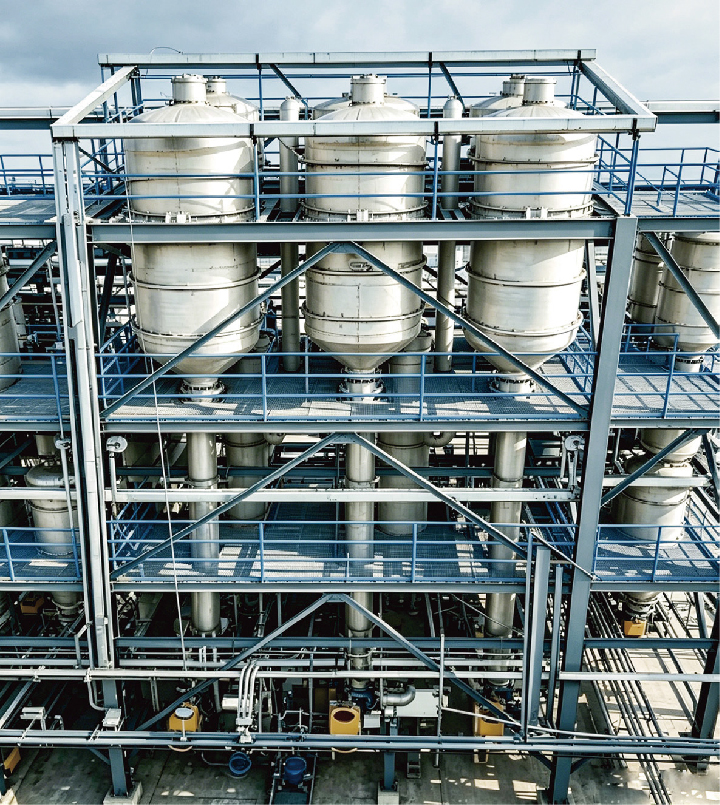
Many chemical products leave the reactor far more dilute than the market requires. A Chemical Concentration Evaporator removes water under controlled conditions, lifting solids content while keeping the product’s chemistry intact.
Concentration Duties in Chemical Processing
Concentration appears throughout chemical production. Reaction products are thickened before crystallisation, spent process streams are reduced before disposal, and dilute acids or lyes are brought up to usable strength.
Each duty has its own limits. Some solutions tolerate high temperatures, others degrade quickly. The Chemical Concentration Evaporator is designed around the product’s sensitivity, the target concentration and the energy available on site.
Evaporator Types and Selection
Falling film units suit solutions that wet surfaces readily and do not crystallise easily. Forced circulation designs handle viscous liquids and streams that would otherwise deposit solids on the heating surface. Rising film and plate designs serve specific duties where residence time or footprint matters.
Selection follows the fluid behaviour. A capable Chemical Concentration Evaporator Manufacturer checks viscosity, boiling point rise, solids loading and fouling tendency before recommending a configuration, because the wrong type quickly loses efficiency.
Vacuum operation also shapes the choice. Running below atmospheric boiling point protects heat-sensitive products and allows lower heating temperatures, while condenser capacity and steam availability set the practical limit for each plant.
Heat Transfer and Vapour Separation
Evaporation depends on heat entering the liquid and vapour leaving it. Tubular bundles or plate packs transfer heat from steam or hot water, and the vapour then passes through a separator that removes entrained droplets before it reaches the condenser.
A well-designed separator protects product quality and keeps the condensate clean. Demister elements, cyclone sections or baffled vessels are chosen according to the vapour load, and the whole arrangement is sized for the plant’s operating range.
Materials for Corrosive Solutions
Chemical solutions attack ordinary steel, so wetted parts are selected for the duty. Stainless steels cover many duties; higher alloys, graphite, or lined carbon steel handle acids, chlorides and other aggressive media.
Material choice extends to gaskets, girth joints and instrument wetted parts. A China Chemical Concentration Evaporator Manufacturer documents the material specification, so the plant knows exactly what the equipment can handle across its service life.
Control, Energy and Product Quality
Evaporation consumes significant energy, so the design aims at economy. Multiple effects reuse vapour from one stage to heat the next, and thermal vapour recompression lifts the vapour’s usefulness without extra steam.
Control keeps the product inside specification. Density or conductivity measurement tracks concentration, and the control system adjusts feed rate, heating and vacuum conditions. Stable operation means the Chemical Concentration Evaporator delivers consistent solids without over-processing.
Applications Across Chemical Plants
Chemical producers concentrate intermediates, regenerate dilute acids and thicken pigment or resin dispersions. Fertiliser and inorganic chemical plants use evaporation to reach crystallisation conditions.
Pharmaceutical and specialty chemical operations apply it where gentle treatment protects the active material. In each case the Chemical Concentration Evaporator is configured around the product, not forced into a standard arrangement.
Installation and Operating Support
Installation planning covers foundations, piping, condensate routing and access for maintenance. Skid-mounted units shorten site work, and modular layouts let the evaporator sit close to the reactor it serves.
Commissioning establishes the operating envelope. Feed rate, temperature and concentration targets are tuned in the first runs, and operators learn how the unit responds to changes. Documentation supports future cleaning, inspection and spare part planning.
Crystallisation and High-Solids Duty
As concentration rises, dissolved salts approach saturation and crystals begin to form. The evaporator then handles solids as well as liquid, so the design changes: larger sumps, gentler circulation and elutriation legs help crystals grow without blocking the flow path.
For these duties a forced circulation arrangement with a dedicated crystalliser body is often preferred. The Chemical Concentration Evaporator is then sized around the crystal population and the desired particle size rather than the evaporation rate alone.
Quality Checks and Documentation
Before delivery, the unit is checked against the approved design. Heat transfer surfaces, vessel dimensions, nozzle positions, weld quality and instrument locations are verified, and the shell and jacket are tested.
Material certificates, test reports and operating instructions complete the package. For a plant running continuous concentration, these records simplify inspection and help the China Chemical Concentration Evaporator Manufacturer hand over a unit that is ready for production.
Center Enamel as Your Evaporator Partner
Center Enamel reviews the process data behind each concentration project, from feed analysis to target solids. Those inputs determine the evaporator type, heat transfer area, materials and control scope.
The company then coordinates fabrication, testing and delivery. As a Chemical Concentration Evaporator Manufacturer, Center Enamel provides equipment that fits the plant’s utilities and production rhythm, with support that continues after commissioning.