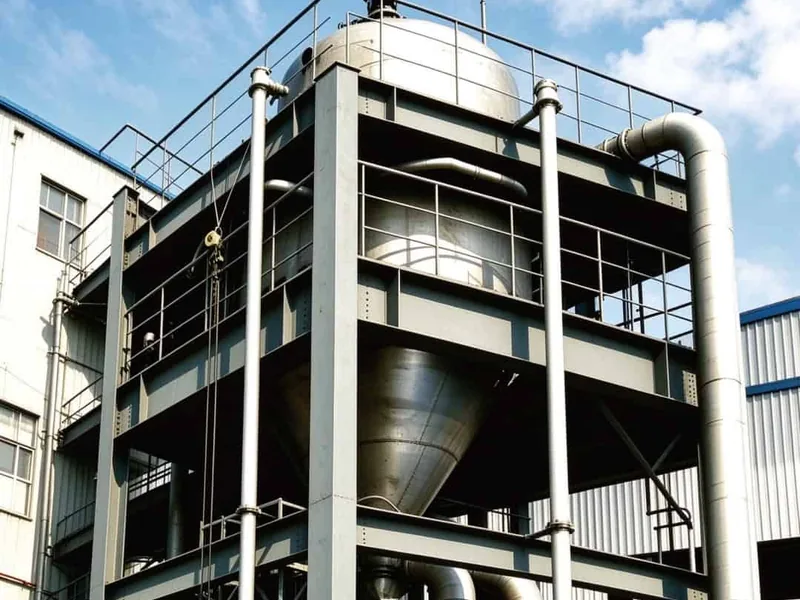
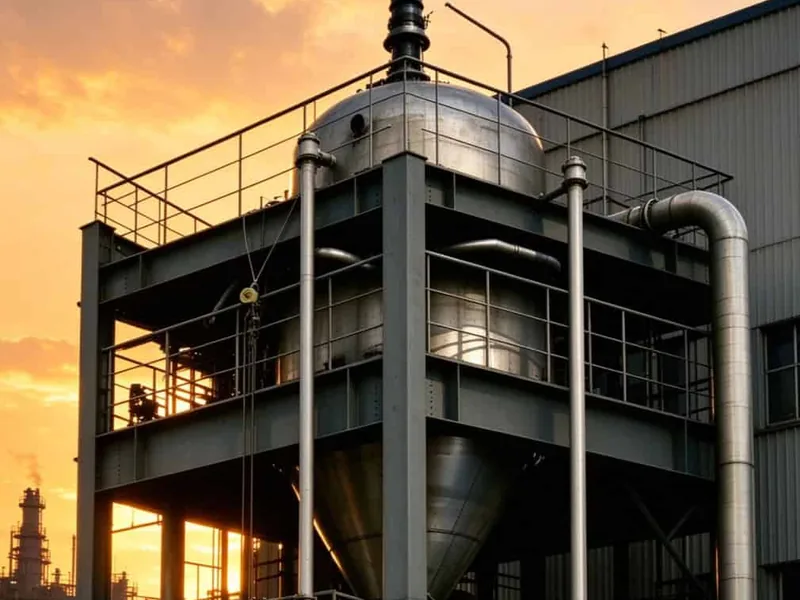
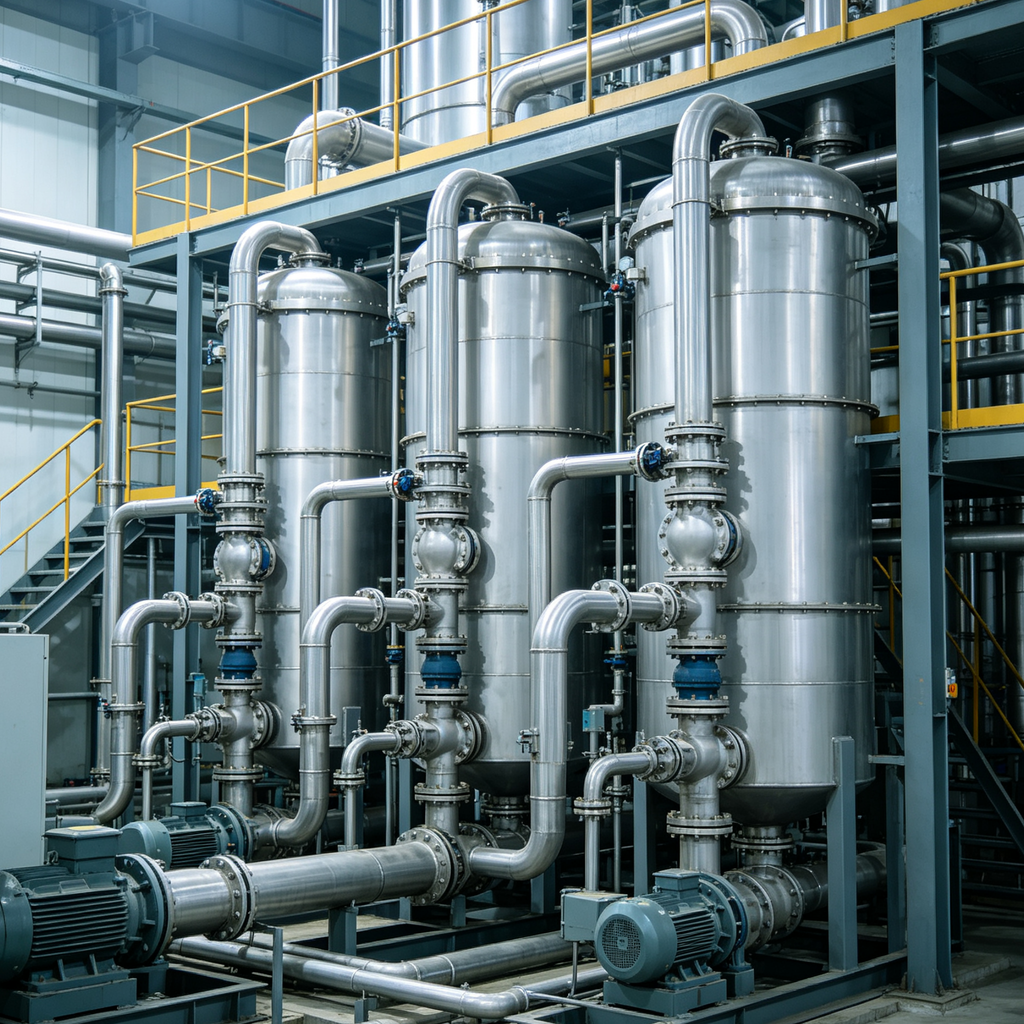
Effluent volumes keep rising while discharge limits tighten. An Industrial Wastewater Evaporator concentrates the liquid fraction and returns clean distillate, so plants send less material for disposal and reuse more of the water they already pay for
Volume Reduction and Water Recovery
Evaporation separates water from dissolved solids. The distillate can be reused in utilities, cleaning or cooling, while the concentrate is handled as a much smaller stream.
Volume reduction changes the economics of disposal. Instead of transporting large volumes of dilute effluent, plants manage a compact concentrate. An Industrial Wastewater Evaporator therefore pays for itself through lower haulage, treatment and water purchase costs.
Evaporator Configurations for Wastewater
Wastewater quality varies widely, so configuration matters. Falling film and forced circulation units suit many streams, while plate designs fit compact installations. Mechanical vapour recompression units suit continuous duties with stable flows.
Designers consider suspended solids, oil content and scaling tendency before selecting internals. A Industrial Wastewater Evaporator Manufacturer that reviews these factors avoids a unit that works on paper but blocks up in service.
Preconcentration and Pretreatment
Evaporators perform best when the feed is reasonably consistent. Settling, filtration or oil separation upstream protects heat transfer surfaces and keeps the unit running longer between cleanings.
Equalisation tanks smooth batch discharges. With a steadier feed, the Industrial Wastewater Evaporator operates closer to design conditions, and the control system spends less time correcting for sudden changes.
Screening the feed also protects downstream equipment. Removing grit and fibrous material early reduces wear on pumps and valves, and it keeps heat transfer surfaces cleaner for longer. Small changes upstream often save substantial maintenance effort later.
Materials and Fouling Control
Wastewater streams often carry chlorides, sulphates and organic matter. Stainless steels, duplex alloys or lined carbon steel are chosen according to the analysis, and the choice is confirmed with the actual effluent data.
Fouling is managed through design and operation. Generous flow velocities, accessible heating surfaces and scheduled wash cycles keep performance stable. Materials and cleaning methods are agreed with the China Industrial Wastewater Evaporator Manufacturer at the specification stage.
Energy Strategy and Vapour Recompression
Evaporation is energy intensive, so recovery options are built in. Multiple effects reuse vapour between stages, and mechanical vapour recompression uses a compressor to raise the vapour’s temperature so it can heat the next effect.
Heat integration with other plant utilities can reduce demand further. Where waste heat is available, the Industrial Wastewater Evaporator can use it instead of fresh steam, lowering operating cost without compromising throughput.
Distillate Quality and Brine Handling
Distillate quality depends on separation. Demisters, condensers and careful stage design prevent carry-over, so recovered water meets the standard required for reuse or discharge.
The concentrate needs a clear route. Crystallisers, holding tanks or dewatering equipment can be added to handle brine, and the layout allows safe sampling and transfer. Planning this early keeps the whole system practical.
Applications and Compliance Support
Chemical, pharmaceutical and food plants use evaporation for effluent volume reduction. Metal finishing, textile and landfill leachate treatment rely on it where dissolved solids are high and discharge options are limited.
Zero liquid discharge projects use evaporation as a core step. Documentation from the supplier supports environmental reporting, and the Industrial Wastewater Evaporator is configured to meet the plant’s specific permit conditions.
Zero Liquid Discharge Considerations
Where discharge options are limited, evaporation becomes part of a zero liquid discharge train. The evaporator concentrates the stream, and a crystalliser or dryer finishes the job, leaving only a solid residue for controlled disposal.
Designing the train as a whole avoids mismatches between stages. Flow rates, heat sources and storage are planned together, and the Industrial Wastewater Evaporator is specified to deliver a concentrate the downstream equipment can handle.
Quality Checks and Documentation
Each unit is inspected before shipment. Heat transfer surfaces, vessel geometry, welds and instrument points are verified, and the system is tested for leaks and for correct operation of valves and pumps.
Records cover materials, testing and operating limits. These documents support environmental reporting and maintenance planning, and they give the China Industrial Wastewater Evaporator Manufacturer a clear basis for handover and operator training.
The package also includes recommended cleaning procedures. Clear instructions help the plant keep performance steady between service intervals.
Working with Center Enamel on Wastewater Projects
Center Enamel begins with an effluent analysis and a site review. Flow rate, composition, reuse target and disposal route define the evaporator type, capacity and materials.
Fabrication, testing and delivery are handled by one project team, and commissioning support helps the plant reach stable operation quickly. A well-matched Industrial Wastewater Evaporator turns an expensive waste stream into a manageable, partly recoverable resource.