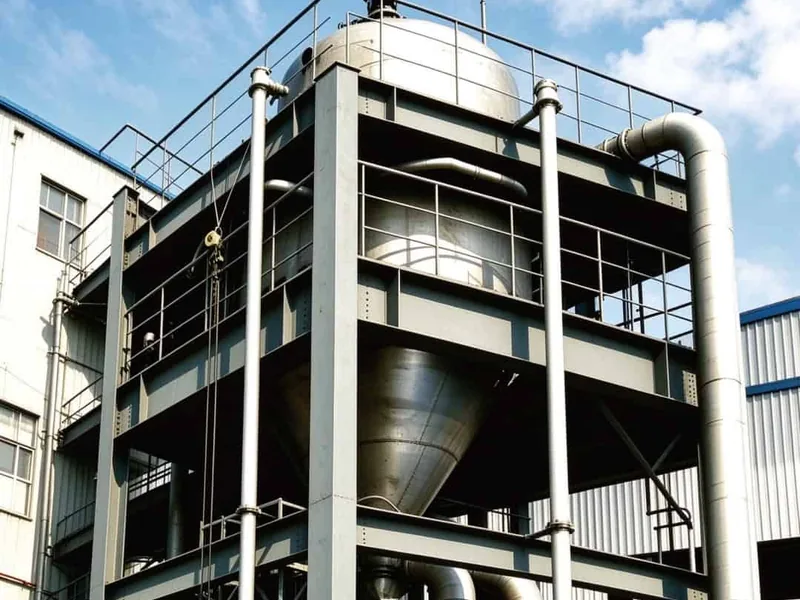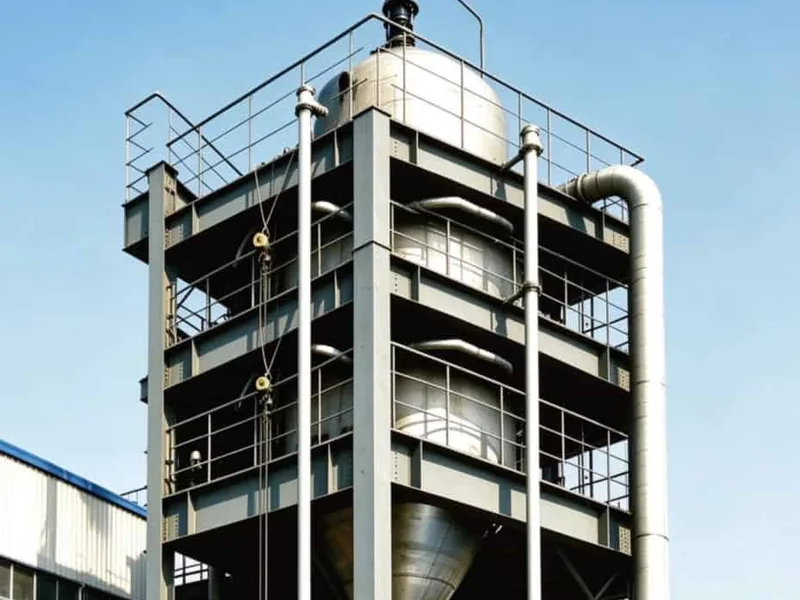
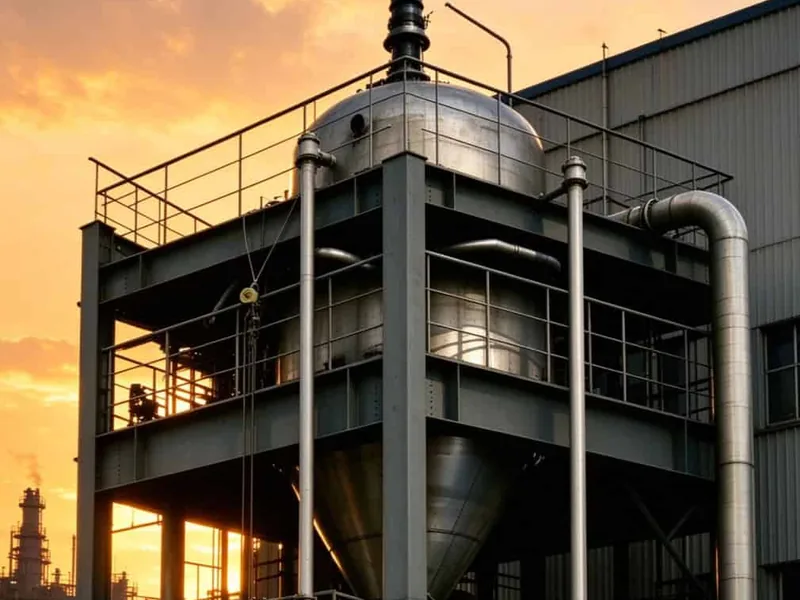
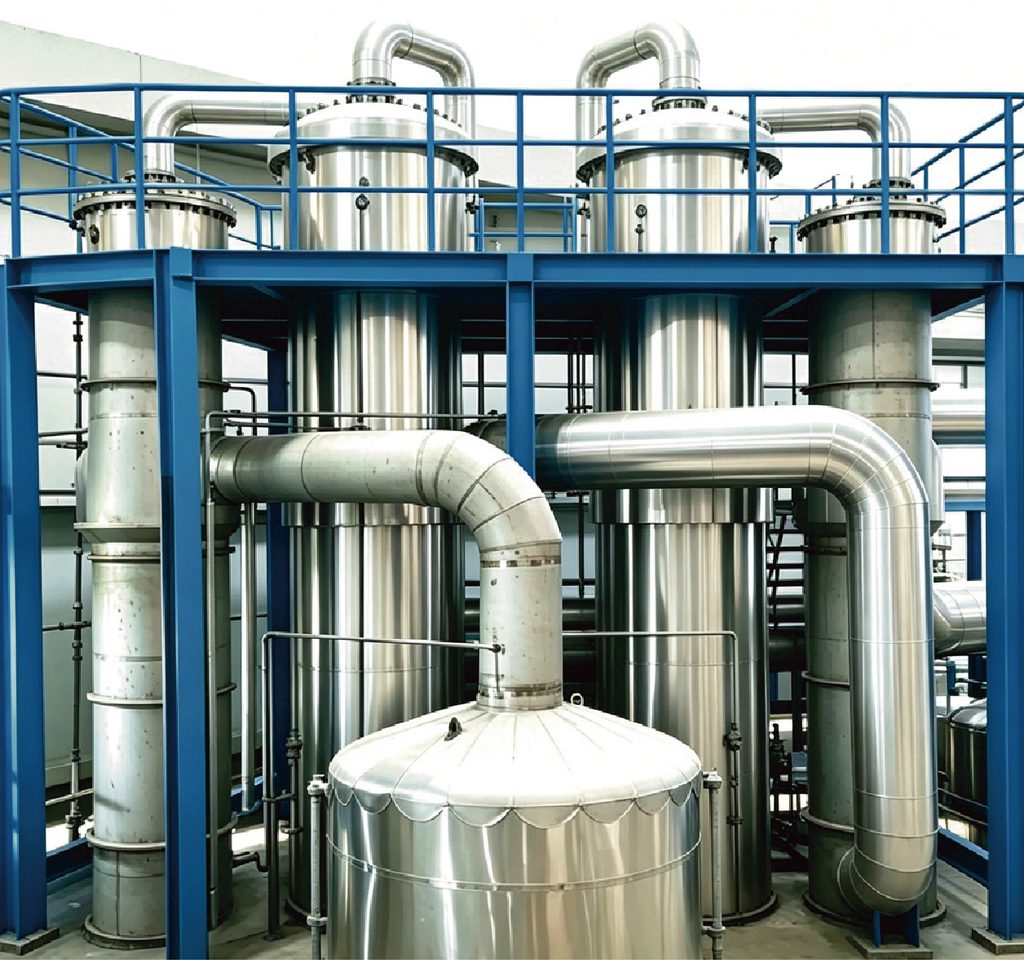
Concentration equipment often has to fit into an existing building. A Plate Evaporator delivers high heat transfer from a compact plate pack, so capacity is gained without a large site footprint.
How Plate Evaporators Work
Product and heating medium flow through alternating channels separated by thin plates. The narrow gaps create turbulent flow at low velocity, which raises heat transfer efficiency and shortens the time the product spends at temperature.
The plate pack is arranged so the product rises or falls through the channels, with vapour leaving at the top and concentrate collecting at the outlet. This arrangement makes the Plate Evaporator effective for heat-sensitive products.
Compact Footprint and Heat Transfer
Plate units pack a large surface area into a small volume. Compared with tubular designs of similar duty, the installed unit needs less floor space and less headroom, which suits plants where expansion space is limited.
Maintenance access also improves. The pack can be opened for inspection and cleaning, and plates can be replaced individually. A Plate Evaporator therefore keeps capacity available without demanding a long shutdown for servicing.
Falling Film and Rising Film Plate Designs
Falling film plate evaporators distribute liquid across the top of each channel, where it flows down as a thin film. Residence time is short and heat transfer is even, which suits dairy, juice and other delicate products.
Rising film designs suit duties where the product is pumped upward with the vapour. Selecting between the two depends on viscosity, foaming behaviour and the required evaporation rate, and the Plate Evaporator Manufacturer matches the design to the product.
Plate geometry also influences cleaning. Wider channels suit viscous products, while narrower gaps raise heat transfer for low-viscosity streams, and the choice is fixed during design so the unit performs as expected.
Materials and Hygienic Construction
Stainless steel plates and frames are standard, with grades chosen for product acidity and cleaning chemicals. Contact surfaces are polished, and gasket materials are selected for temperature and product compatibility.
Hygienic design supports food and pharmaceutical production. Smooth channels, drainable geometry and cleanable frames reduce residue, and documentation from the China Plate Evaporator Manufacturer supports hygiene audits and material verification.
Operation, Cleaning and Changeover
Operation centres on stable feed and heating conditions. Pumps deliver product at a steady rate, and the control system adjusts steam or hot water to hold the concentration target without overheating the product.
Cleaning is straightforward because the pack opens. Plates are inspected, gaskets are checked, and circulation cleaning reaches the narrow channels. Changeover between products takes less time, and the Plate Evaporator returns to service quickly.
Applications in Food, Dairy and Chemical Plants
Dairy plants concentrate milk and whey, juice producers raise solids before packaging, and food manufacturers thicken sauces, syrups and purees. Short residence time protects colour, flavour and nutrients.
Chemical and pharmaceutical plants use plate evaporators for solvents, extracts and heat-sensitive intermediates. In every case the Plate Evaporator is configured with the plate pattern and pass arrangement suited to the duty.
Selection and Capacity Planning
Capacity planning starts with the evaporation rate, the feed concentration and the target solids. Heating medium temperature and available utilities then determine how many plates and passes are required.
Future expansion can be designed in. Extra plate capacity or an additional effect can be added later, so the Plate Evaporator grows with production instead of being replaced.
Multiple Effects and Capacity Expansion
Plate evaporators can be arranged in multiple effects, with vapour from one stage heating the next. The arrangement raises steam economy and still keeps the equipment compact enough for an existing building.
Capacity can also grow later. Additional plate packs or an extra effect can be added to the frame, so the Plate Evaporator accommodates higher throughput without a completely new installation.
Heat integration with existing steam and cooling systems is reviewed at the same time, so the added effect does not overload the plant utilities.
Quality Checks and Documentation
Before dispatch, plates, gaskets, frame and piping are checked against drawings. The pack is assembled, tested for leakage and inspected for correct channel alignment.
Material certificates, leakage test records and plate diagrams form the documentation. Clear records help the plant plan gasket replacement, and they allow the China Plate Evaporator Manufacturer to support maintenance long after delivery.
Center Enamel as Your Plate Evaporator Partner
Center Enamel reviews product data, utility conditions and space constraints before proposing a plate evaporator. Drawings are prepared for approval, and material choices are confirmed against the cleaning regime.
The team then manages fabrication, testing and delivery. As a Plate Evaporator Manufacturer, Center Enamel supplies compact equipment that fits the building, meets the product duty and supports efficient concentration for years.