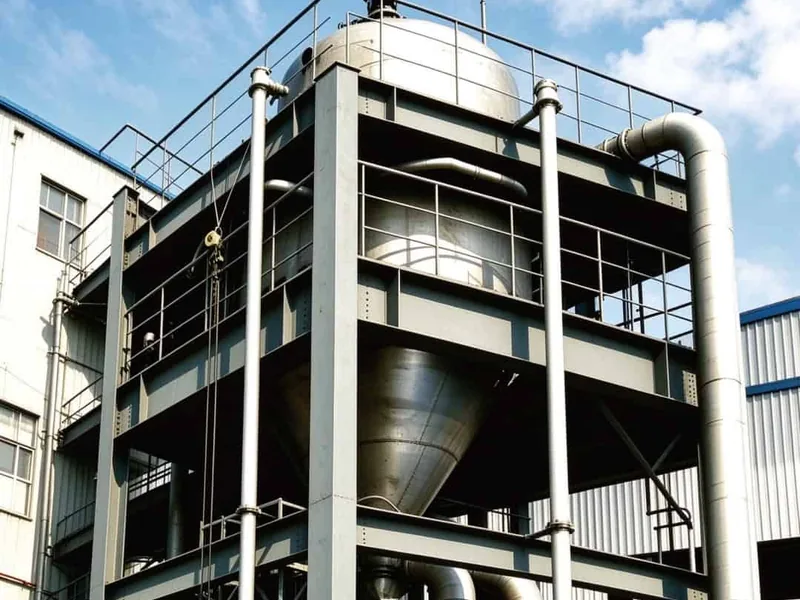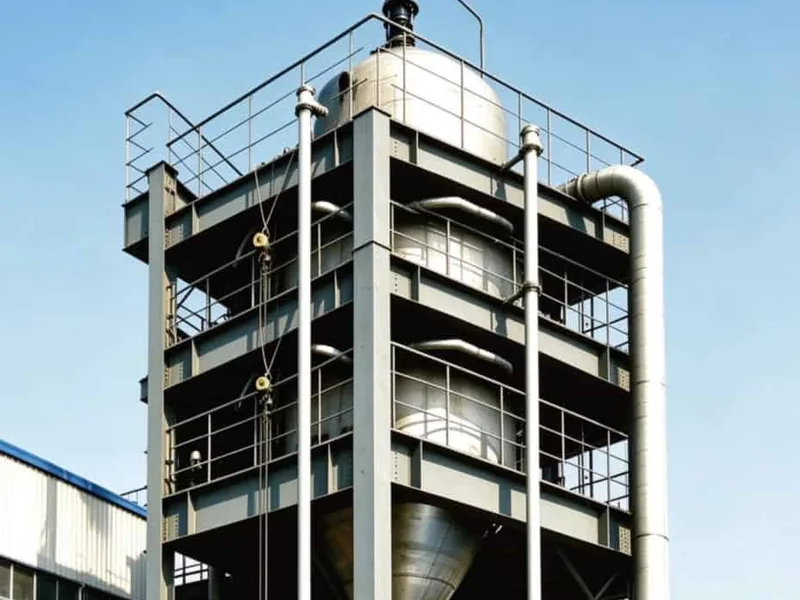
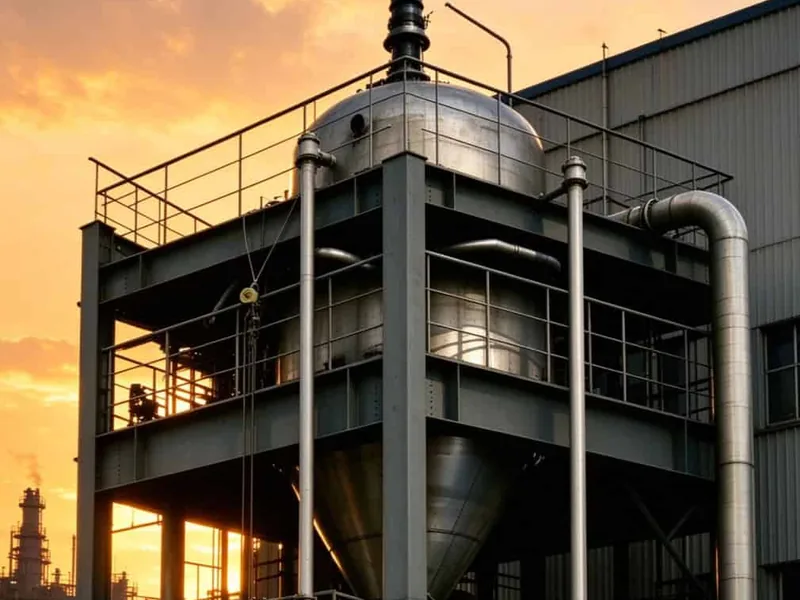
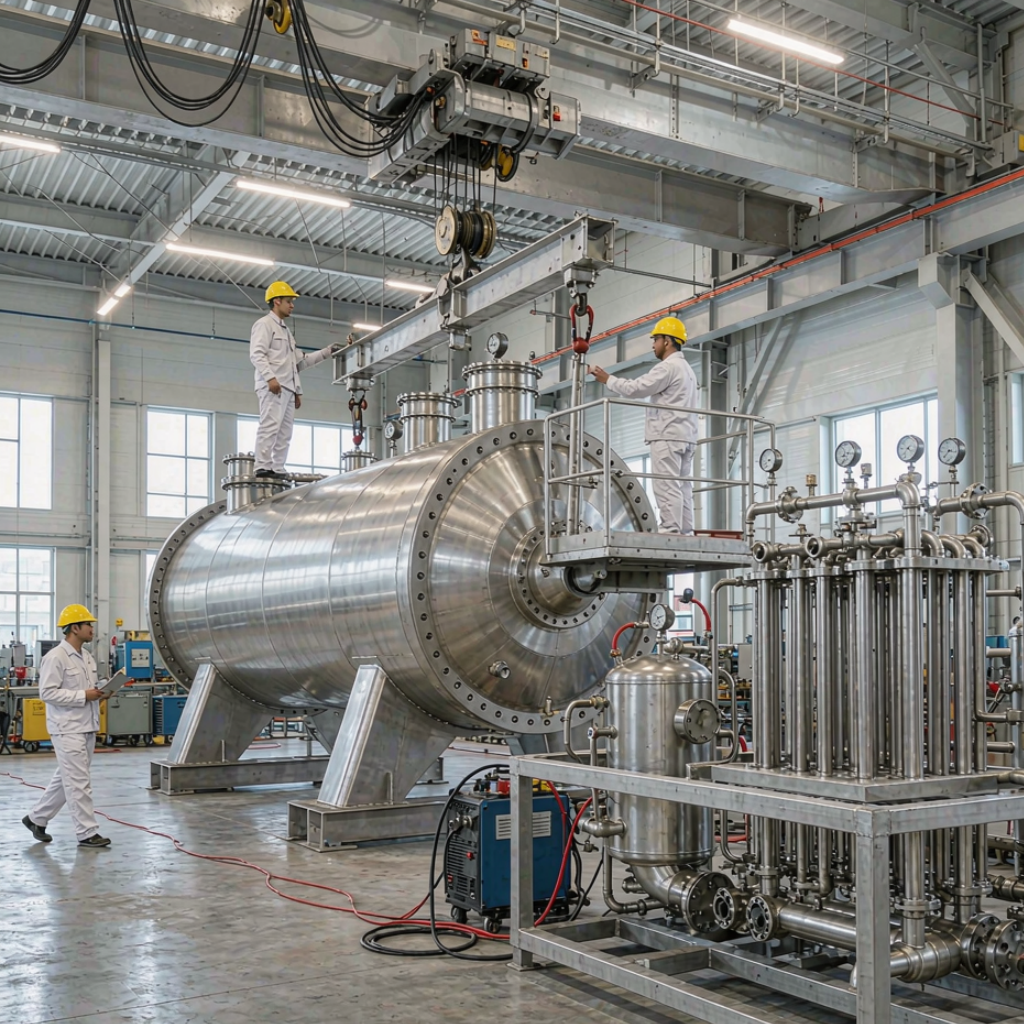
A falling film evaporator removes part of a liquid’s solvent, commonly water, by distributing the feed as a thin film over heated heat-transfer surfaces. Its short residence time can suit products that require careful thermal treatment.
What Is a Falling Film Evaporator?
A Falling Film Evaporator is a thermal separation unit used to concentrate liquids by vaporizing part of the solvent. Feed is distributed near the top of vertical heat-transfer tubes and flows downward as a thin film. Heating medium on the other side of the tube wall supplies the energy needed for evaporation. The vapor and concentrated liquid are then separated in a vapor-liquid separator.
The thin liquid film provides a relatively large heat-transfer area and can support short product residence time. This makes the technology useful for certain heat-sensitive liquids, as well as products that benefit from efficient concentration. Actual suitability depends on viscosity, fouling tendency, boiling point elevation, solids content, and the required concentration ratio.
How Does a Falling Film Evaporator Work?
The feed enters a distribution system that spreads liquid evenly across the tube surfaces. As the liquid flows downward, it absorbs heat and part of the solvent evaporates. The resulting vapor travels with the liquid toward the separator, where the phases are separated. Concentrated product is withdrawn from the bottom, while vapor may be condensed or reused as a heating medium in a multi-effect arrangement.
Uniform distribution is essential. If some tubes receive too little liquid, dry patches may form and reduce heat transfer or affect product quality. The distributor, tube geometry, operating flow, and recirculation strategy should therefore be designed for the feed properties and required operating range.
Key Design Considerations
Feed viscosity and solids content influence film formation and heat-transfer performance. Falling film systems generally work best when the liquid can spread and flow as a continuous film. Very viscous or heavily fouling feeds may require another evaporator type or a specialized configuration. The process review should include feed composition, flow rate, initial and final concentration, temperature sensitivity, and fouling behavior.
The heat-transfer surface may use vertical tubes or another geometry suited to the process. Material selection depends on product chemistry, cleaning agents, operating temperature, and hygiene requirements. Engineers also evaluate vapor separation, condensate handling, vacuum operation where applicable, and cleaning access. For food and pharmaceutical applications, surface finish and cleanability may be particularly important.
Single-Effect and Multiple-Effect Systems
A single-effect evaporator uses heating energy in one evaporation stage. Multiple-effect systems connect two or more effects so vapor from one stage supplies heat to another stage operating at a lower boiling temperature. This arrangement can reduce fresh steam consumption, although it adds equipment and control considerations.
The number of effects is selected based on capacity, energy cost, available utilities, product behavior, and capital budget. Heat integration should consider the temperature difference available at each effect, vapor load, condensate recovery, and the operating flexibility required by the plant. Thermal vapor recompression may also be evaluated when the vapor conditions and project economics support it.
Industrial Applications
Falling film evaporators are used in food and beverage processing, dairy, fruit juice concentration, pharmaceutical intermediates, fine chemicals, and other liquid concentration duties. They can be useful where product quality is affected by long exposure to elevated temperature. In juice processing, for example, the system may be selected to concentrate liquid while managing flavor and color characteristics.
For each application, feed preparation and downstream handling matter. Filters or strainers may protect the heat-transfer passages. Product may be preheated before entering the evaporator, while condensers and vacuum systems manage generated vapor. Concentrated product can then be cooled, stored, or sent to another processing stage.
Selecting a Falling Film Evaporator Manufacturer
A Falling Film Evaporator Manufacturer should be given feed composition, flow rate, initial and target solids content, allowable product temperature, viscosity, fouling tendency, cleaning method, and available steam and cooling utilities. Buyers should also define whether the required system is single-effect or multiple-effect and whether heat recovery is expected.
Review the supplier’s thermal calculation, tube distribution concept, heat-transfer area, separator design, material selection, cleaning arrangement, instrumentation, and scope of supply. Request a process flow diagram and utility summary to understand how the evaporator connects to the plant. Pilot data or product testing may be helpful for unfamiliar feed materials.
Center Enamel Evaporation Equipment Solutions
Center Enamel provides industrial vessel solutions for process projects that require coordinated equipment design and fabrication. For an evaporation system, the project specification should identify feed characteristics, operating conditions, material requirements, capacity, and the interfaces between the evaporator, separators, condensers, and storage vessels.
Customers can share process data and a preliminary flow diagram for technical discussion. Final thermal design and evaporator selection should be completed using validated process calculations and the actual properties of the liquid being concentrated.
Frequently Asked Questions
Why is a falling film evaporator suitable for some heat-sensitive liquids? Its thin-film operation can provide efficient heat transfer and relatively short residence time.
Can it handle viscous liquids? Suitability depends on viscosity and film behavior. Highly viscous or fouling feeds may require another design.
What is the purpose of multiple effects? Multiple effects reuse vapor energy from one stage to heat another, reducing fresh steam demand in suitable systems.
What data is needed for selection? Provide feed rate, composition, concentration targets, viscosity, temperature limits, fouling information, utilities, and cleaning requirements.