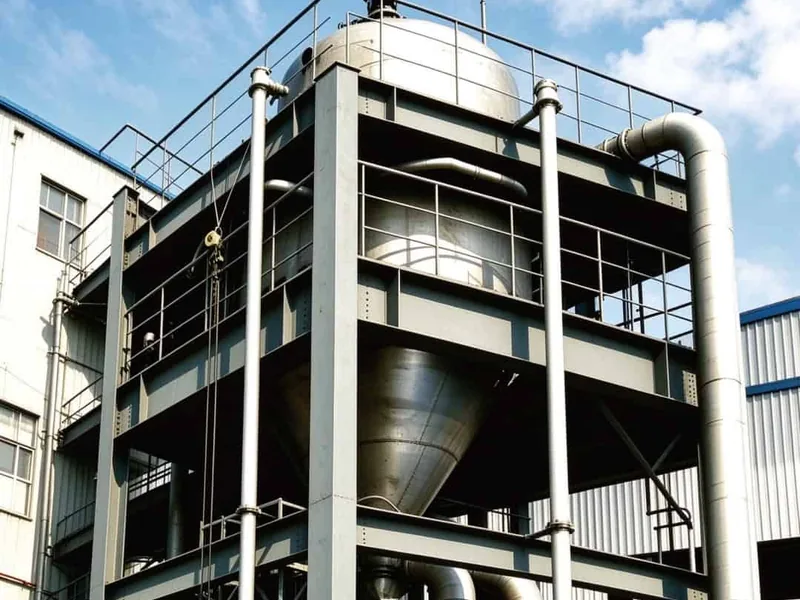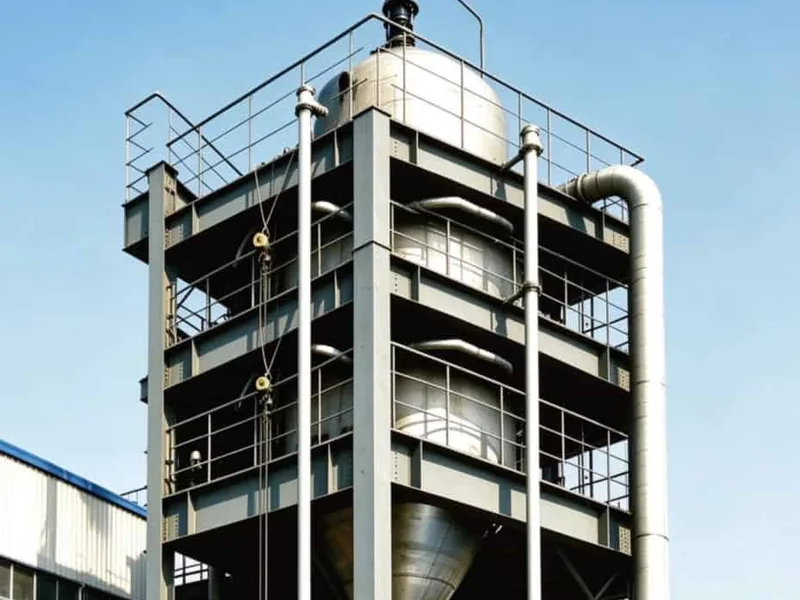
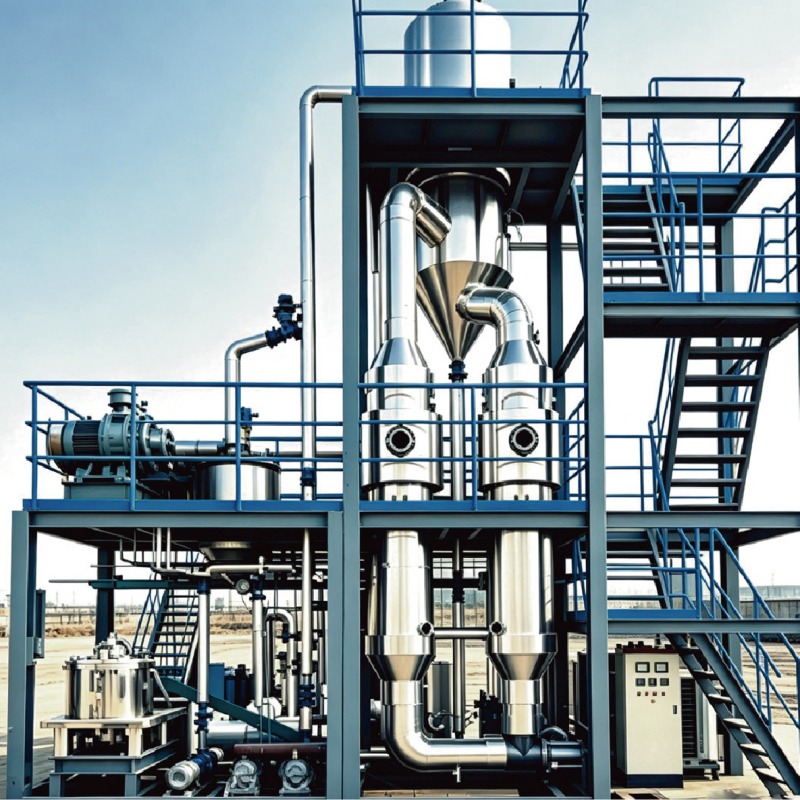
A juice concentrate evaporator increases the soluble-solids content of fruit juice by removing water. Equipment selection focuses on evaporation efficiency, product temperature, aroma management, hygiene, and the characteristics of each juice.
Why Is Juice Concentrated?
Fruit juice is often concentrated to reduce volume for storage, transportation, and later formulation. Removing water increases soluble-solids content, commonly measured as degrees Brix, while allowing the concentrate to be reconstituted or blended into finished beverages. A Juice Concentrate Evaporator is designed to perform this water-removal step while maintaining product characteristics as far as the process allows.
Different juices behave differently during evaporation. Citrus, apple, grape, berry, and tropical fruit juices vary in acidity, pulp content, viscosity, sugar composition, and aroma profile. These properties influence the evaporator type, operating temperature, heat-transfer surface, and product circulation strategy.
How Does a Juice Concentrate Evaporator Work?
Prepared juice is filtered or screened as required and may be preheated before entering the evaporation system. Heat causes water to vaporize, increasing the concentration of soluble solids in the remaining liquid. The vapor is separated from the concentrate and may pass through aroma recovery or condensation equipment depending on the process design.
Evaporation can take place in one or multiple effects. In a multiple-effect arrangement, vapor from one effect supplies heat to a later effect operating at a lower temperature. Vacuum operation can reduce the boiling temperature, which may help limit thermal exposure. The concentrate is then cooled and transferred to storage, blending, or aseptic packaging.
Protecting Flavor, Color, and Aroma
Flavor preservation is a key objective in juice concentration. Temperature, residence time, oxygen exposure, and the concentration profile can affect aroma compounds, color, and taste. A suitable evaporator should provide controlled heat transfer and avoid unnecessary product exposure to elevated temperatures. Vacuum operation and rapid processing may be considered where appropriate for the juice and target quality.
Some volatile aroma components leave with the water vapor. Aroma recovery systems can capture selected volatile compounds and return them to the concentrate or use them in later formulation. The need for aroma recovery depends on the product specification, market expectations, and process economics. Product testing is important to verify that the selected system achieves the desired sensory profile.
Choosing the Evaporator Configuration
Falling film evaporators are widely considered for juice concentration because they can provide efficient heat transfer and short residence time when the juice has suitable flow properties. Other configurations may be evaluated for juices with higher pulp content, greater viscosity, or specific fouling behavior. The system should be selected from actual feed data rather than from a generic capacity comparison.
The number of effects depends on throughput, available steam, energy cost, and investment considerations. Heat recovery can improve energy use, but the additional equipment increases process complexity. Designers should also evaluate cleaning-in-place, product drainage, condensate quality, and the ability to switch between juice types if the plant processes several products.
Integration with the Juice Processing Line
An evaporator is connected to upstream extraction, screening, clarification, and pasteurization stages as required. Downstream, the concentrate may be cooled, standardized, blended, stored, or packaged. Pumps, heat exchangers, condensers, aroma recovery units, and storage tanks must be sized to match the process flow.
Cleaning is particularly important in food processing because sugars and fruit solids can accumulate on product-contact surfaces. The evaporator should be designed with suitable drainage, access, cleaning connections, and a validated cleaning cycle. Hygienic material selection and fabrication practices help support product quality and routine sanitation.
Selecting a Juice Concentrate Evaporator Manufacturer
A Juice Concentrate Evaporator Manufacturer should receive the fruit type, feed Brix, target concentrate Brix, throughput, pulp and viscosity data, temperature limits, aroma requirements, available utilities, and cleaning standards. Buyers should also identify whether the system requires aroma recovery, multiple effects, vacuum operation, or integration with pasteurization and aseptic storage.
Review the supplier’s thermal design, product distribution, heat-transfer surface, separator, condenser, cleaning arrangement, automation, and material specifications. Ask for a process flow diagram and utility summary. Pilot trials or product testing can be useful when handling a new juice or a feed with unusual pulp or viscosity characteristics.
Center Enamel for Food Process Equipment
Center Enamel provides industrial vessel solutions for projects that require coordinated process equipment and storage. For juice concentration projects, vessel and tank requirements should reflect the juice type, product-contact materials, cleaning procedures, temperature range, and connections to the evaporation and packaging line.
Customers can share juice analysis, capacity targets, process flow, and equipment scope for an initial review. Final evaporator design and product quality validation should be carried out by qualified food-process engineers using the actual juice characteristics.
Frequently Asked Questions
What does a juice evaporator remove? It removes water to increase the soluble-solids content of the juice.
Why is vacuum used? Vacuum can lower the boiling temperature and may help reduce thermal exposure, depending on the process.
Can aroma be recovered? Yes. Aroma recovery equipment can capture selected volatile components carried with the vapor stream.
What information is needed for selection? Provide juice type, feed and target Brix, flow rate, pulp content, viscosity, temperature limits, aroma targets, and cleaning requirements.