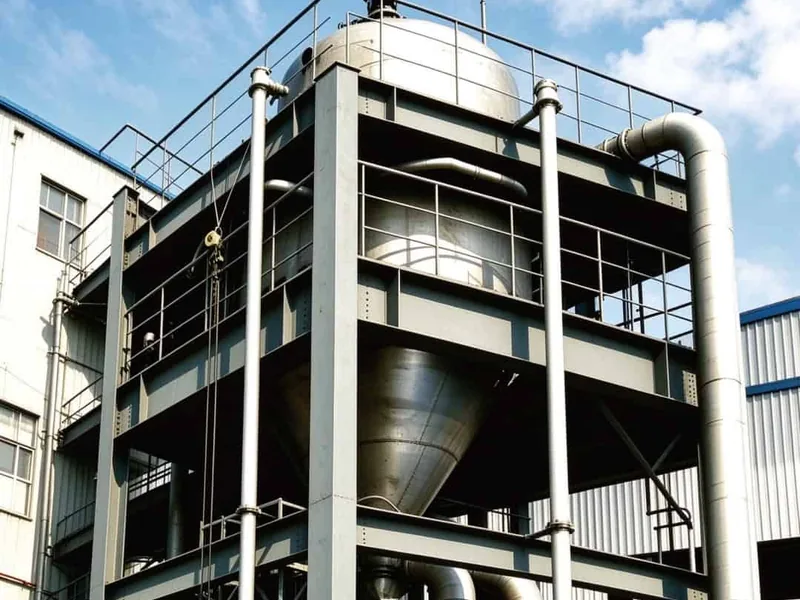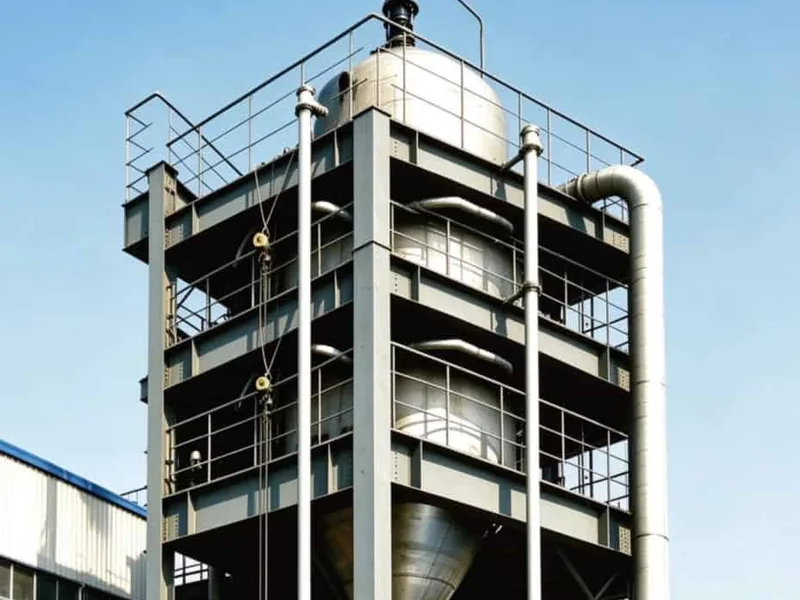
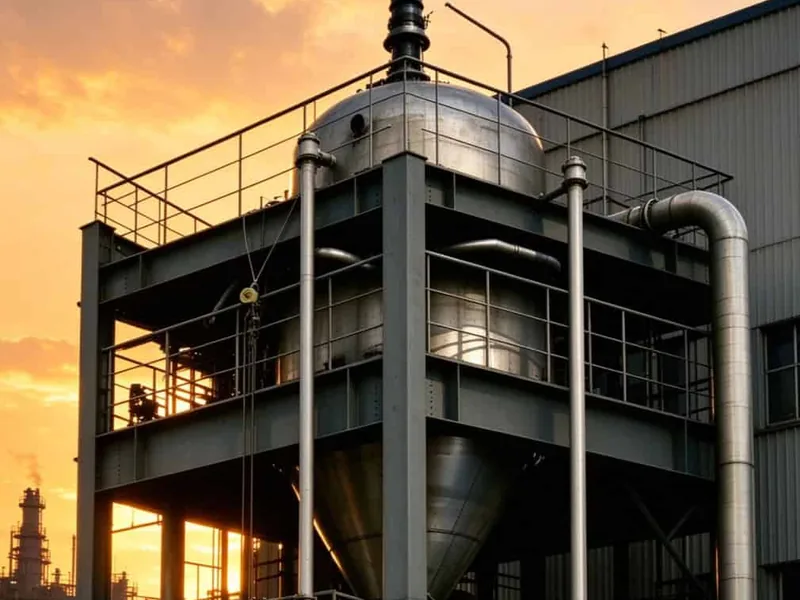
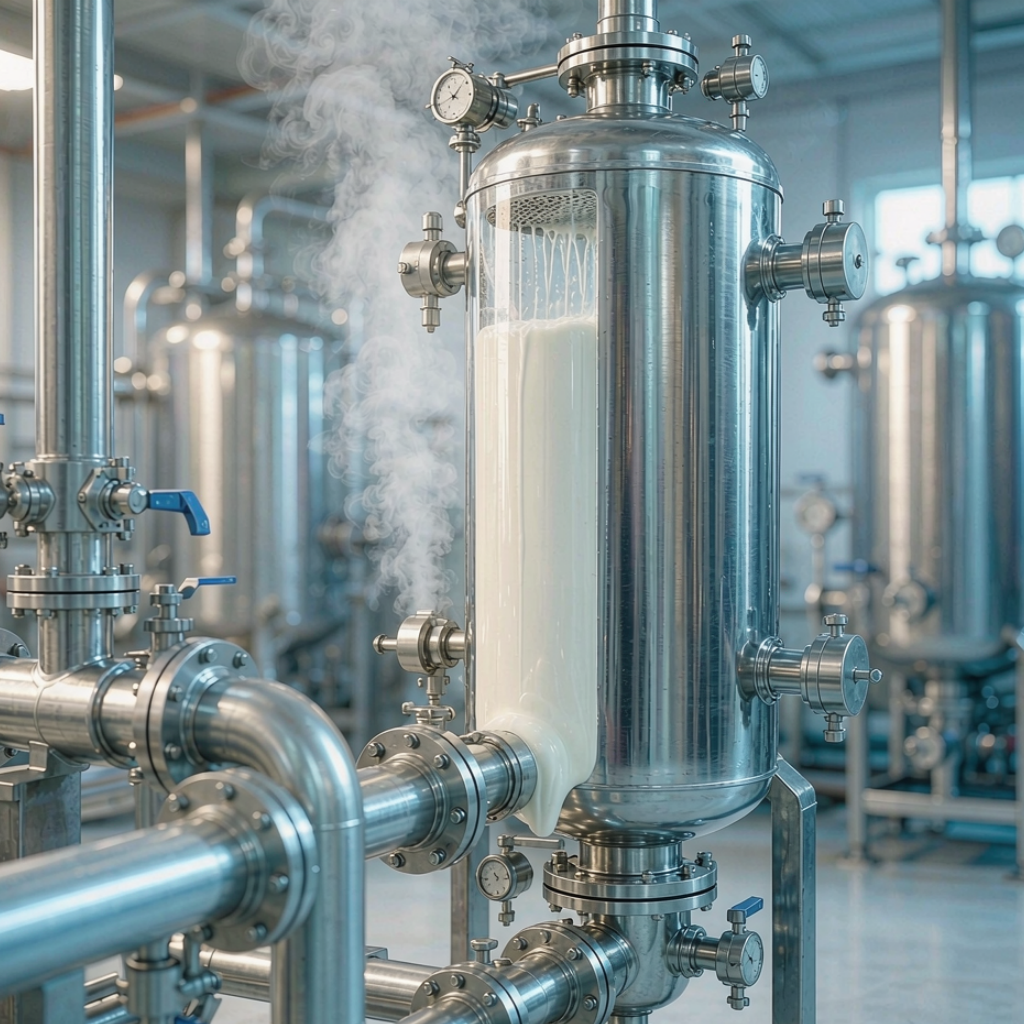
A forced circulation evaporator moves process liquid through a heat exchanger at a controlled circulation rate before flash evaporation in a separator. This arrangement is often considered for concentrated streams and liquids with scaling or crystallization tendencies.
What Is a Forced Circulation Evaporator?
A Forced Circulation Evaporator is designed to concentrate liquid solutions through controlled heating and vaporization. A circulation pump moves liquid through an external heat exchanger, where it is heated, and then into an evaporation vessel. A portion of the liquid flashes into vapor as pressure and temperature conditions change. The vapor is separated from the concentrated liquid, and the liquid is recirculated.
The high circulation rate helps maintain flow across heat-transfer surfaces and can reduce localized concentration at the wall. This makes the arrangement useful for some high-solids, viscous, scaling, or crystallizing solutions. The technology is not automatically suitable for every difficult feed; selection depends on viscosity, solids, crystal behavior, heat sensitivity, and pumping characteristics.
How Does the Process Operate?
Feed enters the circulation loop and mixes with recirculating liquid. The pump sends the stream through the heat exchanger, where steam or another heating medium transfers energy to the process liquid. The heated stream enters the separator, where part of the solvent vaporizes and is disengaged from the liquid. Concentrated liquid returns to the circulation loop or is withdrawn as product.
The circulation ratio, heat input, separator pressure, and feed rate determine the evaporation performance. In some processes, the liquid is maintained below its boiling point in the heat exchanger and flashes in the separator. This can help manage boiling on the heat-transfer surface. The exact operating strategy is developed from the process properties and required concentration.
Why Use Forced Circulation for High-Solids Streams?
As concentration increases, some solutions become more viscous or approach saturation. These conditions can increase the likelihood of deposits, crystal formation, or uneven heat transfer. Forced circulation maintains liquid velocity through the exchanger and can help keep solids suspended where the process allows. It also provides flexibility to manage concentration and temperature through circulation and heat input.
For crystallizing duties, the system may be designed to control supersaturation and support the desired crystal handling approach. For viscous feeds, pump selection and pipe sizing are particularly important because pressure drop and power demand can rise as viscosity increases. The design should evaluate the full operating range, including startup, shutdown, and cleaning conditions.
Important Equipment and Design Factors
A typical system includes a circulation pump, heat exchanger, vapor-liquid separator, feed pump, discharge pump, vapor line, condenser where required, instrumentation, and control system. The heat exchanger may be shell-and-tube or another suitable type based on process fluid, solids, and cleaning requirements. The separator is sized to provide effective vapor disengagement and limit liquid carryover.
Material selection depends on chemical composition, temperature, concentration, and cleaning media. Pump wetted parts and mechanical seals must be compatible with the process liquid. Engineers also consider erosion where solids are present, corrosion, thermal expansion, access for maintenance, and the need for flushing or cleaning. The system’s energy performance depends on heat-transfer area, temperature difference, vapor handling, and opportunities for heat recovery.
Applications in Chemical and Waste Processing
Forced circulation evaporators are used in chemical processing, salt and mineral solutions, wastewater concentration, brine treatment, caustic solutions, and other duties involving concentrated liquids. They may also be applied in zero-liquid-discharge systems as part of a sequence that concentrates wastewater before crystallization or final solids handling.
The process may include pretreatment to remove suspended material or adjust chemistry before evaporation. Downstream equipment can include crystallizers, centrifuges, filters, condensers, and condensate treatment systems. The complete process should be evaluated to determine product recovery, residual handling, water reuse, and energy requirements.
Selecting a Forced Circulation Evaporator Manufacturer
A Forced Circulation Evaporator Manufacturer should receive feed composition, flow rate, solids concentration, viscosity, scaling or crystallization tendency, target concentration, operating temperature, and utility data. Buyers should identify whether the process is batch or continuous and whether the system is part of a larger wastewater or resource-recovery project.
Ask for circulation calculations, pump selection basis, heat-transfer area, separator design, materials, cleaning method, control philosophy, and expected utility consumption. The supplier should clearly define the limits of the process guarantee and the data needed for performance evaluation. Testing may be necessary when the feed behavior is uncertain.
Center Enamel for Evaporation Projects
Center Enamel provides industrial vessel solutions for process systems requiring project-specific engineering and fabrication. In a forced circulation evaporation project, vessel and separator specifications should be coordinated with the circulation loop, heat exchanger, process chemistry, operating conditions, and downstream solids-handling equipment.
Customers can submit feed analysis, process flow information, capacity targets, and preliminary equipment requirements for review. Final equipment selection should be based on validated process calculations and a complete understanding of the liquid’s behavior.
Frequently Asked Questions
Why is liquid recirculated at a high rate? Circulation supports flow across the heat-transfer surface and helps manage concentrated or solids-bearing streams.
Can a forced circulation evaporator handle crystallizing solutions? It can be considered for selected crystallizing duties when circulation, crystal behavior, and equipment design are properly evaluated.
What is the function of the separator? It separates generated vapor from the concentrated liquid after the heated stream enters the evaporation vessel.
What information is required for selection? Provide composition, solids, viscosity, flow rate, concentration target, fouling behavior, utilities, and cleaning requirements.