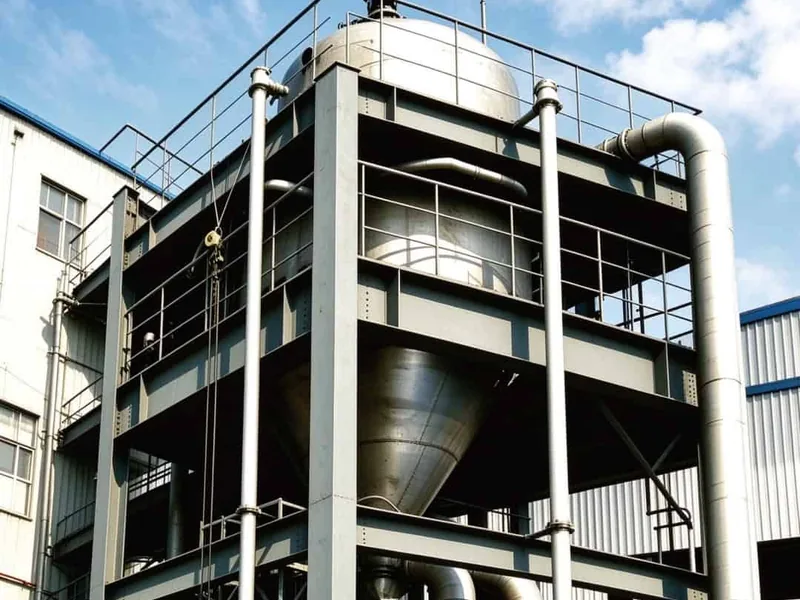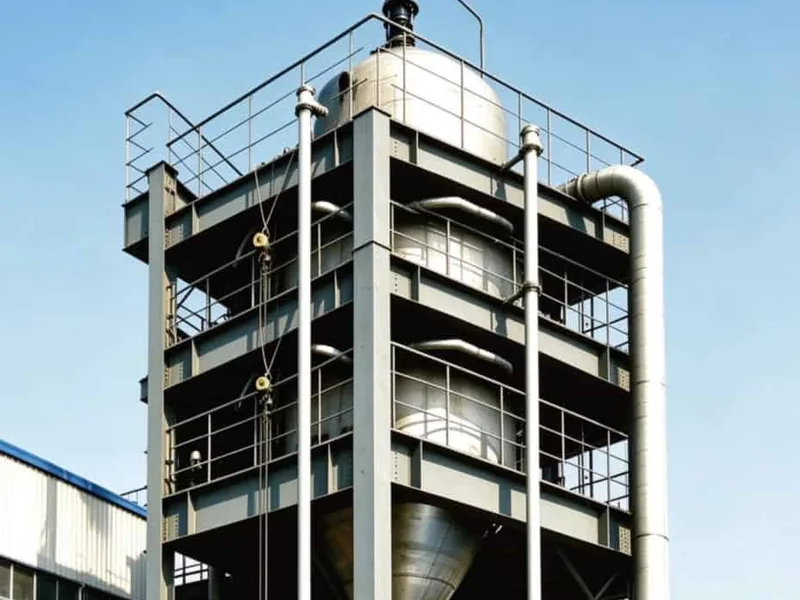
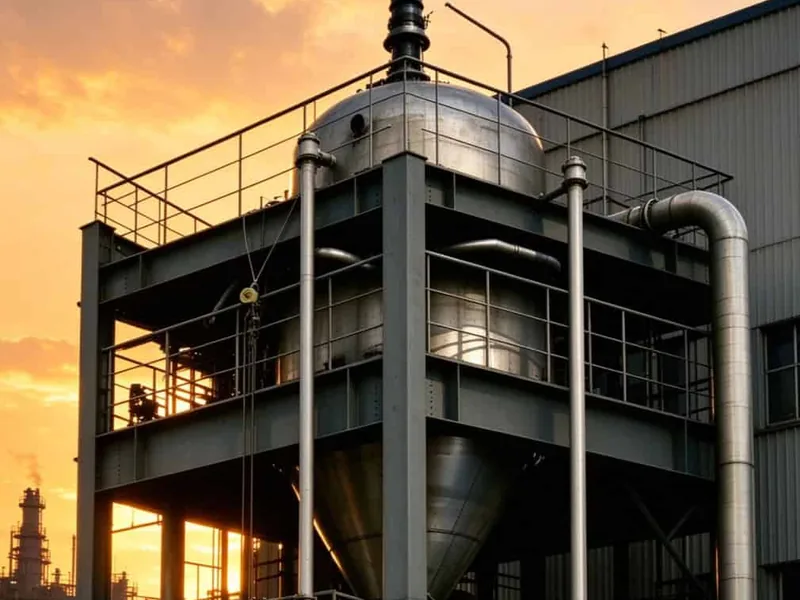
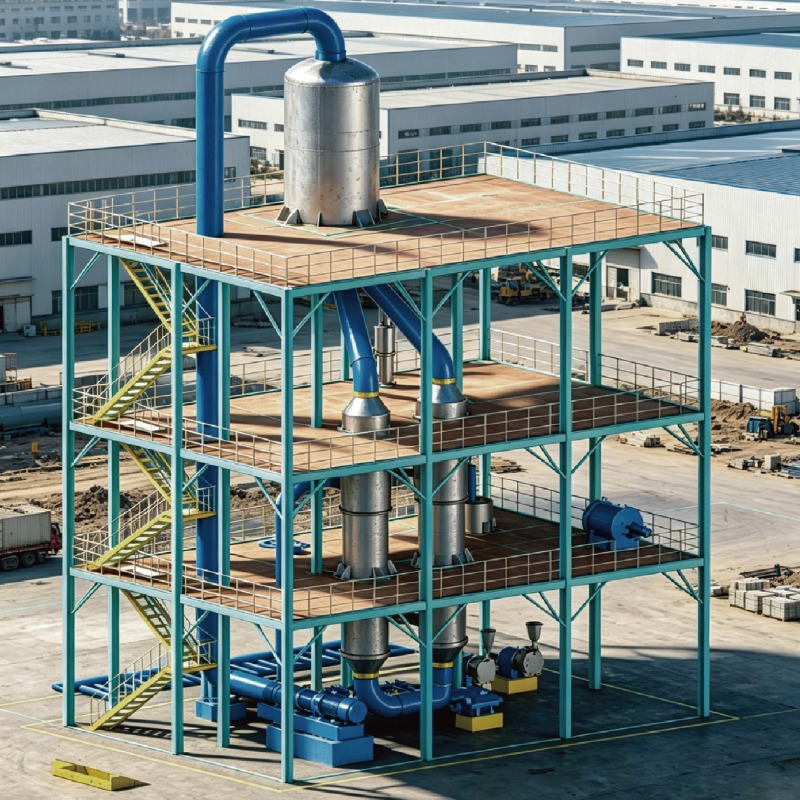
A sludge dewatering evaporator reduces the water content of selected sludge streams through controlled heating and evaporation. It can be considered where conventional mechanical dewatering does not achieve the required residual volume or dryness.
What Is a Sludge Dewatering Evaporator?
Industrial and municipal wastewater treatment produces sludge containing water, suspended solids, organic matter, and dissolved substances. Mechanical equipment such as centrifuges, belt presses, and filter presses removes part of the water, but the resulting cake may still contain substantial moisture. A Sludge Dewatering Evaporator applies thermal separation to remove additional water from suitable sludge or concentrated residual streams.
The system heats the feed so that water evaporates and can be separated as vapor or condensate. The remaining material becomes more concentrated. The process may be used after mechanical dewatering to reduce the amount of material requiring transport, storage, or further treatment. Its suitability depends on sludge composition, viscosity, solids content, heat sensitivity, and the quality requirements for recovered water.
How Does Thermal Sludge Dewatering Work?
Sludge is transferred to a feed tank or conditioning stage, where it may be mixed, screened, or adjusted to improve handling. It then enters the evaporation unit, where heat is supplied through a suitable heat-transfer surface. Water vapor is generated and separated from the concentrated sludge. The vapor is condensed to produce a liquid stream that can be tested and directed to reuse or further treatment.
The concentrated residual is discharged for additional drying, stabilization, disposal, or resource recovery depending on its composition and local requirements. Some systems use vacuum operation to reduce boiling temperature, while others use forced circulation or another evaporator arrangement to handle concentrated material. The operating strategy must be matched to the sludge properties.
Mechanical Dewatering and Evaporation
Mechanical dewatering is often used as a first step because it can remove free water with relatively low thermal energy input. Thermal evaporation may then be applied to the mechanically dewatered cake or a concentrated liquid stream. Combining technologies can reduce the amount of water that must be evaporated and improve the overall energy balance.
The best process sequence depends on the sludge. Fibrous sludge, biological sludge, mineral sludge, and chemical precipitation sludge have different filtration and thermal characteristics. Laboratory tests and representative feed analysis help determine whether conditioning, mechanical dewatering, evaporation, or a combination is appropriate.
Important Design Considerations
Sludge viscosity and solids content influence pumping, heat transfer, and discharge. High-viscosity material may require a positive-displacement pump, agitation, or forced circulation. Heat-transfer surfaces should be selected with fouling behavior and cleaning access in mind. Some sludge types may form deposits or change consistency as water is removed, so the full concentration range should be evaluated.
Material selection depends on pH, salts, chlorides, organic compounds, temperature, and cleaning chemicals. The design should include vapor separation, condensate collection, odor management where required, insulation, access for maintenance, and suitable instruments. A mass balance helps estimate water removal, residual output, and the expected condensate flow.
Water Recovery and Residual Management
The evaporated water can be condensed and assessed for reuse, return to the wastewater treatment process, or additional polishing. Condensate quality depends on the volatile components present in the sludge and the operating conditions. Sampling and treatment may be required before reuse. The concentrated residual must also be characterized to determine the appropriate handling route.
A sludge dewatering project should evaluate the whole residual-management chain. Reducing sludge volume may lower transport requirements, but energy consumption, cleaning frequency, condensate treatment, and residual disposal costs also affect project economics. A site-specific mass and energy balance is important before choosing the equipment.
Applications in Industrial Wastewater Treatment
Sludge evaporation may be considered in chemical manufacturing, metal finishing, mining, food processing, pulp and paper, and other industries that generate concentrated sludge or residual liquids. It can also be part of a zero-liquid-discharge strategy where liquid streams are concentrated and recovered water is returned to the plant after suitable treatment.
The process is not a universal replacement for mechanical presses or centrifuges. It is generally evaluated when additional volume reduction or water recovery is required and when the sludge can be processed economically by thermal equipment. Feed testing helps establish a suitable treatment route.
Choosing a Sludge Dewatering Evaporator Manufacturer
A Sludge Dewatering Evaporator Manufacturer should receive sludge analysis, average and peak flow, solids content, viscosity, pH, temperature, volatile components, target residual concentration, and condensate requirements. Buyers should identify upstream dewatering equipment, available steam or other heat sources, cleaning methods, and the required operating schedule.
Review the supplier’s evaporation concept, pump selection, heat-transfer design, vapor handling, material compatibility, cleaning provisions, energy estimate, and condensate treatment interface. Request a process flow diagram and mass balance. Where sludge properties vary, representative testing is valuable for confirming performance assumptions.
Center Enamel for Sludge Treatment Projects
Center Enamel provides industrial vessel solutions for wastewater and process applications. For a sludge dewatering project, tank and vessel specifications should be coordinated with sludge characteristics, feed and discharge arrangements, material compatibility, and the wider treatment system.
Customers can provide sludge analysis, flow data, target volume reduction, and process information for preliminary review. Final equipment selection should be based on process testing and a complete technical and economic assessment of evaporation, condensate handling, and residual management.
Frequently Asked Questions
Does a sludge evaporator replace a filter press? Not necessarily. It is often considered after mechanical dewatering to remove additional moisture.
Can the evaporated water be reused? Condensate may be considered for reuse after its quality is tested and any required treatment is completed.
What affects evaporation performance? Solids content, viscosity, fouling tendency, heat-transfer conditions, and the selected operating method all matter.
What information is needed for selection? Provide sludge analysis, flow rate, solids, viscosity, target residual, heat source, condensate requirements, and cleaning method.