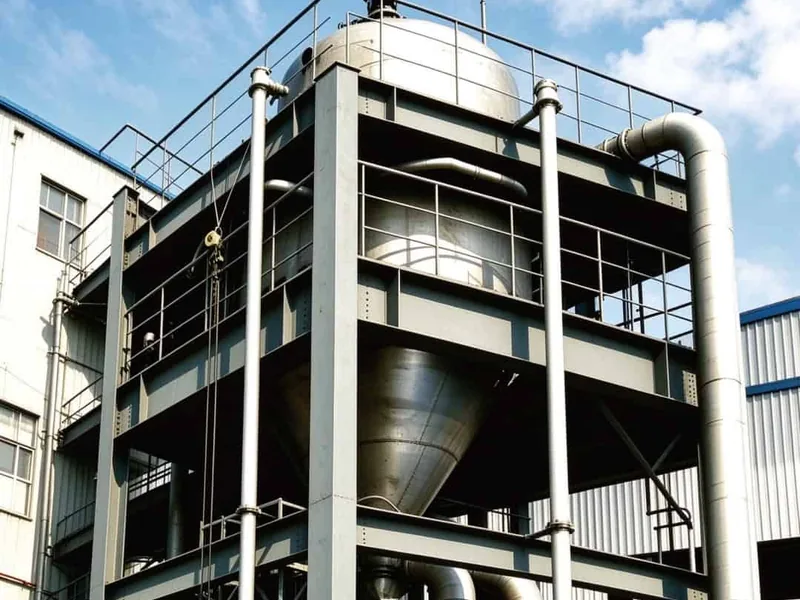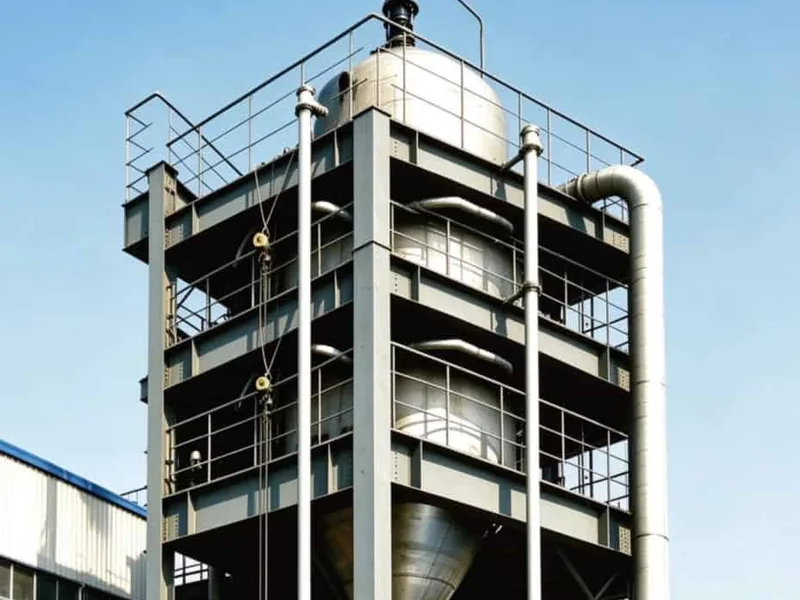
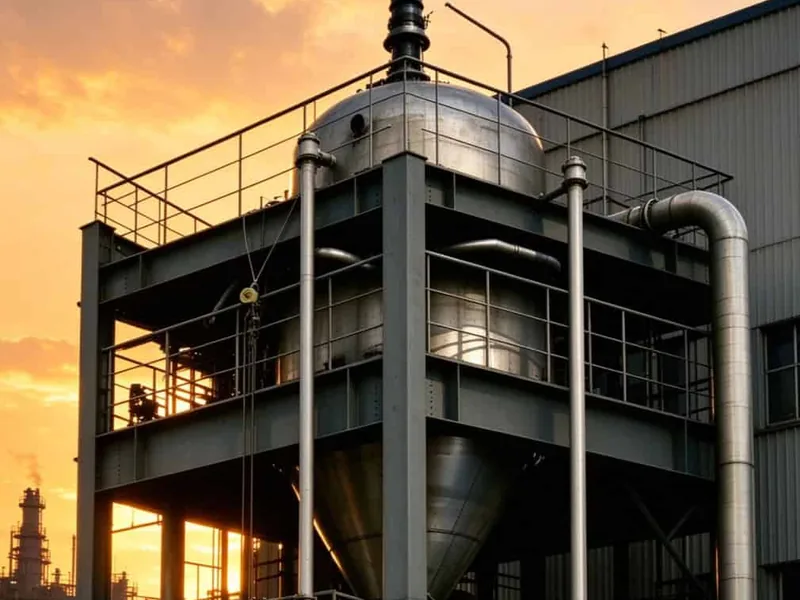
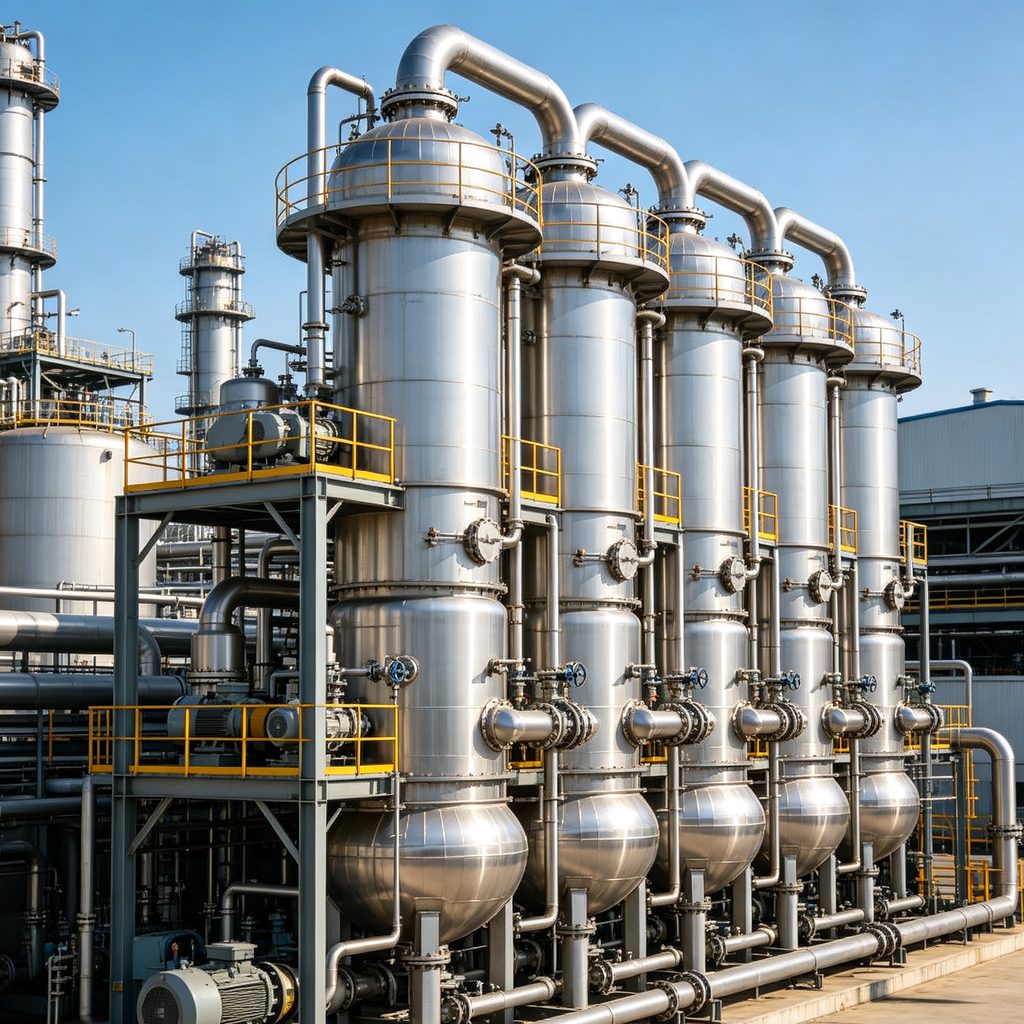
Polymer quality is decided inside the Evaporator. Molecular weight, molecular weight distribution, and particle or bulk properties all follow from how monomer, initiator, and heat are handled. Center Enamel designs polymerization Evaporator that hold those conditions steady, batch after batch and through the whole production campaign.
Polymerization Routes and Evaporator Selection
Suspension and emulsion processes need strong mixing and reliable heat removal, solution processes need solvent handling and recovery, and bulk processes need careful control as viscosity rises. The Evaporator type follows from the route chosen in development, and the same route also sets the surface finish the vessel requires. Monomer purity and inhibitor level are checked before the batch, since both shift the reaction rate.
Batch operation suits multiple grades and modest volumes, while continuous operation suits a single grade at high output. In both cases the vessel must remove reaction heat at the same rate it is generated, or the temperature will drift and the molecular weight will follow the drift rather than the recipe. Jacket flow is therefore tied to the reaction rate rather than to a fixed valve position.
Mixing, Heat Transfer, and Scale-Up
Impeller selection sets the flow pattern: axial impellers circulate the bulk, radial impellers provide shear for dispersion, and combined designs cover both needs. Baffles stop the charge from rotating as a solid body, which would leave heat-transfer surfaces starved of flow and let local hot spots form at the wall. Impeller diameter and speed are chosen so the wall sees continuous flow at every fill level.
Scale-up works from power per unit volume and heat-transfer coefficient rather than geometric ratio alone. A jacket, internal coil, or reflux condenser provides the surface area, and the design is checked against the heat release curve of the reaction, including the peak that appears as the reaction accelerates. Where the peak is steep, a reflux condenser adds surface area without changing the vessel geometry.
Surface Finish and Cleanability
Internal surfaces are polished stainless steel, typically 316L, with a finish specified to limit polymer build-up on the wall. Dead legs, sharp corners, and unused nozzles are avoided because they collect material that later appears as contamination in a subsequent grade. Nozzle spacing is reviewed so every connection can be reached for cleaning.
Cleaning access is designed in from the start: spray balls, a manway large enough for inspection, and drain points at the low points of the vessel and its connected lines. Where the campaign changes grade frequently, the cleaning routine is agreed with the plant before the nozzle layout is fixed.
Controlling Molecular Weight and Quality
Temperature is the strongest lever on molecular weight, so the control loop must respond quickly to reaction heat. Initiator or catalyst dosing follows a defined profile, and monomer ratio is held by flow control rather than by manual addition, which keeps the ratio constant through the whole addition stage. The addition line is sized for the fastest dose the recipe allows.
Residence time and mixing complete the set. In-line viscosity measurement, together with torque on the agitator, gives a running indication of conversion, and samples taken at defined points confirm molecular weight distribution against the specification before the batch is discharged. Conversion curves from earlier batches give the operator a reference for the current run.
Materials and Fabrication
Vessels are built from stainless steel or clad plate, with the wetted surface matched to the monomer and solvent set. Welds are ground and polished where product contact matters, and the finished surface is passivated so that the first batch sees the same surface as the hundredth.
Jacket and coil circuits are tested separately from the product side, and the assembled vessel goes through dimensional checks, non-destructive examination, and a final leak test before dispatch. Agitator alignment is verified on the test stand, because vibration at the seal is the usual source of early wear. The finished vessel is dried and sealed before packing, so the polished surface arrives as it left the shop.
Package Scope From a China Polymerization Evaporator Manufacturer
Center Enamel supplies the Evaporator with its agitator drive, jacket circuit, temperature sensors, and control interface as one package. Factory acceptance testing verifies rotation, sealing, heating, and instrument response together, so the unit arrives as a tested system rather than as parts to be assembled on site. Control logic is tested against the plant’s recipe sequence, not only against the package’s own signals.
Documentation covers drawings, material certificates, weld records, test reports, and operating instructions. Export packing and site support are arranged for the complete package, not just the vessel, including the alignment checks that follow installation.
Specifying a Polymerization Evaporator
Start with the polymer grade, the process route, the batch size or throughput, the heat of reaction, and the cleaning method. Those details fix the mixing duty, the heat-transfer area, and the surface finish required, and they show early whether the grade can run in an existing vessel or needs a new design.