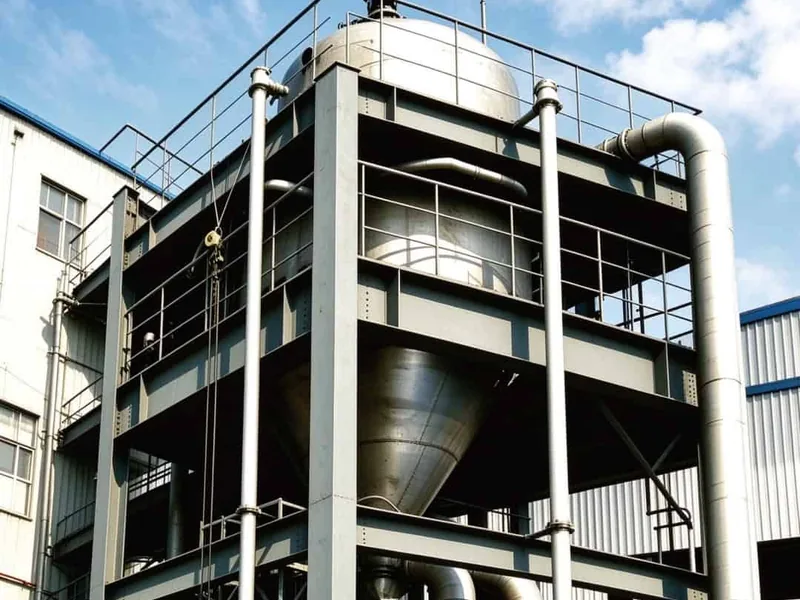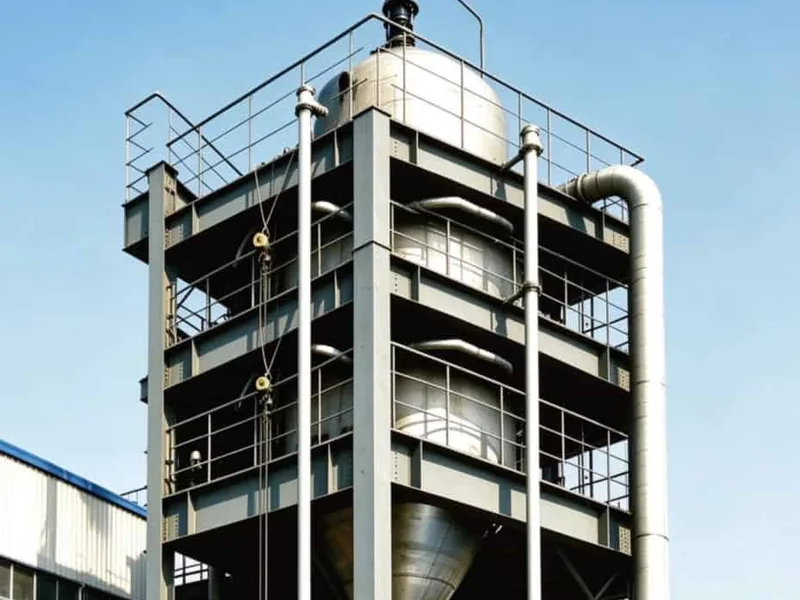
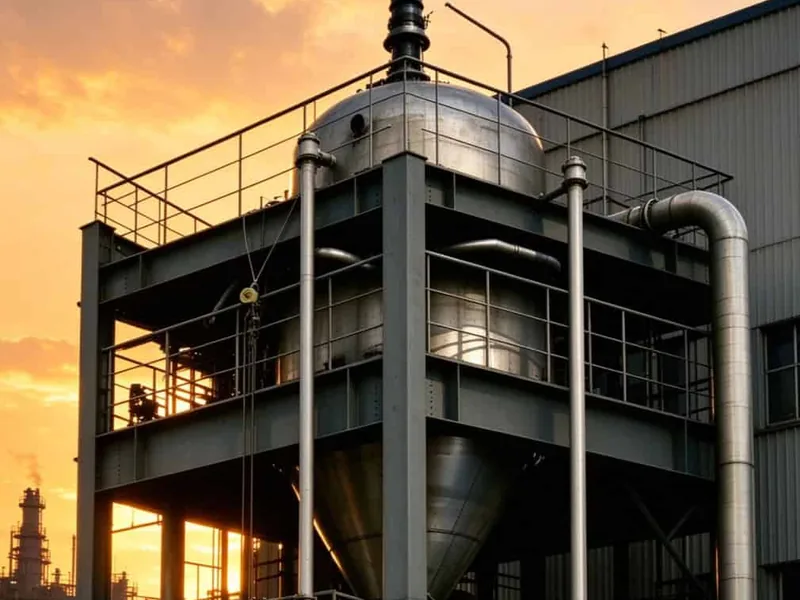
Supercritical carbon dioxide behaves like both a liquid and a gas near its critical point, which makes it an effective solvent for selective extraction. Density can be adjusted to target specific compounds, and the solvent leaves the product cleanly when it returns to gas. A supercritical fluid extraction package puts the vessel, gas loop, separation, and control into one repeatable line.
Principles of Supercritical CO2 Extraction
Above its critical temperature and condition, carbon dioxide has the density of a liquid and the mobility of a gas. Dissolved compounds move quickly through the fluid, and the solvent can be tuned by changing density, which alters solubility without changing the solvent itself or adding a second chemical to the line. Solubility rises with density, so a small change in condition can separate two compounds that behave alike at lower density.
Because extraction takes place at moderate temperature, heat-sensitive compounds retain their character. After extraction, the carbon dioxide is separated from the product and recovered for the next cycle, leaving no solvent residue in the output and no solvent stream that has to be treated as waste. Most of the gas is recovered and returned to storage, so operating cost depends mainly on make-up gas and power.
Package Scope and Vessel Configuration
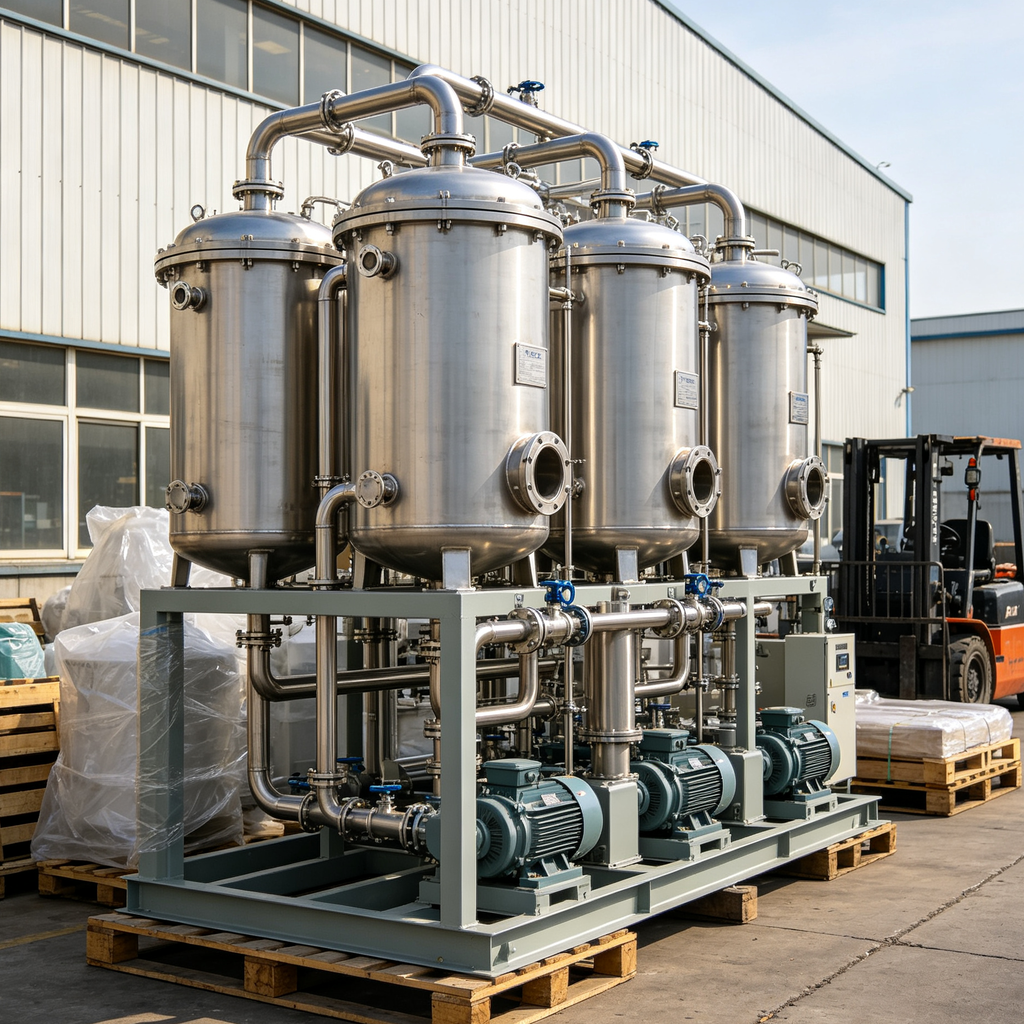
A typical package includes one or more extraction vessels with product baskets, a separation vessel, carbon dioxide storage, a circulation pump, heat exchangers for heating and cooling, and a recovery circuit that returns gas to storage for the next run. Vessel count follows the batch time and the number of products run in parallel.
The vessels are connected through a manifold that allows filling, extracting, and discharging in sequence. Control, instrumentation, and interlocks sit in one cabinet, so the line operates as a single unit rather than a collection of separate machines that happen to share a building. Instrumentation covers temperature, density, flow, and gas inventory at every stage of the cycle.
Extraction Vessel Design and Material Choices
Extraction vessels are built from stainless steel with a closure designed for frequent opening and reliable sealing. The basket locates the charge away from the outlet, so fluid passes through the bed evenly rather than finding a channel along the wall. Basket walls are perforated evenly, so flow distribution does not depend on how the charge is loaded.
A heating jacket holds the vessel at its extraction temperature, and internal surfaces are finished for sanitary operation. Quick-release closures shorten the turnaround between batches, which matters when a line runs several products per week Changeover time is measured and used to plan the production sequence. and each changeover carries a cleaning step. Seals are replaced on a planned interval rather than after a leak appears.
Process Control and Recipe Repeatability
Each product has a recipe: charge weight, extraction temperature, fluid density, flow rate, and cycle time. The controller holds those values and steps through fill, extract, separate, and recover in a fixed order, so a run cannot start until the previous condition has been satisfied.
Records of temperature, density, and cumulative flow per batch show whether the run matched the recipe. That evidence supports product release and makes it possible to compare yields between campaigns and between vessels, which is how a process improvement is proven rather than assumed. Yield and purity results are stored per recipe, so the best setting for each raw material is kept.
Applications in Natural and Industrial Products
Botanical extracts, nutraceutical ingredients, and flavour compounds are common duties, where the aim is a clean concentrate without residual solvent. Decaffeination of coffee and tea uses the same principle at production scale, with the extracted caffeine recovered as a separate product.
Cosmetic ingredients, pharmaceutical intermediates, and materials cleaning also rely on the process, because the fluid penetrates porous structures and leaves them dry and ready for the next step. Residue checks after cleaning confirm the line is ready for the next product. The same equipment can run several of these duties when the recipes and cleaning routines are planned together. Cleaning between products follows a validated procedure, with the solvent and drying step recorded.
Delivery and Support From Center Enamel
Center Enamel fabricates the vessels to ASME Section VIII Division 1 and assembles the package with piping, insulation, and instrumentation in the workshop. Factory acceptance testing runs the gas loop and the control sequence before dispatch, including the recovery cycle that determines operating cost. Gas analysis confirms the carbon dioxide quality before the first production run.
As a China supercritical fluid extraction package manufacturer, the company prepares drawings, material certificates, test reports, and operating manuals, and supports installation, commissioning, and operator training on site, including the first product trials.
Planning a Supercritical Extraction Line
Define the raw material, the target compound, the batch size, the required purity, and the utilities available. Those inputs set the vessel volume, the number of vessels, the recovery capacity, and the control scope, and they decide whether a single vessel or a multi-vessel carousel fits the production plan.